The Foundation Bull of the University of Aberdeen, dated 10 February 1495, has been granted UNESCO UK ‘Memory of the World’ status.
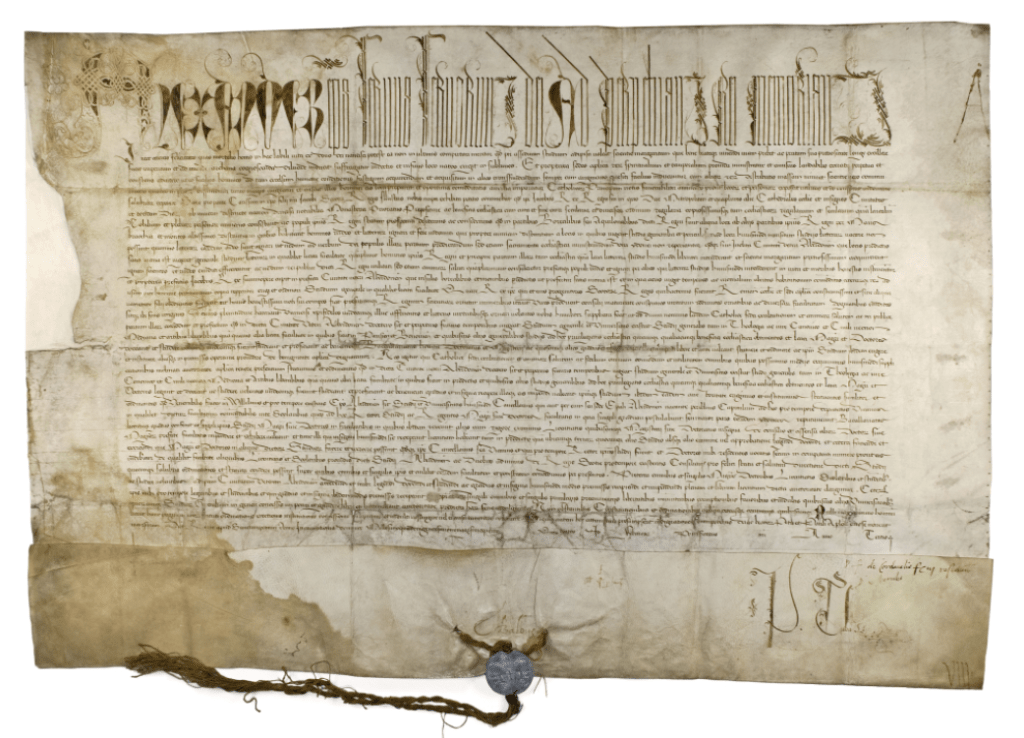
The Foundation Bull of the University of Aberdeen, dated 10 February 1495, has been granted UNESCO UK ‘Memory of the World’ status.
At the first pair of game jams in the series this month, Jam in the Archives teams gathered for competitions in Aberdeen and Dundee. Building on the original Jam in the Archives (2025), these jams returned in 2026 on a bigger scale, aiming to help shape the wider alignments of universities, archives, libraries, galleries & games in making a shared case for creative innovation.
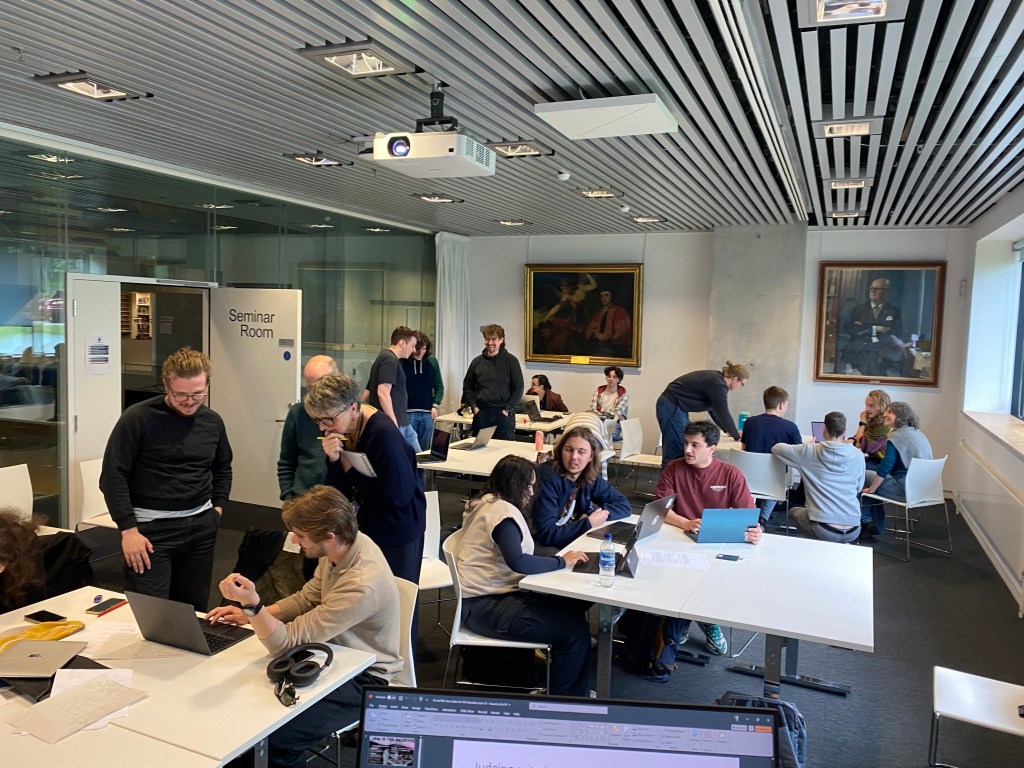
The challenge was to make games inspired by historical collections – student teams were judged on a playable game loop demo or a game concept with a robust plan for development. They worked over two days, and they pitched their games to a panel of judges drawn from different areas of expertise.
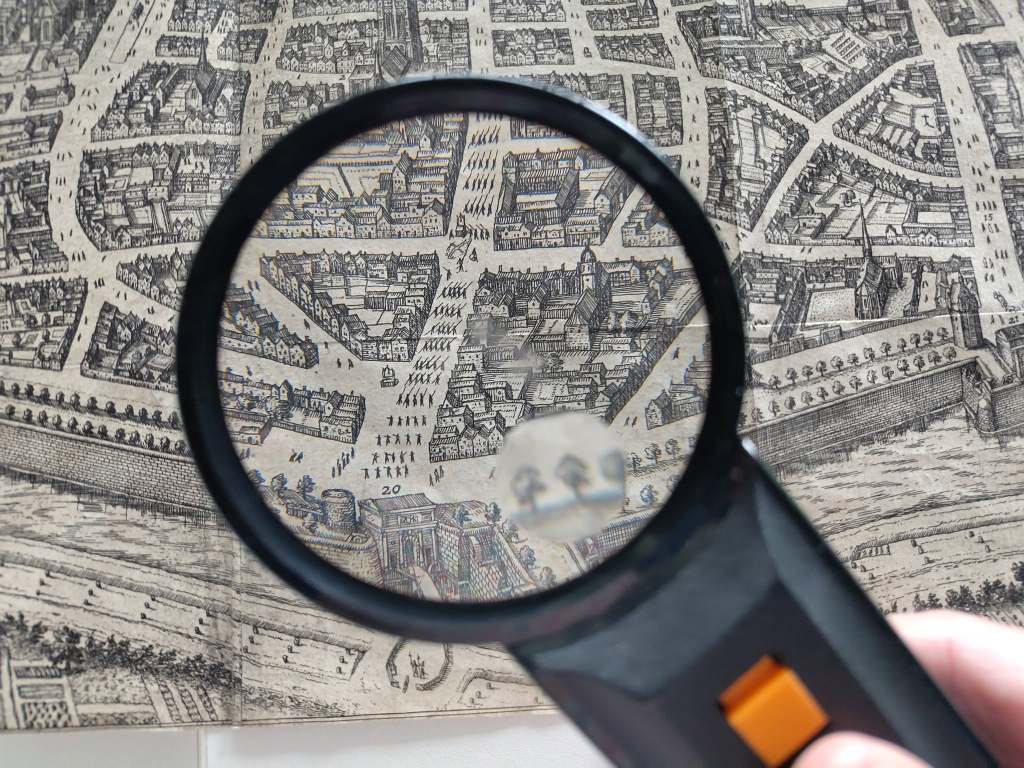
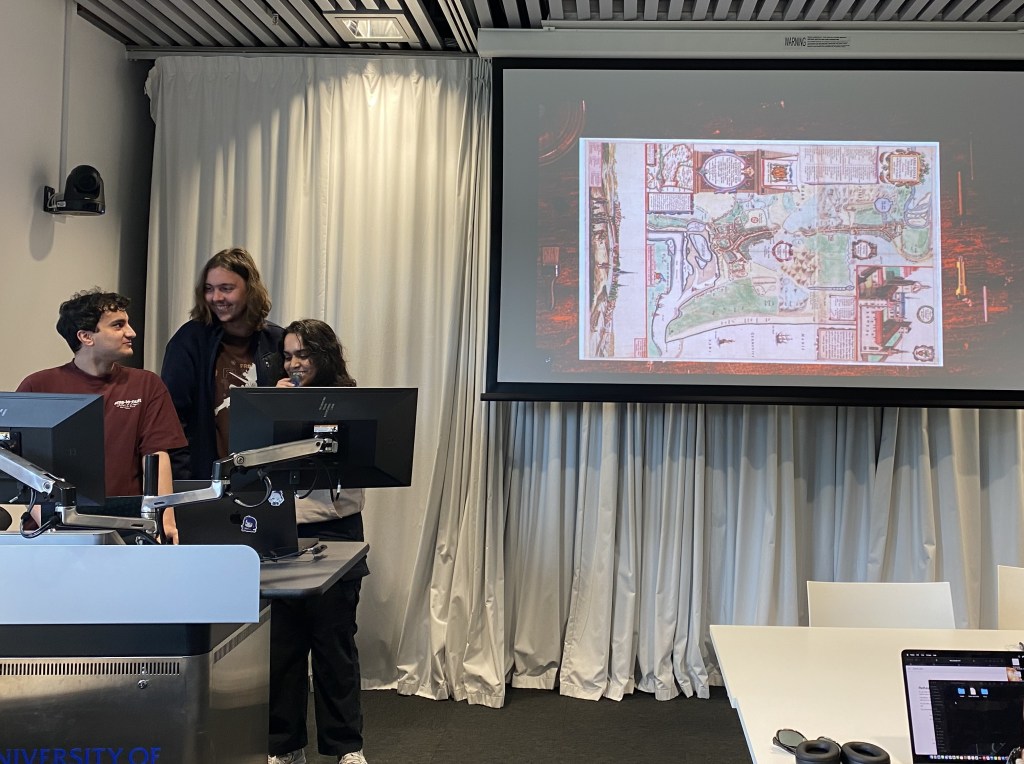
In ABERDEEN on 11 & 12 June, six teams (twenty-one participants altogether) engaged with remarkable historical maps and atlases from University Collections. These included a seventeenth-century map of Utrecht, a John Seller’s pocket atlas of the world (1680), Georg Braun and Frans Hogenberg’s Civitates Orbis Terrarum (1577-81), an original print of James Gordon of Rothiemay’s map of Aberdeen (Abredoniae Novae et Veteris Descriptio, 1661), drawings for the unrealised plans for James Byres of Tonley’s remodelling of King’s College about 1767, and a surveyor’s plan of the Fetteresso estate (near Stonehaven), showing the ‘Home Farm And Grounds’ drawn in 1862.
Five brilliant game pitches resulted (see summaries below). Congratulations to the runners-up ‘What Could Have Been’ and to the winners ‘Surveyor-Fetteresso’.
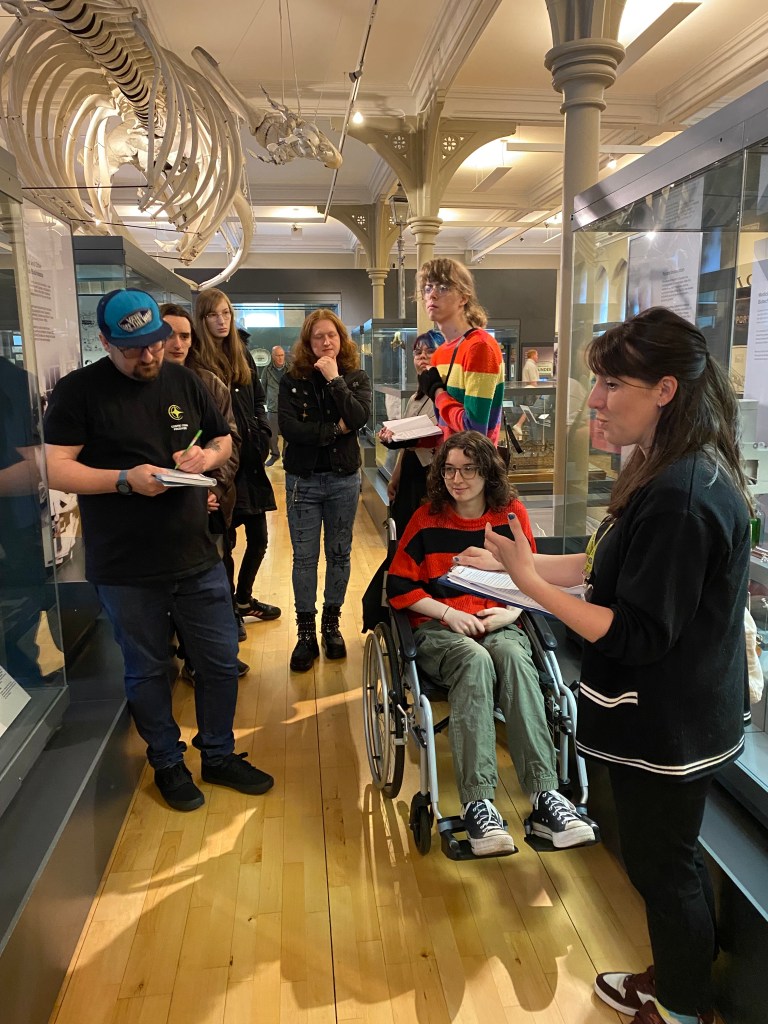
In DUNDEE on 18 & 19 June, established student team Cosmic Coda split into two groups, Team Cosmic and Team Coda. They encountered digitised historical collections from Abertay University’s archive. The teams then visited The McManus: Dundee’s Art Gallery & Museum, where the collections team showcased a range of historical records and objects from Dundee’s rich history of industry, from jute and whaling to technology and games. Items the groups considered were themed on ‘The Making of Modern Dundee’, and ‘Dundee and the World’. Objects included and a Sinclair ZX Spectrum (c. 1981-2); images from Joseph McKenzie’s photographic essay on Dundee: City in Transition, People in Jute, from 1964-6; an architectural model of Dundee as it was about 1850, and many more fascinating artefacts which captured the story of the working city, changing dynamically over time.
Two wonderful game pitches resulted (see summaries below). Congratulations to the runners-up ‘Sorting Slug’ and to the winners ‘Spirits of the City’.
The winners from both jams, Spirits of the City, and Surveyor-Fetteresso, progressed on to the final Jam in the Archives at the National Library of Scotland the following week – Read all about it here.
Summaries of the game projects pitched to the judges in each event follow below:
ABERDEEN EDITION:
The Mystery of Cologne (Team F)
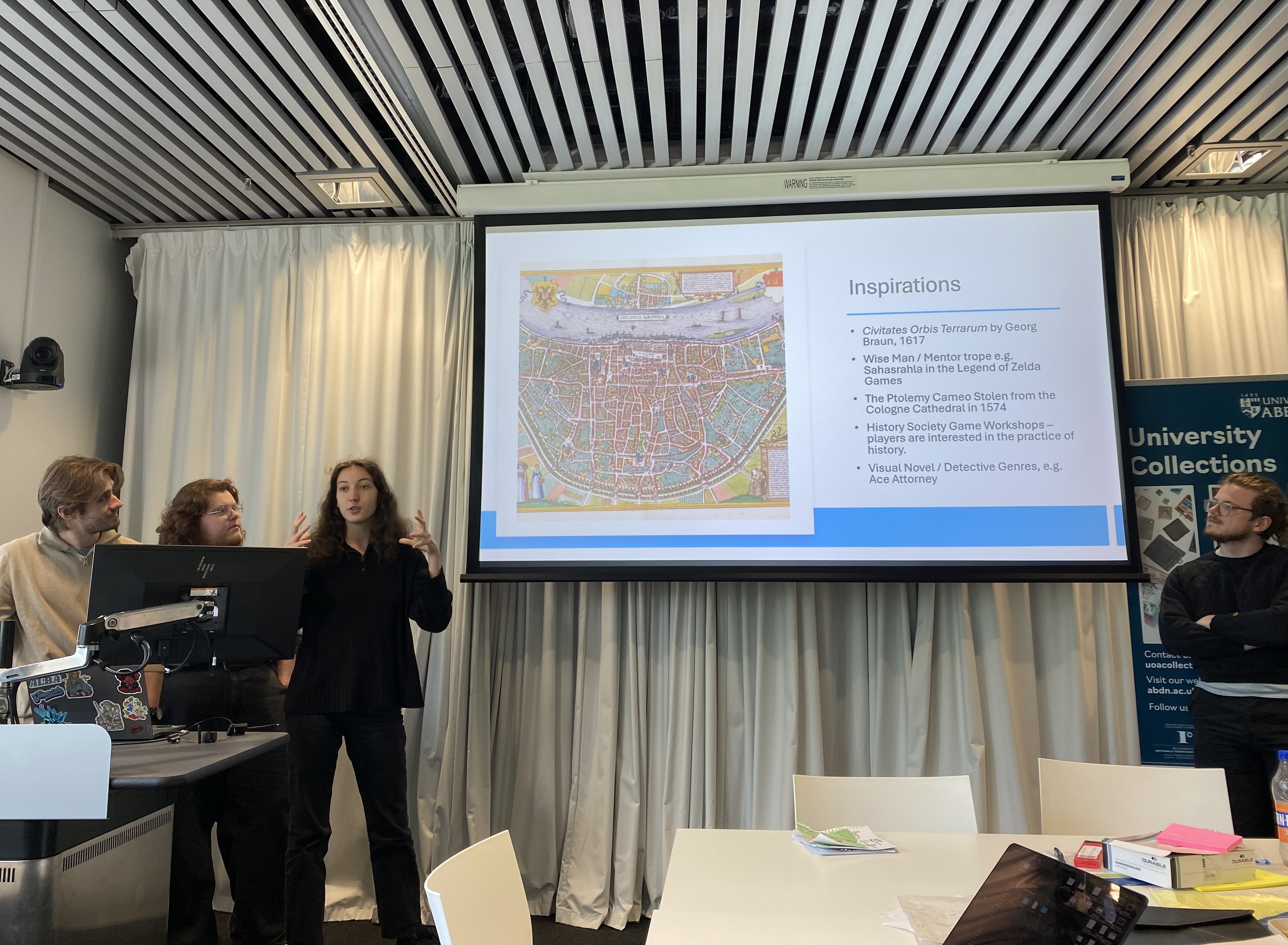
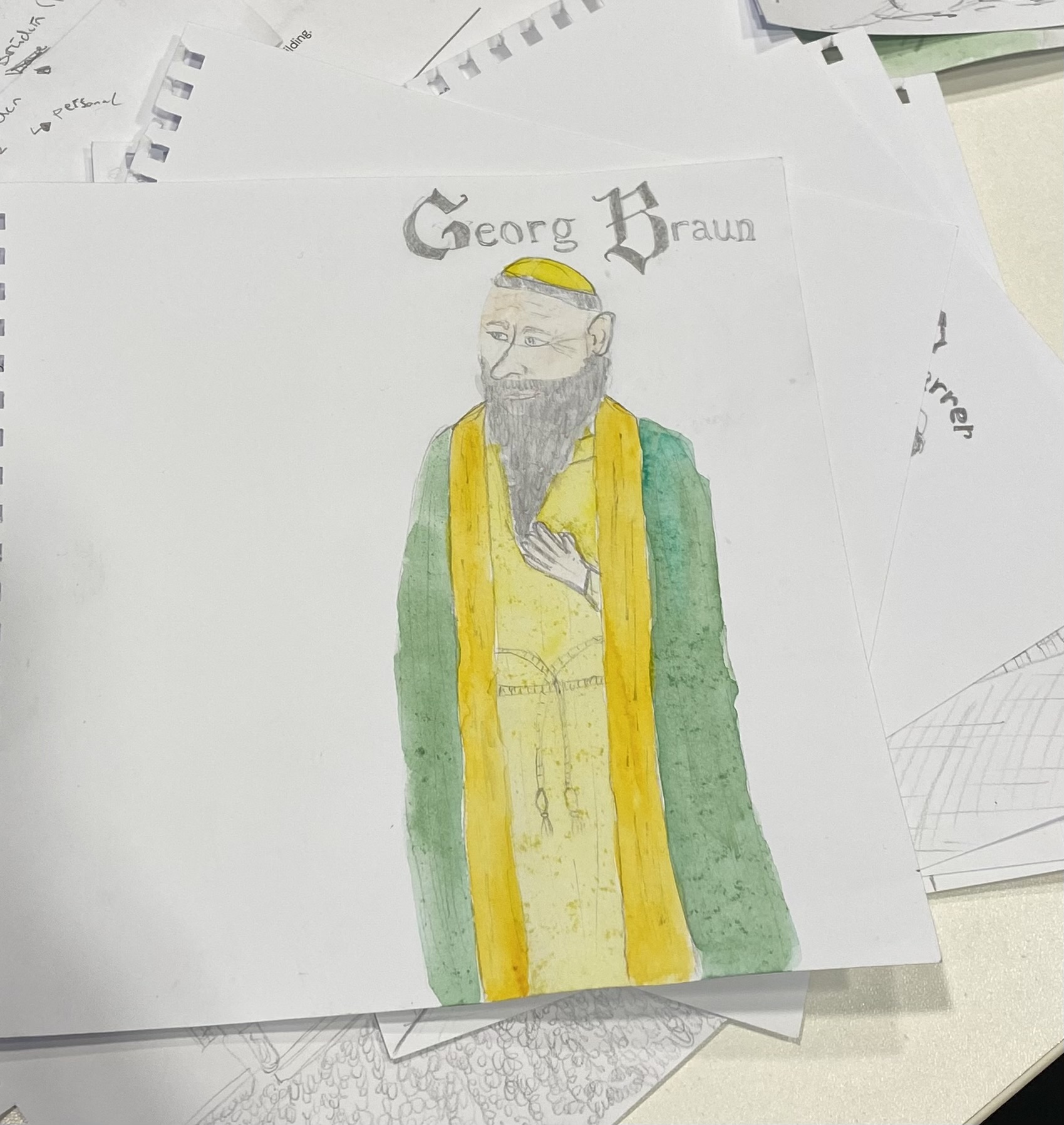
This game uses George Braun’s sixteenth-century Civitates Orbis Terrarum as its chief inspiration, focussing on its map of Cologne. Built in Twine, the game offers a branching narrative inspired by visual novels and presents several vivid characters including Braun himself. The game aims to put players in a situation where they have to work like historians and interpret the guidance of a narrator whose reliability is left in question, subverting expectations by playing on tropes of wise old mentors such as Gandalf. The game impressed with charming hand-painted art and original guitar music which played with expectations of historical authenticity.
What Could Have Been (Team E)
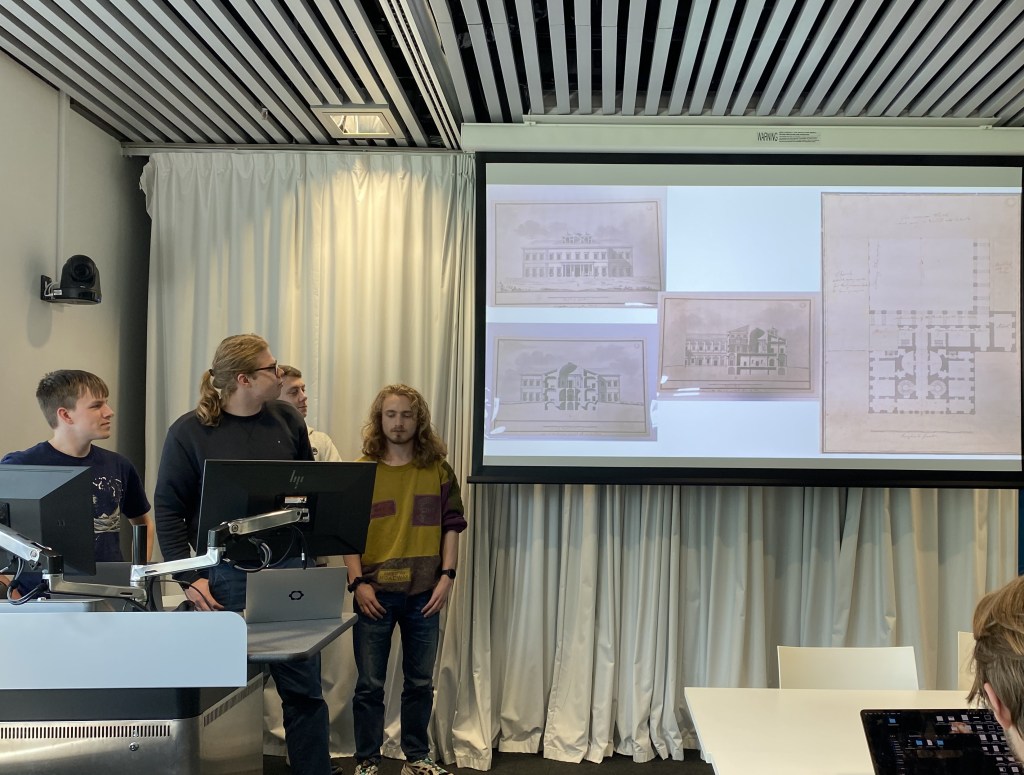
James Byres of Tonley drew up plans for a new King’s College, Aberdeen in 1767 that were never realised. This stealth game imagines a timeline in which they were, dropping players into a 3D-modelled version of the building. This alternative timelines offers a nightmare vision in which players have to avoid demonic professors to collect plans which allow them to access a time travel machine that operates laterally across timelines rather than backward and forward so they can escape. The game offers a compelling sense of tension, built by musical cues and a mechanic whereby threat level increases as players entered into view of more professors. Alongside the game, the players produced an impressive standalone architectural model of the alternate building based on the original plans.
Damnatio Memoriae (Team D)
Named after the Roman practice of erasing individuals from the historical record, this game casts the player as a member of a dystopian society thrust into the role of novice archivist. The team was especially inspired by Gordon of Rothiemay’s famous 1661 map of Aberdeen and annotations on a later copy of it but more broadly reflected on the theme of how records shape our view of the past and how they might be tampered with to alter this view. Players carry out cataloguing work and are ordered to erase notes and other elements of maps to mould perceptions of the past according to the desires of their ominous rulers. Players have significant autonomy over how events unfold and work under deadline pressure throughout. The tone is dark, drawing on Papers, Please as a reference point.
Beneath the Quad (Team C)
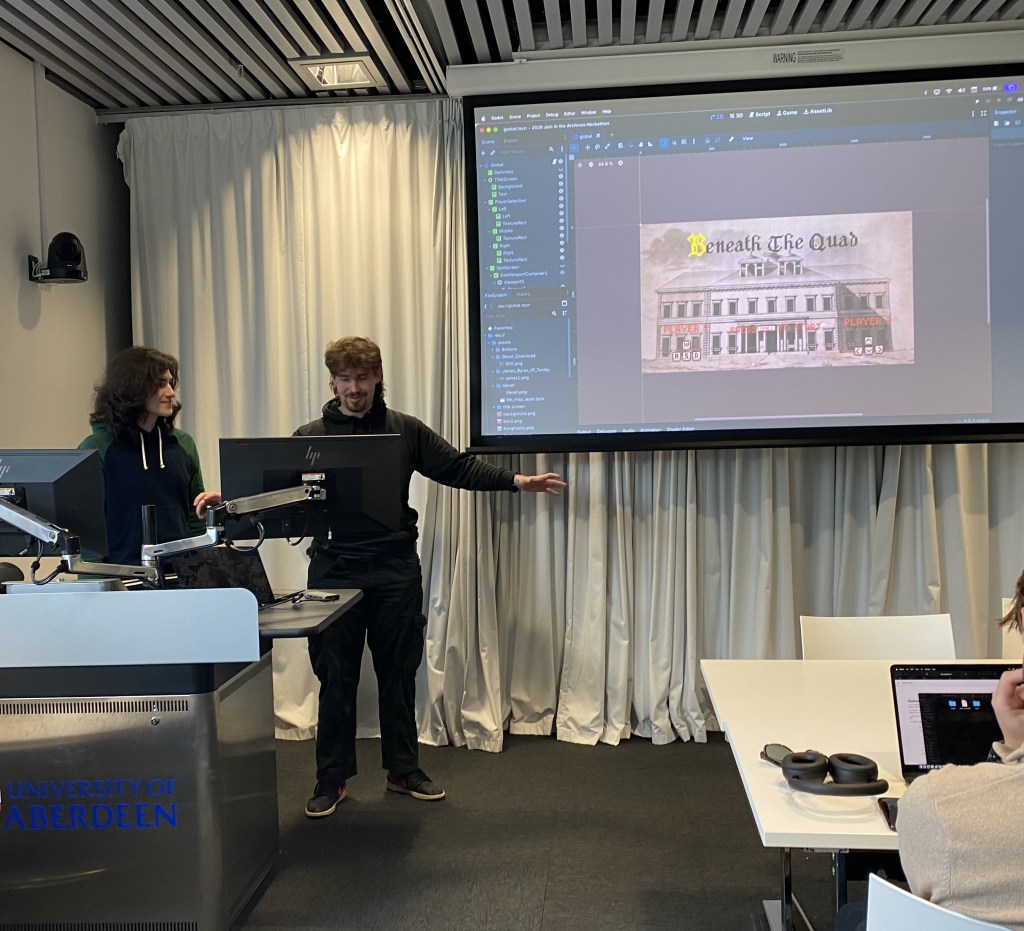
This game also drew on James Byres plans for King’s College but took that inspiration in a radically different direction. Reminiscent of games such as It Takes Two and Split Fiction, this was a two-player co-op experience, a design the team were keen to tackle because it was something they had not tried before. The core game mechanic was built around the clever conceit that puts the two players in different roles: one as a living person and one as a ghost. These characters inhabit different versions of the same building and must navigate puzzles whereby if an object if blocked in one layout it may be possible to move it in the other layout. The narrative framing for this central mechanic was the ghost of Byres aimed to change the future by having his plans realised after death.
Surveyor: Fetteresso (Team B)
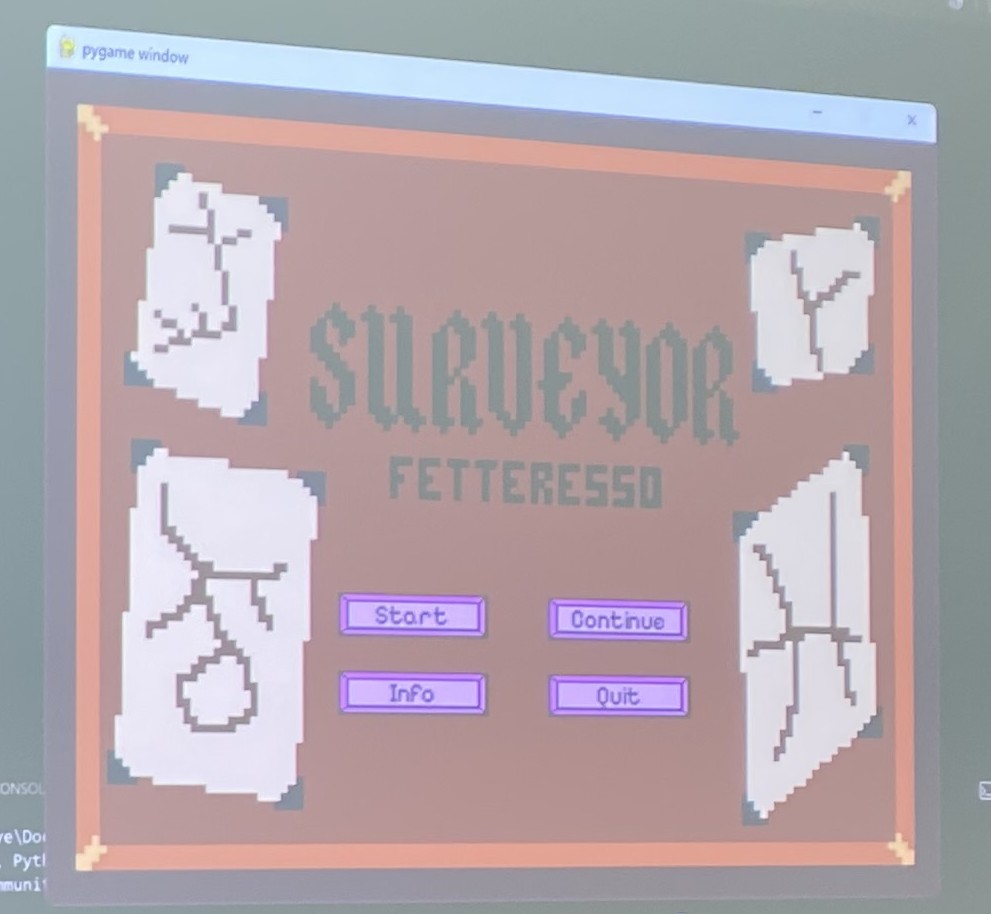
This game was inspired by Fetteresso estate plans from the 19th century. This elegant game is built around a simple ‘spot the difference’ central mechanic framed by a story in which the player takes on the role of an experienced surveyor who is hiring an assistant and needs to choose between three candidates by comparing their estate maps against his own. These in-game maps are closely based on the Fetteresso source material and inspiration was also drawn from one team member’s studies of surveying. On top of this, the game offers dialogue choices that shape the story and there are three different endings. This package is presented with charming pixel art visuals and original music.
DUNDEE EDITION:
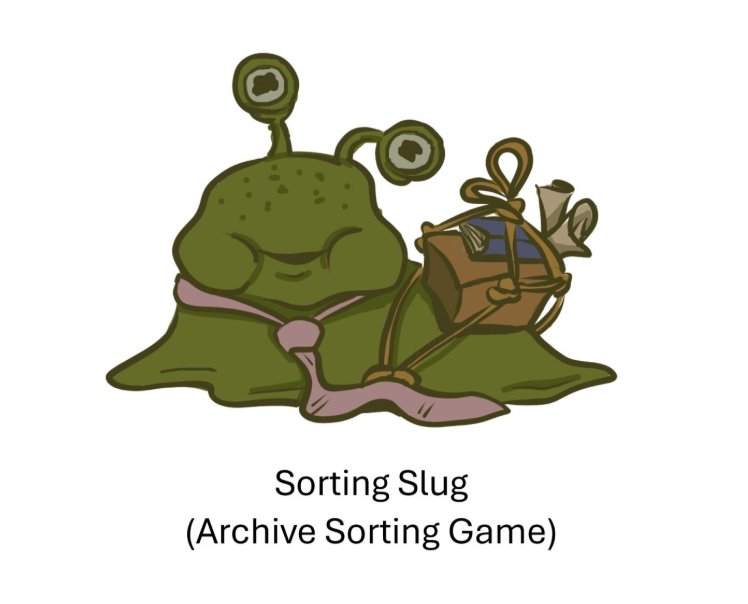
Sorting Slug (Team Cosmic)
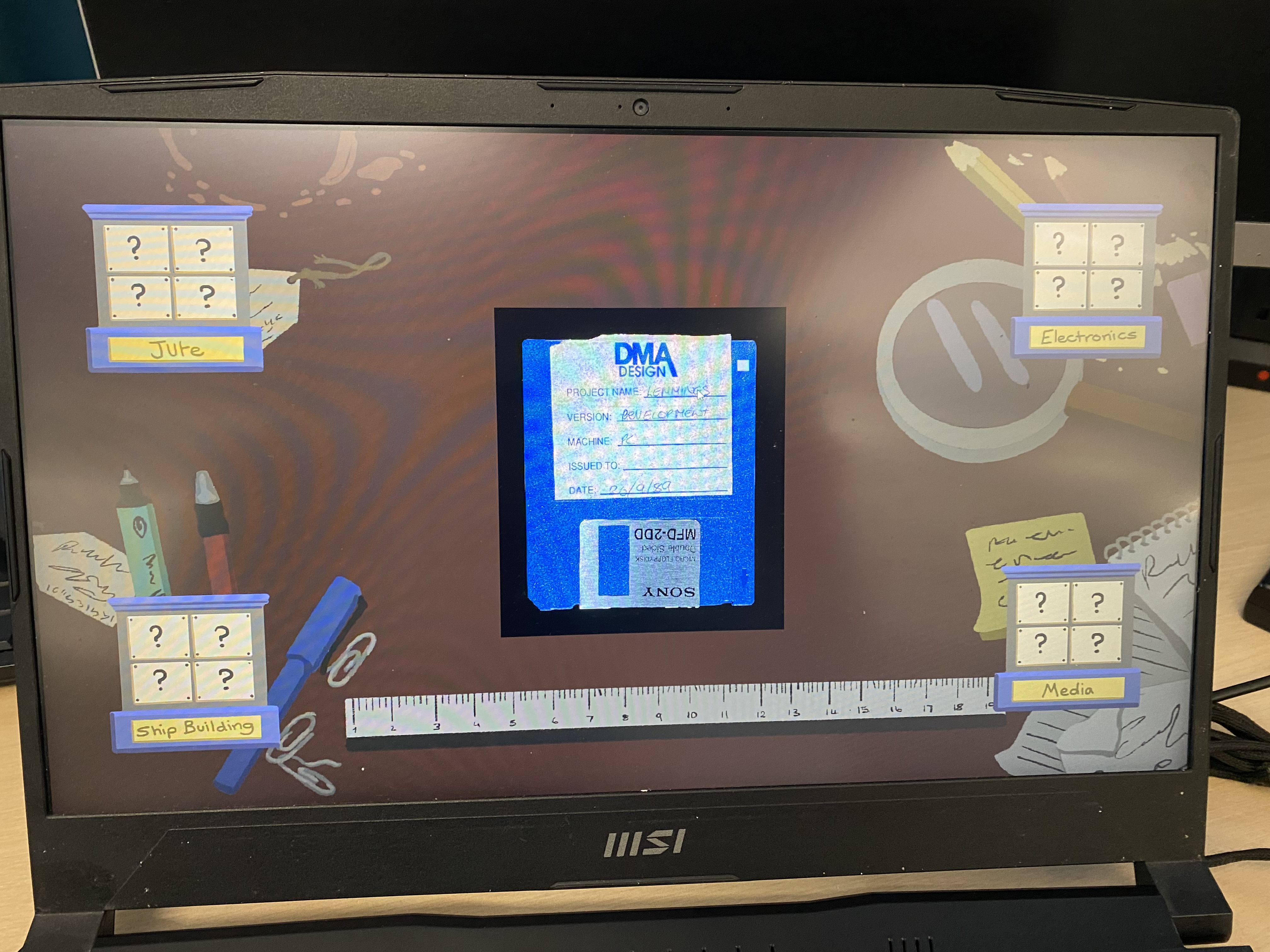
Sorting Slug takes the categorisation of archival objects as its central mechanic, tasking players with sorting items by dragging them into the correct categories. The examples used in the demo were from the collections of The McManus but the team focussed on this simple, engaging and tactile core loop with the intention that it would provide a solid foundation which could be adjusted to suit different audiences and age demographics and rapidly expanded with new content. In this way the game could be adapted for use by different heritage institutions and used for a range of purposes such as crowdsourcing exercises involving the collective interpretation of ambiguous or contested objects. The result is a clean, adaptable design that gestures toward real applications in archival and heritage work.
Spirits of the City (Team Coda)
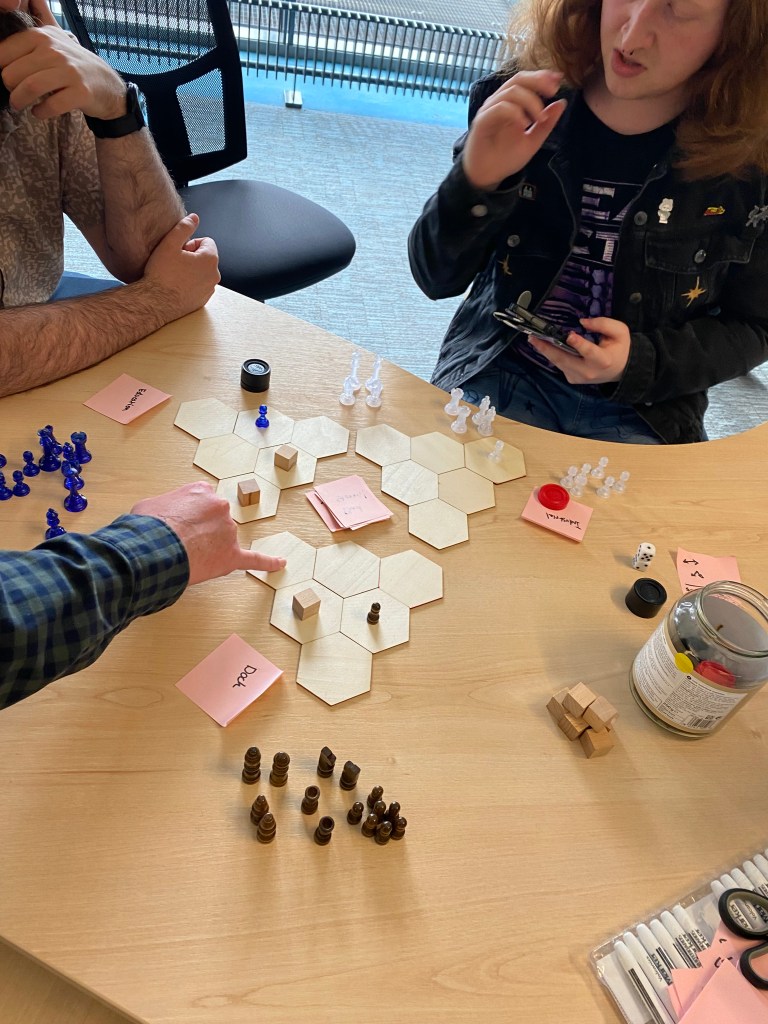
Inspired by the concept of the genius loci — the protective spirit of a place — this cooperative board game for 1-3 puts players in charge of three of Dundee’s economic sectors, drawing on inspirations from The McManus and from Abertay University’s archives. Players must build up their own sectors but the game emphasises their interconnectedness, so players must stay aware of the effects of their actions on the city more broadly. Buildings in each sector share the same mechanical function but carry distinct flavour, grounding the gameplay in a sense of place while making the system adaptable to different cities. The strong sense of character provided by the Dundee setting was also seen in the game’s imaginative event cards based on real historical events, including the arrival of the famous Tay whale and the competing pressures of wartime, which drove demand for jute while depleting the workforce.
Jam in the Archives was funded by Impact & Engagement Accelerator Funding from the University of Aberdeen. It was led by Jackson Armstrong, William Hepburn and Miles Everett (Aberdeen), alongside Kayleigh MacLeod (Abertay), with coordination by Melissa Tan as IEAF Postdoctoral researcher at Aberdeen. These events were judged by Miles Everett and Jane Pirie (Aberdeen), and by William Kavanagh (Abertay) and Lili Bartholomew (The McManus).
A great many thanks are due to all the participants, and to Lisa Collinson, Jane Pirie, and Andrew MacGregor of the Aberdeen University Collections Team, to Ruaraidh Wishart of the Abertay Archives, and to Lili Bartholomew & Julie McCombie of The McManus: Dundee’s Art Gallery & Museum.
Read about the final Jam in the Archives at the National Library of Scotland held the following week, and see the University of Aberdeen news item here.

