Game Jam Showcases Creative Takes on Medieval Archives

Jam in Archives: a medieval game jam
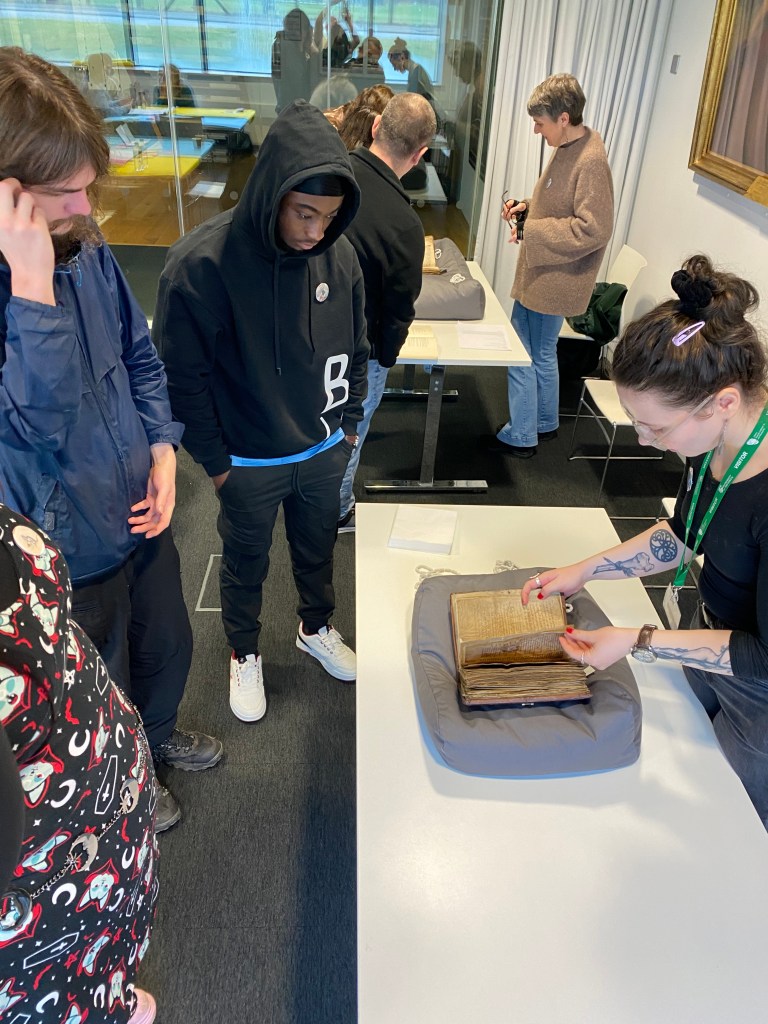
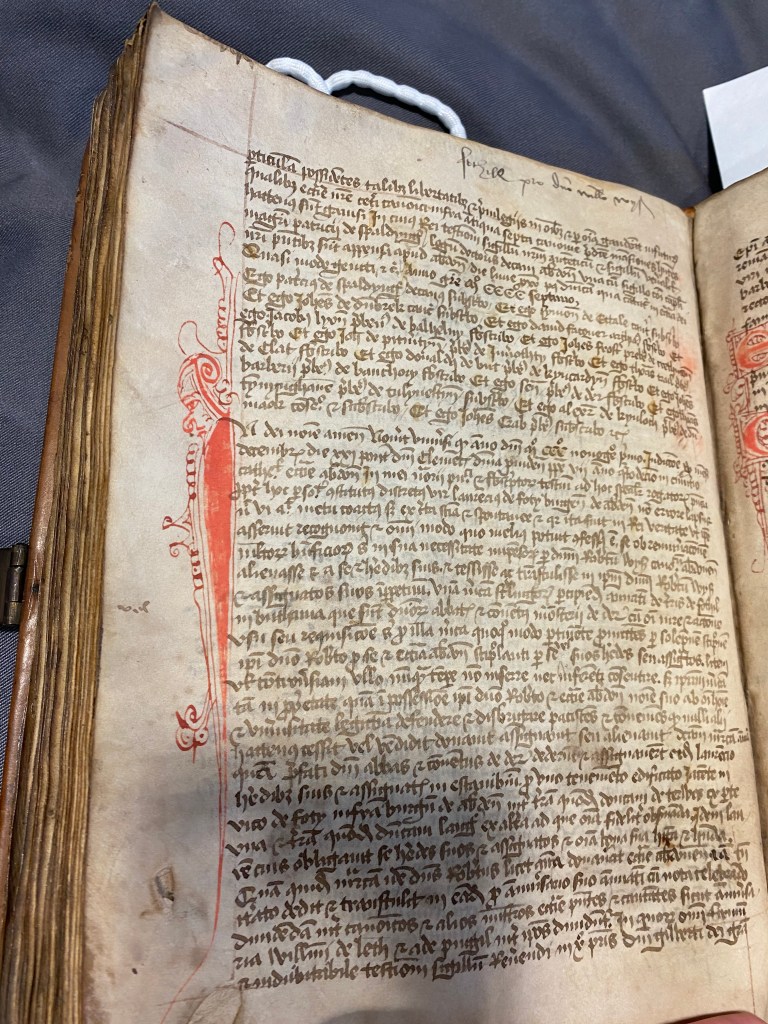
Last week was Jam in Archives: a medieval game jam inspired by manuscripts and books. Participants met on 22 January at the University of Aberdeen. This short, one-day jam focused on three examples of fifteenth-century cartularies, or books of charters, one from Scone Abbey (held by the NLS), one from Glasgow Cathedral, and one from Aberdeen’s St Machar’s Cathedral (both held in Aberdeen’s University Collections). They were introduced by Julia Vallius, a PhD student at Glasgow who has recently completed SGSAH-funded internship with the National Library of Scotland.

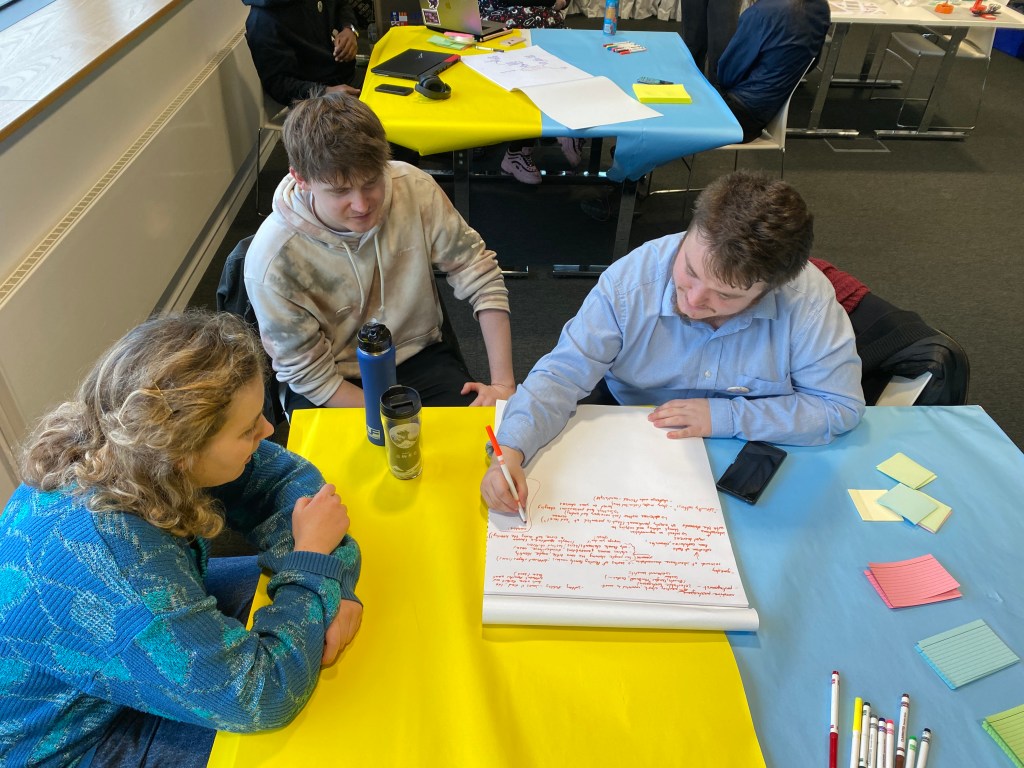
Jackson Armstrong introduced the day and William Hepburn gave an introduction to the variety of forms games can take, and to set out the theme and rules. The theme for the day was revealed to be “recording for the future” and the group formed into three teams. The icebreaker included some name badge making with various medieval images .

The teams had four hours in total to develop their ideas and demonstration materials for a digital game, and prepare a presentation for our guest judge Jon Ingold of inkle Studios.

The first team devised “Scribes of Succession”, a puzzle game which also invites players to learn about medieval records. After the death of a noble lord, his heir must show their claim to inheritance, and fend off the claims of a rival heir. The gameplay involves a series of tasks including locating a cartulary in a cathedral library, investigating who the scribes were that made copies of charters, and puzzling through their different handwriting, and identifying evidence to prove the heir’s right to succession against the rival.

The second team proposed the game entitled “Make your Claim”. In this game set in Scotland following the untimely death of King James II, the player is a clerk whose challenge is to evaluate the claims to lands of rival families. The clerk must decide who to support and whether evidence can be fabricated or ignored.

The third team created “Ink and Soil”, where the player’s job is to manage a medieval abbey’s lands and resources, and build up written records to protect their lands against neighbouring landowners. All the while pilgrims arrive making curveball demands on these resources.


Jon Ingold awarded an imaginary budget to each game. Scribes of Succession got £250,000, Make your Claim got £4,000, and Ink and Soil got £1,000,000 – as an indication of the scale of budget that might be required to realise each vision.

This Jam in the Archives event was a collaboration between University of Aberdeen, RGU, The National Library of Scotland, supported by the Scottish Graduate School for Arts & Humanities, and Common Profyt Games Ltd. Special thanks to the Univeristy Collections team for their support, and to all our participants for their creativity and enthusiasm!

Hands-on Learning: Art, Archaeology and Language for Primary Students

Hetty Haxworth and Kit Martin’s medieval art sessions returned this term in person to an Aberdeenshire school. They were joined by Jovi Fawcett and Jackson Armstrong who brought medieval bones and decoding ancient handwriting to the mix of activities.

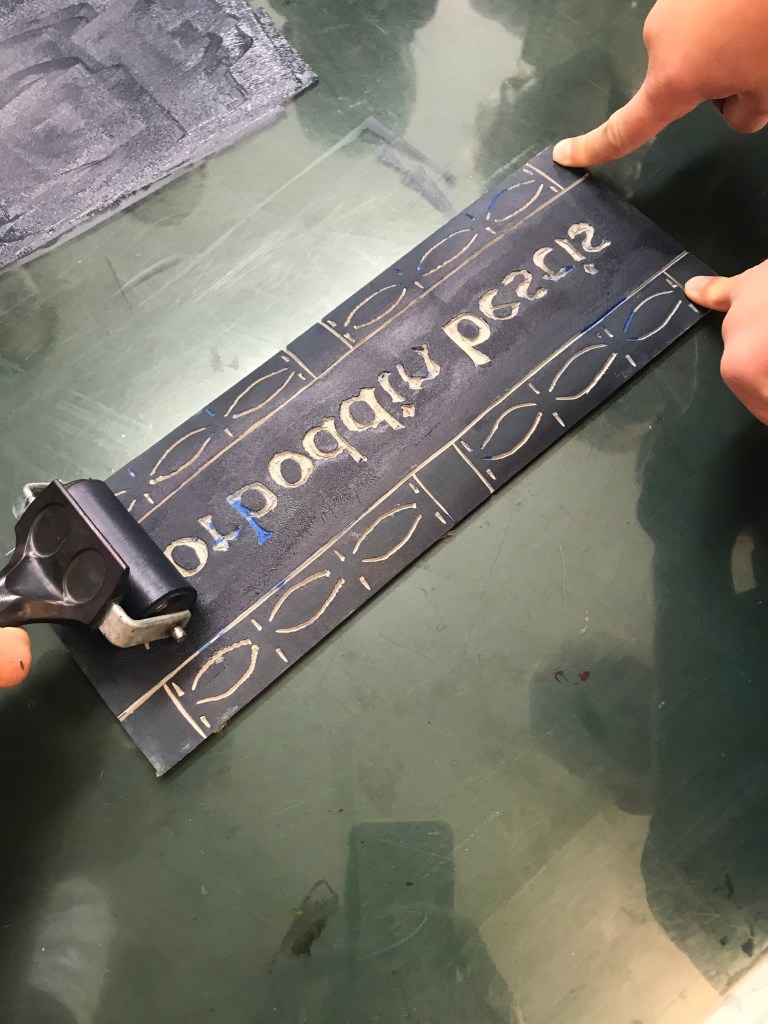
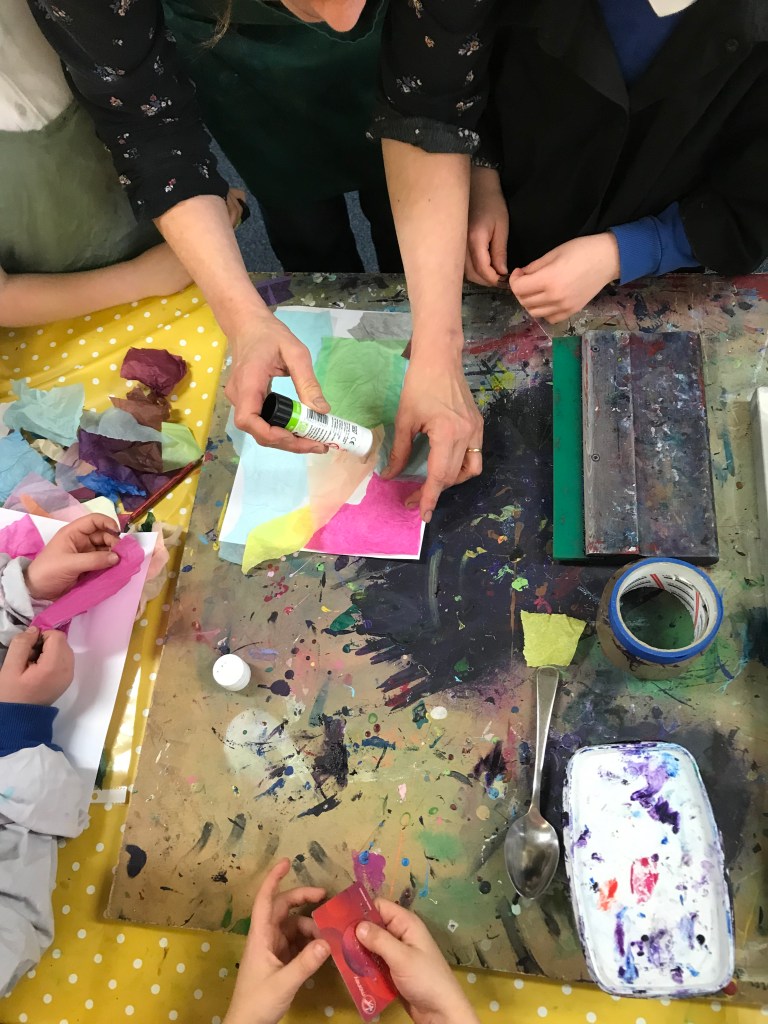
A few years ago artists Hetty Haxworth and Kit Martin worked with the Aberdeen Burgh Records Project to create workshops for primary schools using block printing, monoprinting, collage, design and drawing, all inspired by the content of the Aberdeen Registers Online. Now in person and without any pandemic restrictions (which had meant the original sessions had to be done by instructional video), Hetty, Kit, Jovi and Jackson visited Fettercairn Primary in Aberdeenshire on 31 October and 1 November, and worked with all years from nursery to Primary 7.

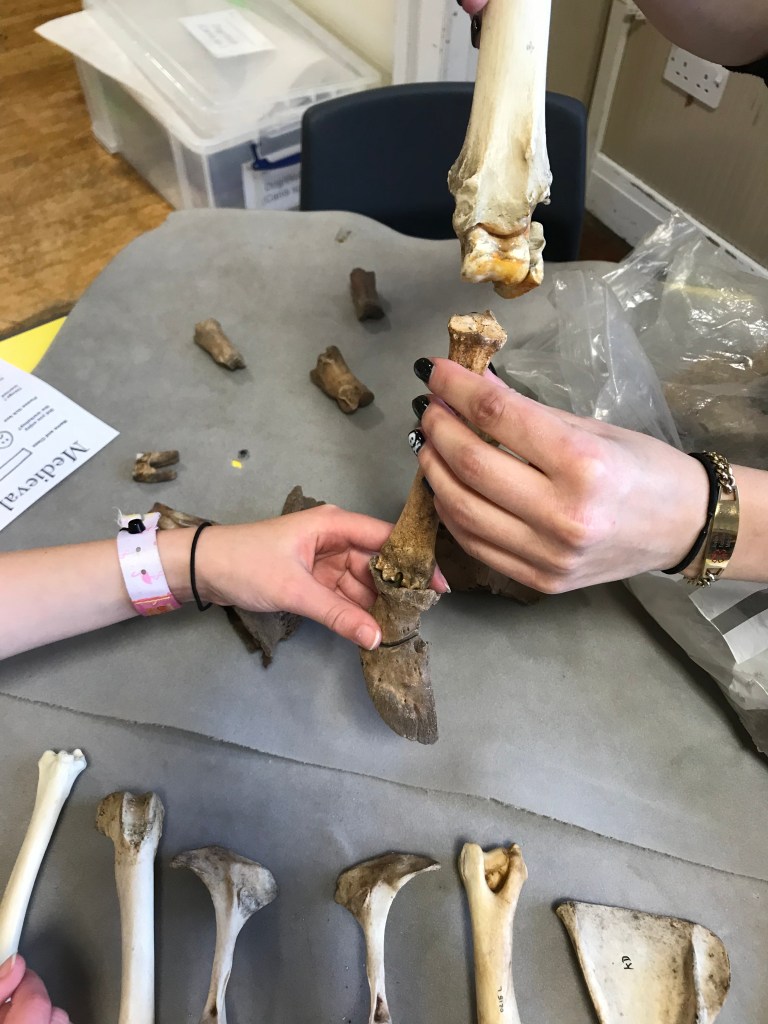
The class groups focused on themes of animals, fish and seafaring in medieval Aberdeen. The Middle Scots phrases ‘rede and suet’ (for salmon) and ‘forboddin bestis’ (for unruly escaped pigs) formed the focus of the artworks that the pupils made in stages by using different printing techniques. PhD student Jovi Fawcett brought examples of medieval and modern bones of sheep and pigs to the school, for the groups to handle. Jackson challenged the pupils to test their palaeography skills and decode examples of letters and words in the ARO.

The result was an exciting mixture of art, archaeology, & historical language. The pupils experienced hands-on practice with print making and drawing. They handled archaeological teaching bones and explored different types of bones articulations, and they encountered Middle Scots words, phrases and medieval handwriting. Feedback from pupils and teachers was positive, and the artworks created by the groups are on display in the school.

Whitefriars of Aberdeen: A Working List of Witnesses to Carmelite Charters

Aberdeen History alum Julia Vallius has created a Working List to identify information about people who were witnesses or affixed their wax seals to many of the charters of the Aberdeen Carmelite friars from 1338 to 1431.

Detail from MARISCHAL/1/6/1/3/15 in University of Aberdeen Museums and Special Collections, licenced under CC By 4.0.

What is it? The Working List tabulates information about the surviving Aberdeen Carmelite charters, listed chronologically. For instance, it records that in 1399 for a charter by which William Crab donated land to the Carmelites, the witnesses included the provost, Adam de Benyn, and twelve other named men. It also records that the seals of William Crab, and of two bailies of the burgh (Simon de Benyn and William Blyndcele) were attached to the charter. This work helps to identify activities of burgh officials and other prominent figures, including in the period from c.1414–c.1433 when there is a gap in the main council register series.

The charters listed here are from the Marischal College Archives, part of the University of Aberdeen’s Special Collections. The Marischal collection in part contains the charters of the Carmelites, or Whitefriars, first established in Aberdeen in 1273.

Two sample transcriptions of charters are included, one in the Middle Scots vernacular, which records a grant in 1421 by Elizabeth Gordon of Gordon, who was the mother of the first earl of Huntly. She made her own gift and also confirmed “ye gift of my lady my eldmoder [grandmother] dam margret of keth ye qwilk my eldmoder has gifin to my said bretheris [the friars] of before tyme gone“.

The charters concerned have some playful illuminations, including that of a cockerel, shown above, and the head of a crowned king in a charter of David II, and intertwined fish, shown below.

Detail from MARISCHAL/1/1/1/4/4 in University of Aberdeen Museums and Special Collections, licenced under CC By 4.0.

Where is it? The Working List is available under a Creative Commons licence on the OSF (Open Science Framework), at https://osf.io/rdsfg/. Its long title is Working List of Witnesses and Authentication of Carmelite Charters, Aberdeen: Held in the Marischal College Archives (University of Aberdeen Museums and Special Collections), version 1.0, https://doi.org/10.17605/osf.io/rdsfg

Detail from MARISCHAL/1/1/1/4/4 in University of Aberdeen Museums and Special Collections,
licenced under CC By 4.0.

Where does it come from? The Working List began as the appendix created by Julia Vallius for her Senior Honours Dissertation entitled ‘Textual identities and urban communities: Understanding the role of charters and burgh records in the formation and creation of community identities, using the Aberdeen Carmelites charters as a case study’ (April 2020), supervised by Jackson Armstrong. Julia’s dissertation won the Kathleen Edwards Prize in Medieval History. Julia is currently undertaking a PhD in Medieval History at the University of Glasgow.

Julia and Jackson have worked over time to compile a first version of the Working List of Witnesses. Future versions can update, extend and augment this resource. Julia and Jackson are grateful for the support of the Museums and Special Collections throughout this project. 

Working List DOI link [ https://doi.org/10.17605/osf.io/rdsfg ]