On 18 February Jackson Armstrong gave a lunchtime talk for Aberdeen Archives, Gallery & Museums, at the Maritime Museum.
The talk explored how the people of medieval Aberdeen made their imprints on the world. They set down in written records aspects of their lives, work, possessions and identities. The more prominent among them affixed personal wax seals to documents to prove their authenticity. Some left memorials to themselves and their relatives carved in stone. Through these and other types of sources – some clear and some more mysterious, and some now held far away from Aberdeen – we can trace fragments of stories of the people who made the burgh their home.
There’s only one thing that old Master Chalmers knew how to grow in the family garden: puzzlement. When he dies in 1511, his two grandchildren can’t believe their ears when they have old Chalmers’ will read out to them: Elizabeth receives an iron padlock, while Thomas inherits the family prayer book with the silver clasp decorated with the Chalmers coat of arms.
Elizabeth sits for a long time with the padlock and fidgets with its key. The lock fits in the palm of her hand. It’s rounded and decorated with a wavy pattern, like lighting, while the key is unadorned. Her grandfather must have imagined her growing up and wanting her jewellery box securely sealed. Is this my legacy? she wonders. Locking things away to never be seen? Was it not I who read from that very prayer book to my grandfather and little brother every night? Is it because I’m a girl that he assumes I want to keep secrets more than I want to read and pray?
Thomas sits in his own corner of the room, mindlessly turning from page to page. The roaring lion on the coat of arms is reaching out its paws to catch him. A family heirloom, entrusted to him. As usual, the letters get mixed up before his eyes and he can feel a headache coming on. I must be a grown man now, he thinks, if I’m supposed to learn all the things my sister does, and do them better. He sighs.
As if brought together by a pair of invisible hands, the siblings get up and meet in the middle of the room. Still silent, they exchange the goods so that the prayer book is in Elizabeth’s hands and the padlock and key in Thomas’. They nod at each other. No one will know.
Coral beads on a silver chain. Two rings, one her mother’s wedding ring, forged with the letters MM and TP for Marjorie Marr and Thomas Prat. A brooch in the shape of a circle with a sword inside. Every piece made of shining silver. Also, a wool mantle lined with rabbit fur. Agnes imagines these items in Uncle Ninian’s home, hidden away in a box under his bed until he needs them. She remembers how he’d come to her house over the years, trying to do all the things that a legal guardian is supposed to do: petting her on the head and asking if she was being fed and clothed properly, sitting down with her to teach her how to read and do accounts, only to get up from the table in the next moment. And she’d follow him like a puppy, playing the game with him of entering each room and locating valuables that she’d help him carry to his horse. He’d take anything from woven tapestries to sets of silver spoons.
‘You’re a good girl, ’ he’d say, quickly looking away as he climbed into the saddle. ‘God bless you, Agnes.’
Slowly but surely, he’d emptied her deceased parents’ house of books, jewellery, kitchen utensils, even furniture. In the final years before Agnes turned twenty-one, her nurse had to use a single pot to cook their meals. They shared between them one pillow to sleep on. What Ninian needed the money for, she didn’t know then. Orphans don’t get to ask their guardians what they use their inheritance for. It was assumed by the town officials that he, being her father’s brother, would act in the interest of the family estate. A young heiress was to listen, obey, and eventually learn. So she did.
Only her mother’s goods did Ninian leave untouched over the years, as though the striking red colour of the coral beads were keeping him away. They invoked the mysteries of God Almighty – Agnes had thought so herself when as a young girl she’d seen them first on her grandmother’s wrist, then on her mother’s. That’s why she, now twenty-one and a week old, is surprised to come home and find these items gone. Ninian’s key is on the table.
‘Very well, ’ Agnes says to her nurse, who’s clasping her heart at the loss of the goods, ‘soon my pockets will be overflowing with the rents from my tenants, now they pay me and not him. You’ll see, when I find the most expensive lawyer in town, it’s not you that will be crying for help.’
In court, Uncle Ninian is a pale shadow of who he was when he first became her guardian. He was self-important then, the legal representative of one of the richest girls in town, a head full of hair and words dancing on his lips like a poet. Whenever someone trespassed onto her estates, he went straight to court, and took her with him, as if he needed a tender girl to witness him act the hero part. Now, they sit opposite each other in the court room, him bald, thin and nervous, her red-cheeked and calm. Her lawyer speaks a language of carefully calculated blame:
‘Ninian Prat has owed a debt to every single one of us at one point or another. We all know the state of his repute in the burgh. We all know he’s a drunk and a gambler. We all know Agnes Prat will have to spend the coming years restoring her parental home to the state it was before her parents’ death, God have mercy on their souls. So I ask you, do you trust this man when he claims that Marjorie Marr’s treasures rightfully belong to him?’
It’s almost too easy. Uncle Ninian has made so many enemies in the burgh, boasting too widely of his influence over the town’s wealthiest child, and making too many promises he’s not kept. In the bustling street outside the tollbooth, Agnes ends up walking home behind her uncle. The crowd at the Market Cross parts to let him through, like he’s a leper among saints. He keeps his head down until he disappears behind a corner.
The following Friday, Ninian doesn’t come to court to hand over the goods or provide evidence for why he should have them. The case is postponed another week, but with the same result. Agnes sends her nurse to his home, suddenly unwilling to send the lawyer to insult her uncle further. But the nurse returns with a report of an empty house where there’s not so much as a pillow to sleep on, save for a single item, left on the threshold wrapped in cloth: Marjorie Marr’s coral beads.
‘Where do you suppose he’s gone?’ Agnes rotates the beads around her wrist.
‘To Hell, if there’s justice, ’ her nurse says. ‘And there’ll always be justice, the court has shown us this.’
Agnes agrees, but when she goes to sit by the window with her mother’s beads, she’s uncertain. Each bead that she touches with her fingers is a reminder of something men of the law rarely speak of. Mercy. Compassion. Redemption. She feels at once too young to understand these words, and far too old.
On a cold November morning in 1501, Cristina Smith comes to the Aberdeen Burgh Court, followed by a line of men. Teeth clenched, nails digging into her palms, Cristina approaches the bailies in the great hall of the tollbooth.
Like most people appearing before the bailies, she has something to prove. After her father’s death, Cristina followed his advice and claimed his workshop as her own. Spacious and bright, its one large window faces south onto the busy street at Green Gate. The workshop had been Cristina’s playground since childhood. As she grew, her father introduced her to the workshop tools and their uses: the anvils of differing sizes, surfaces against which to mould any piece of metal into shape; the forehammer and the hand hammer, too large for her child-sized hand at first but soon enough she used them with ease; and the many tongs hanging in a neat row along the wall. Her father was always well-organised. She’s not about to prove herself to be somebody else’s daughter.
Unlike most people coming to court, Cristina is flanked by a group of twelve men. Despite her simple grey dress, her black overcoat, and the modest wimple covering her hair and neck, being surrounded by such a large group of supporters makes her seem noble. Important. Powerful.
‘The daughter of Andrew Smith?’ the scribe asks her before the bailies speak, ensuring he knows what to put down on the parchment before him.
‘Cristina, ’ she replies. ‘I’m Cristina Smith.’
‘Tell us your issue, ’ one of the bailies requests, though he knows well why she’s come.
Cristina speaks in a voice loud and clear, for the bailies, the scribe, the men behind her – for the entire town – to hear: ‘There’s been murmurs in the community of this town, ’ she says, ‘that I’ve no right to my father’s workshop and the tools there. That I’m no proper heir of his, that my womanhood keeps me from inheriting my father’s tools and his sword that has hung in our house since before I was born. So, revered bailies of this town, I’ve brought you evidence to the contrary. No writs, no documents to go over, but the testimony of the best and most worthy of the smiths of this town.’
One by one, hat in hand, the smiths step forward. Their testimonies are unanimous:
‘Cristina Smith was trained by her father as a blacksmith from girlhood.’
‘She’s as good as a member of our guild, woman or not.’
‘Cristina ought to have the tools and the sword that her father left for her. She’s his only rightful heir.’
The bailies must accept a testimony as united as this. They must accept that a woman, small as she is, has harnessed the support of the town’s most important tradesmen. The blacksmiths, who forge the weapons that defend the town as well as the tools that sustain its daily life, must be kept happy at any cost. Cristina lowers her eyes with a smile as her ownership of her father’s goods is put on paper. She almost wishes she’d brought her sword to court. Its curved handguard, shaped a clamshell, was made by her grandfather, a man with an eye for elegance. The blade itself is so heavy, only a handful of boys were able to lift it when her father invited them into his workshop to play soldiers for a day. They all gasped when she, then fifteen, swung it over her head with all the strength her hard work had built in her arms.
Once back in her workshop, she’ll take the sword from its sheath and hang it on the wall behind her worktable. It’ll be the first thing anyone entering her shop sees. Perhaps this time, the townspeople who’ve complained about her assertiveness will whisper: By God, she seems about ready to forge the world anew.
The fact that she owns three identical gold pendants, each set with a circle of pearls, isn’t something Elizabeth normally announces to the world. She keeps them locked away in a chest under her bed. Once upon a time, there was a chain that allowed one of them to hang freely around their owner’s neck, bouncing up and down when the owner moved. She remembers standing on her toes to catch the shining circle while her mother danced for her in the Great Hall at Meldrum House. She was a playful dancer, Elizabeth’s mother, and she liked to make her hair, dress and jewellery move as she clapped her hands and spun around in circles. When she placed Elizabeth on her own feet and whirled her around the room, the only music the mother’s singing, the pendant swayed before Elizabeth’s eyes. The circle of pearls shone like a constellation of moons, a handmade sky that was hers to inherit.
But Elizabeth is no longer that dancing child. She refuses to wear jewellery that will tell of a painful past. All of it, her golden childhood, her merry mother, is stored in a room behind a bolted door.
Today, the pendants clink in protest from within Elizabeth’s pouch as she approaches the pawnbroker. The woman is aged, as tall as she’s wide, and her smile is well-meaning in the basest of ways. It’s the smile of someone who fancies herself a part-time saviour of people with problems she could not even begin to understand.
‘Here, ’ Elizabeth says, picking the first pendant from her pouch and putting it on the pawnbroker’s table. ‘Just as I told you. Solid gold, five pearls.’
With a small sigh of pleasure, the woman touches each pearl with the tip of her finger, then takes the pendant in her hand. The circle of gold covers her palm almost entirely. She lifts it up and down, weighing it, nodding to herself. Then she looks up, suspicion replacing the smile from before.
‘You’re the widow of that Leslie of Pitcaple man.’
‘The baron of Pitcaple, yes.’
‘Died penniless, I hear.’
‘A landed man. My son’s inherited all his properties.’
‘And you’re the boy’s guardian?’ The pawnbroker’s questions are rapid as she tries to understand Elizabeth’s need for money, a need that, as the woman knows full well, would not exist if Elizabeth were her son’s guardian and received his tenants’ rent until he came of age.
‘No, ’ Elizabeth says behind gritted teeth. ‘My husband gave the guardianship to his brother. But I have my younger son and daughters to provide for. So how much will you pay me for this precious heirloom?’
‘Heirloom?’ the pawnbroker repeats, and Elizabeth bites her tongue. ‘You mean to tell me Pitcaple, the baron, passed this on to you, while he was looking left and right for extra cash?’
‘I don’t mean to tell you that. I am saying, this is mine through inheritance and now I wish to pawn it.’
‘You know where this was made?’ The woman waves the bright slice of gold in front of her, testing Elizabeth’s knowledge.
‘Bruges, 1459.’
‘So then it was shipped to Aberdeen and bought by your family? A family of very wealthy merchants, I assume?’
‘It was bought in Bruges by my lady mother’s father. He was no merchant and my mother was no merchant’s daughter.’
‘Well, ’ the pawnbroker leans in to listen now, the pendant still sitting in her hand, ‘who was your mother then?’
Elizabeth takes a deep breath. ‘My mother was Elizabeth Meldrum, heiress to the Meldrum estates.’ Tears rise in her eyes. There’s too much in that name: the promise of eternal wealth, years of prosperity stretching out like the fields around Meldrum House. She remembers her father’s eyes shining each time he looked at her mother, the golden heiress that brought him the barony of his dreams. Then Elizabeth’s brother, the heir, takes a step forward in her memory, promising her to the first available suitor without the foresight that her by-then dead parents had had. She puts her palms against her face and presses the tears back behind her eyes.
With a small laugh, the pawnbroker shakes her head. ‘That great lady, you mean to tell me she’s your mother and she left you with nothing?’
‘She gave me some properties here in town upon my marriage, and the rents are what sustain me and my children.’
‘Aha. So what do you need money for?’
‘My tenants are refusing to pay me until I repair some of their ceilings and front gates. This is what I’ll do with the money you give me. So I ask you again, how much for this jewellery from Bruges?’
The pawnbroker puts the pendant down. Her fingerprints remain on the surface, like clouds on a golden sky.
‘Three pounds, ’ she offers.
Nodding, Elizabeth reaches into her pouch. She knows her jewellery is valued at three pounds apiece, but has hoped the woman would make an undereducated guess and offer at least five or six pounds.
‘So nine pounds altogether, ’ Elizabeth says, and watches the pawnbroker’s eyes widen at the sight of the two additional pendants.
‘Your mother did indeed provide for you, ’ she exclaims, and goes into the next room to fetch the money.
Elizabeth hugs herself, looking at the row of her mother’s jewellery on the table. If I can only make one thing come true, she thinks, it’ll be that my children will never know this room nor that woman – and that no pawnbroker will ever know them.
This and the following four posts present short stories written by Ebba Strutzenbladh. Ebba has developed them over the course of her recent SGSAH internship with the Aberdeen City & Aberdeenshire Archives. These stories are inspired by entries in the Aberdeen Registers Online which offer insight into the lives of medieval women.
The Green Belt, 1465
The belt is linen, embroidered with fine green thread in a vine-like pattern. Green, a mischievous colour. Is it the shade of grass stains on the back of an errant lady’s dress? Or is it the colour of modesty, Adam and Eve’s hands nervously gathering pieces of green to cover themselves as their nudity strikes them? Embroidering the belt was a shared endeavour, mother and daughter sitting together night after night to complete it in time for the May Festival. They never thought to find out what the other was seeing in her mind as they worked.
Janet, the mother, believes in the rich tradition of green. Everlasting life and prosperity – the vitality an aging man likes to dream about. But the colour also speaks of home and heritage: their wooden house is in the midst of the flourishing quarters called the Green Gate, where they built a business as luxury tailors clothing the very finest merchants and lairds. When the Aberdonian men dressed up in green that spring, playing Robin Hood and Little John with their bows at the May Festival, Janet’s husband Robert had something the others didn’t: a matching belt with his aspirations and values, as well as his legacy, stitched onto it.
Daughter Isabell thinks of pleasure-seeking when she thinks of green. The fairies dancing in the woods at dawn are a greyish green, or so people say. A group of young girls she knows stole urine from one of their pregnant mothers and boiled it with verdigris to dye their wimples green. Giggling, they imagined people in the street watching them as they walked to the market, the girls appearing from within the layers of cloth draped around their faces and necks as though framed by fresh sage leaves. Isabell enjoyed watching the men, her father among them, dressed in that pregnant colour as they shot their arrows at painted barrels during the Festival. They seemed to her like fairies who’d left their lush woods and appeared for everyone to see in the fair May sun.
Now, with Robert’s coffin in the hard January ground, the belt has become detached from meaning. The vitality of its threads seems an impotent joke, the pleasure is forgotten. Robin Hood, the fairies in the forest – they would never grow pale and waste away in fever as Robert has done.
‘Father would have wanted me to have it, ’ says Isabell. ‘It was my last gift to him and so it ties him to me.’
‘You know what ties him to you?’ Janet’s face is half-hidden behind a kerchief wet with tears. ‘Your poor widowed mother, his wife of twenty-three years. And what did I do when you complained the needle was hurting your fingers? I let you go to sleep, Isabell, and finished it myself.’
‘The idea was all mine!’ the daughter claims. ‘It was my thinking that we decorate Father like a creature from the woods.’
‘We did no such thing. The belt was for his prosperity and honour.’
They continue to speak like this, day after day, sometimes their impatience turning to shouts, until the neighbours come and take them to court where the bailies scratch their heads, confused.
‘What’s the value of this belt, then?’ they ask mother and daughter. ‘And why did your late husband and father not bequeath it in his will to the appropriate party?’
‘His will only include household items and such, ’ Janet explains. ‘This is something else entirely, goodmen. It’s a labour of love.’
The bailies, who dislike seeing green in January, believe it’s primarily the colour of confusion: it can mean too many things; it’s seen everywhere in the world, in eyes, forests, and food; it’s not nearer to white than it is to black; its meaning is open, its implications eternal.
‘Who has the belt now?’ the bailies demand.
Learning it’s Isabell, they make a quick ruling to end the green chaos: the daughter will keep the belt. In exchange, she must make Janet a new one, using the same green thread, as well as pay her mother twenty shillings that she owes her, and two bolls of barley for the trouble. Mother and daughter return home to begin a new project: under Janet’s supervision, Isabell makes the first belt she’s ever produced without her mother’s hands next to hers. This time, they both think it’s green like fresh new shoots in the spring.
From July-October 2024 PhD student Ebba Strutzenbladh is exploring ways of responding to the City archive’s holdings through creative writing and immersive storytelling. This is funded by the SGSAH, where Ebba is also blogging. Check out her recent post about her internship here –
On 21 February Jackson Armstrong and William Hepburn gave a talk on ‘Historical Archives & Video Game Development’ in Edinburgh.
This was for the History, Time & Temporality in Music, Sound & Media research cluster, at the Reid School of Music, Edinburgh College of Art. The cluster is running a series this semester on games, coordinated by Dr James Cook.
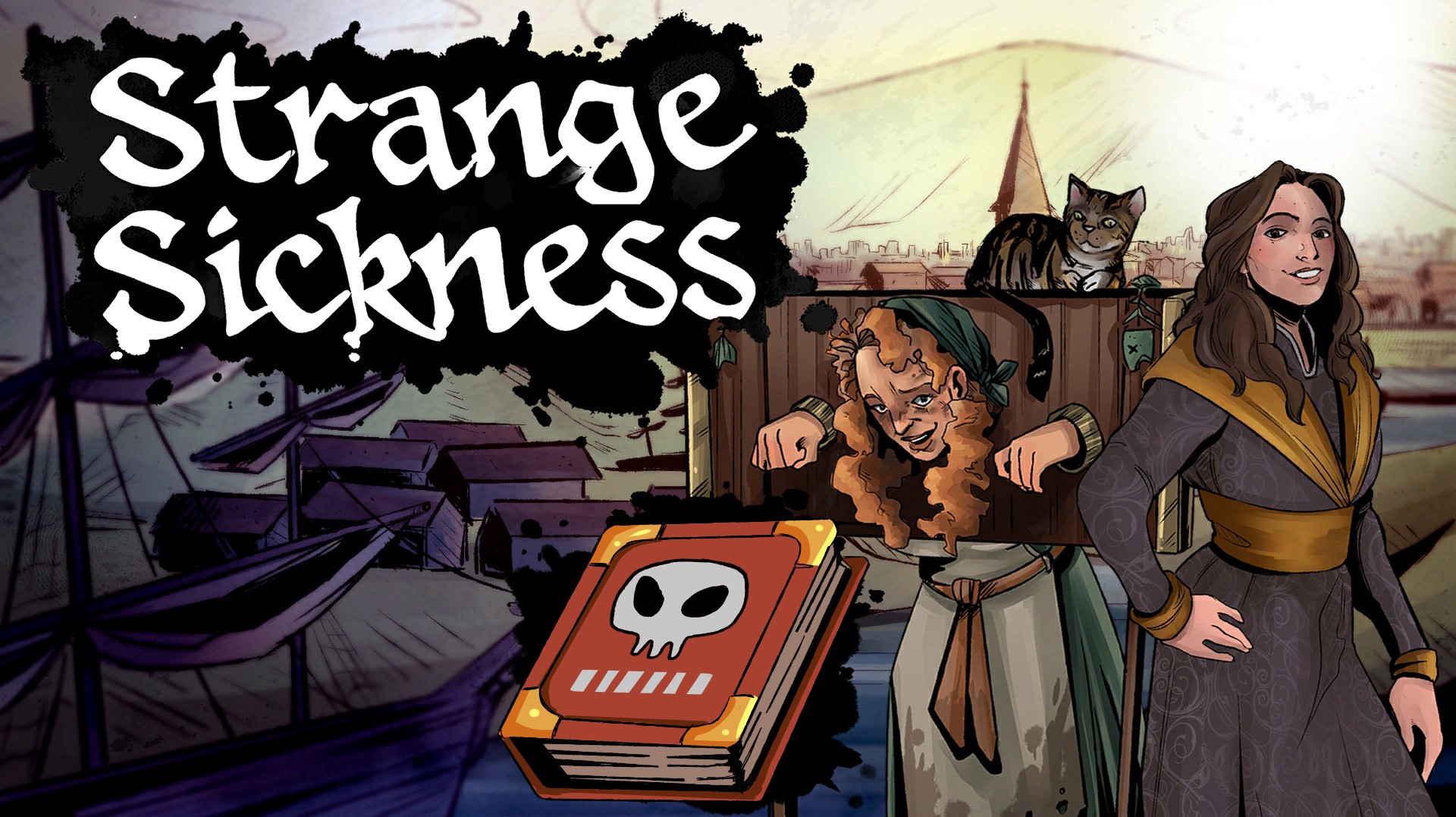
The presentation explored the approach to history adopted in Strange Sickness, the idea of ‘creative translation’ of historical sources, the different ways a game can be historical, and the lessons learned in making this game. There was a stimulating discussion with the audience questions, in person and online, around the textual, visual and aural layers of games.
William Hepburn reflecting on visual representations of lost spaces
History Scotland magazine, Strange Sickness on Mac, and more
A few quick highlights to draw attention to this summer from the burgh records project!
In June Strange Sickness was released for MacOS, to join the version already available on PC. Find out more at strangesickness.com
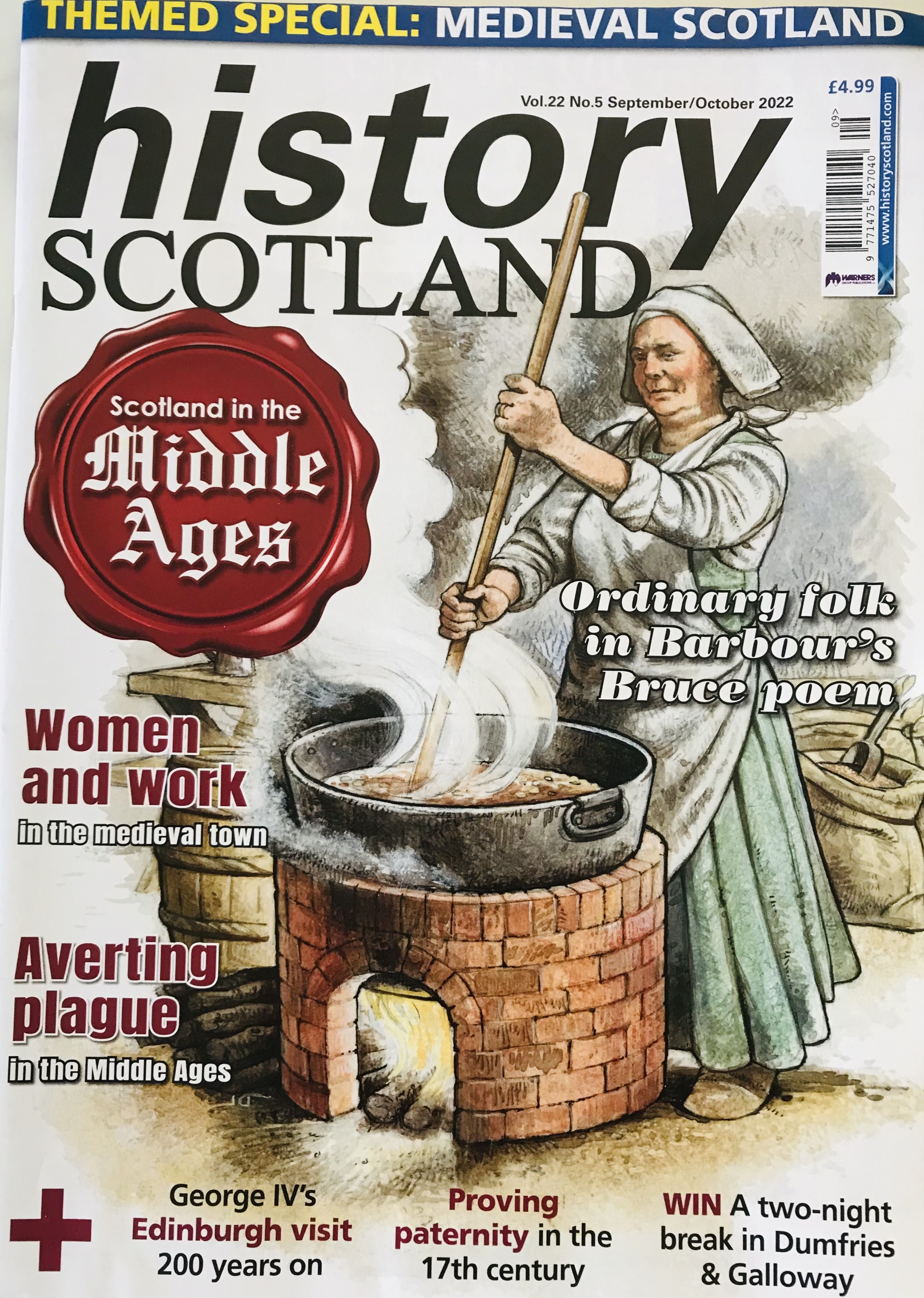
Jackson Armstrong wrote a short piece on the voices of medieval people in History Scotland’s special issue on the middle ages (Sep/Oct 2022 issue). This article explores how the written words and spoken words can be recovered from the Aberdeen council registers. The special issue also features articles on towns, women, plague, and more, by great contributors.
More activities, news and posts are to follow in the coming months. Look out for Songs from Medieval Aberdeen at the Lunchbreak Concert on 10 September!
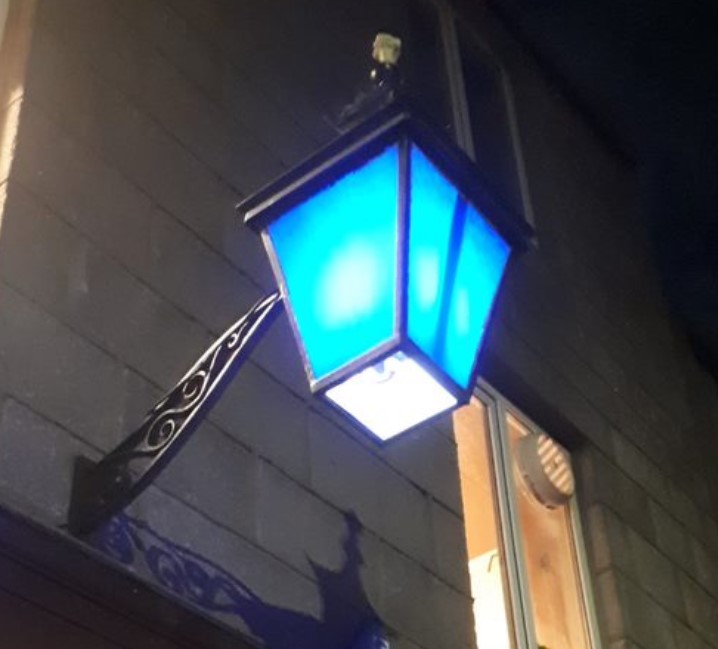
The Strange Sickness team gathered with backers and supporters for an evening of live music and celebration at The Blue Lamp in Aberdeen on Friday 13th May 2022.
To mark the completion of the game William, Katharine, Alana and Jackson came together in person for the first time and met over thirty supporters who were able to be there. The event had generous support from the University of Aberdeen Development Trust.
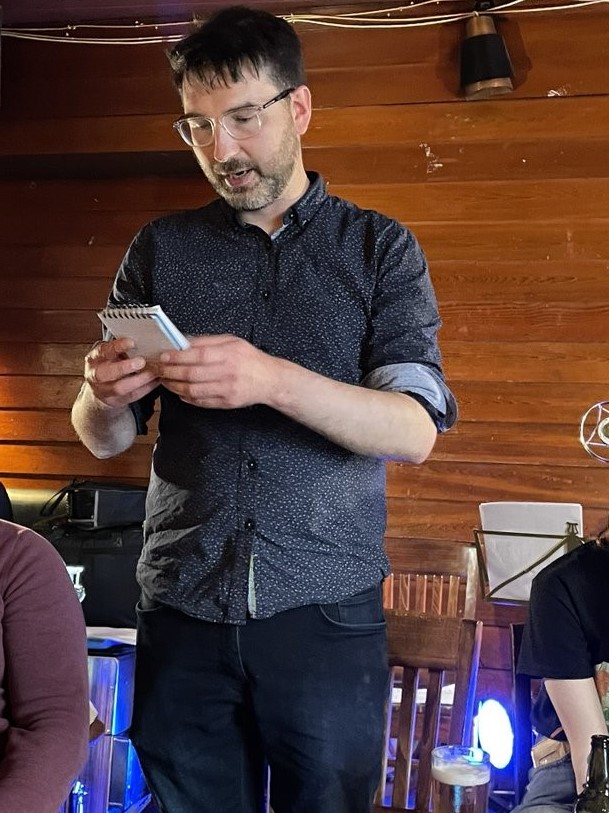
There was a Q&A session with the game creators, followed by a cracking performance by Songs from Medieval Aberdeen, who provided the track for the game’s credits.
Songs from Medieval Aberdeen playing live
Later in the evening the organisers held a raffle draw for a special bottle of Chivas Regal 25 Year Old, kindly gifted by Chivas Brothers, and three game download keys.
Some of the game team went on a sunny excursion to Dunnottar Castle the following morning! It was a great occasion and a fun way to toast the Strange Sickness collaboration.






 aberdeen registers
