The common minstrels of Aberdeen

by Claire Hawes

minstrels

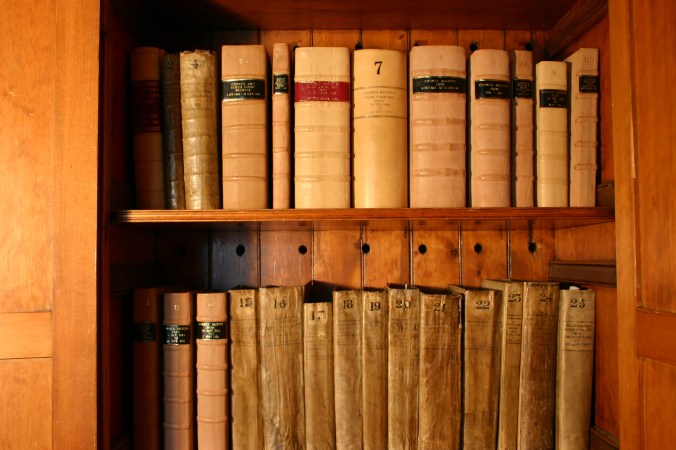
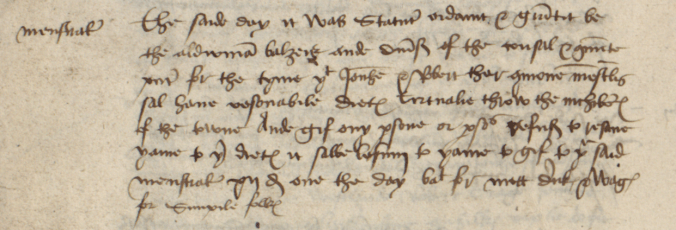
This entry, from volume 7 of the Aberdeen Council Registers, gives a rare insight into the cultural life of the burgh. It is a statute, from 18 January 1493,  which orders that all the burgesses of the town should take turns in hosting John and Robert, the burgh’s minstrels. Any burgess who refused to host would have to pay the minstrels 12 pence, for food, drink and wages. This allowed the cost of the minstrels’ board and lodging to be distributed amongst the burgesses.

The fact that John and Robert were ‘common minstrels’ suggests that they were employed by the town as a whole – the burgh corporation – rather than by individuals, hence the reason that all the burgesses had to contribute to their upkeep. It is likely that their services were required on important occasions such as feast days, meetings of the guild, and perhaps the annual head court, as well as for visits from royal officials, and even the king himself.

In 1507 James IV’s new bride, Margaret Tudor, undertook a ceremonial entry into the city. The event was recorded in verse by William Dunbar, a famous Scottish Renaissance poet. The minstrels are mentioned in the third verse – could it be John and Robert?

Ane fair processioun mett hir at the port,

In a cap of gold and silk full pleasantlie,

Syne at hir entrie with many fair disport

Ressaveit hir on streittis lustilie;

Quhair first the salutatioun honorabilly

Of the sweitt Virgin guidlie mycht be seine,

The sound of menstraillis blawing to the sky:

Be blyth and blisfull, burgh of Aberdein.


Transcription:

The saide day it was statutit, ordanit and grantit be the aldirman, balyeis ande divers of the consal and communite present for the tyme, that Jonhe and Robert – thar commone menstralis – sal have resonabile dietis circualie throw the nichtbouris of the towne. Ande if ony persone or personis refus to resave thame to thar dietis, it sal be lesum to thame to gif to the said menstralis xij d. on the day, batht for mett, drink, and wagis for simpile folkis.

Distinguished visitor and research seminars

This week (3-7 April 2017), the Research Institute of Irish and Scottish Studies (RIISS) was pleased to host Professor Jan Dumolyn (University of Ghent) as a visitor. Professor Dumolyn’s research is concerned with medieval Flanders, and he is the leading historian of medieval Bruges. His time in Aberdeen included meetings with various colleagues on campus, and visits to the University Library’s Special Collections Centre, the Aberdeen City & Aberdeenshire Archives, and the Maritime Museum.

Two seminars were held during the week. On 4 April Dr Claire Hawes of the LACR project presented a paper on ‘Politics and the Public Domain in Fifteenth-Century Scotland’, which led to a discussion of approaches to the study of political culture. Dr Hawes offered a fascinating new perspective on the political history of late medieval and early modern Scotland, suggesting a way forward that moves beyond the well-worn framework of crown-magnate relations. On 6 April Professor Jan Dumolyn spoke on ‘Commercial Connections between Flanders, Scotland and the Hanseatic world: An Interdisciplinary Approach’. Both these seminars prompted comment on a number of points of comparison between Scotland and other European territories in the later middle ages. The latter paper offered a view on the potential for collaboration between historians and archaeologists in the study of trade in bulk commodities, and in particular on how ballast stones can be a means to investigate commercial networks across the North Sea and Baltic Sea. The scope for tracing Scottish migrants in the rich records of Bruges was also touched upon, for example noting the Scottish shore porters of late medieval Bruges, and recalling the fact that the dialect word in that city for fish imported from Scotland was ‘aberdaan’.

Who Killed David Dun?

Who killed David Dun event

‘Who Killed David Dun?’ was an event held at the Aberdeen Town House on 26 February 2017 as part of the Granite Noir festival. Granite Noir was Aberdeen’s first book festival dedicated to crime fiction. When the Law in the Aberdeen Council Registers (LACR) project was asked to take part and create an event for the festival, the first problem that sprang to mind was that the chief subject of crime fiction – murder – was barely evident in the Aberdeen Council Registers which sit at the heart of the project. Murder did not lie within the jurisdiction of the burgh courts recorded in the registers.

What the registers do contain, however, is abundant evidence of disagreements and conflict – often violent – between inhabitants of the medieval town. As we transcribed volume 5 of the Aberdeen Burgh Registers one name seemed to come up with unusual frequency in relation to disturbances of the peace – David Dun. In the office we imagined why David Dun might have fought with other townspeople so often. Though there is nothing to suggest David Dun was murdered, with so many potential enemies he seems like someone who plausibly could have been murdered. I decided to build the LACR contribution to Granite Noir around the fictional murder of David Dun.

David Dun game Shiprow screenshot

As well as placing the LACR event firmly within the theme of the festival, this fictional murder offered a hook on which to hang many insights gleaned from real historical sources. It also provided the driving force for an interactive narrative which would allow the audience to engage directly with the historical sources which form the basis of our work as a research project. The event was designed to function much like interactive books such as the Choose Your Own Adventure or Fighting Fantasy series. The audience was presented with choices and had to decide by majority vote which path the narrative took. Along the way they encountered people, locations and events which were all based on evidence from the Aberdeen Council Registers. They had to look out for clues to help them work out who had killed David Dun. This interactive narrative was built using the open source interactive fiction tool Twine.

Transcription challenge

One challenge in creating the game was to find a way of directly engaging audiences with the historical records. To do so I decided that the character that the audience collectively played would be the town clerk. During the game, the town clerk consulted the Aberdeen Council Registers to cross reference evidence from them with evidence gathered from events and conversations in the narrative. Using the conceit that the town clerk was new and struggled with the writing of previous town clerks, the game included transcription challenges that needed to be passed to ‘unlock’ the relevant evidence from the register. These challenges involved showing actual passages from the registers and asking audiences to try to identify certain words in the fifteenth-century script. Once they had done so they could read translated passages from the registers which offered clues about the identity of the murderer.

In this way, the structure of the game allowed the audience to get a taste of the palaeography and source analysis work carried out by the LACR project – experiences which can normally only be accessed through specialist knowledge and training. It also underlined to the audience that most historical records were not just repositories of information made to be accessed by future generations. Rather, they were actively used in the period in which they were created. For example, records were brought forward as evidence to help resolve medieval court cases. The use of records as evidence to help solve the murder in the game was intended to reflect the active role of written records in medieval Aberdeen.

The event was well-attended and the audience successfully identified the killer of David Dun! Attendees also had the opportunity to inspect one of the original UNESCO-recognised Aberdeen Burgh Registers, which was kindly put on display by Phil Astley (partner of the LACR project and City Archivist for Aberdeen City and Aberdeenshire Archives). In a question session at the end the audience asked insightful questions about the Aberdeen Council Registers and the medieval town. The event was a rewarding experience for me. It made me think about medieval Aberdeen in new ways and revealed some interesting connections between different pieces of evidence from the registers. I would like to thank Lee Randall of Granite Noir and Phil Astley for the opportunity to take part in the festival.

Project Symposium I: Cultures of Law in Urban Northern Europe

By Jackson Armstrong

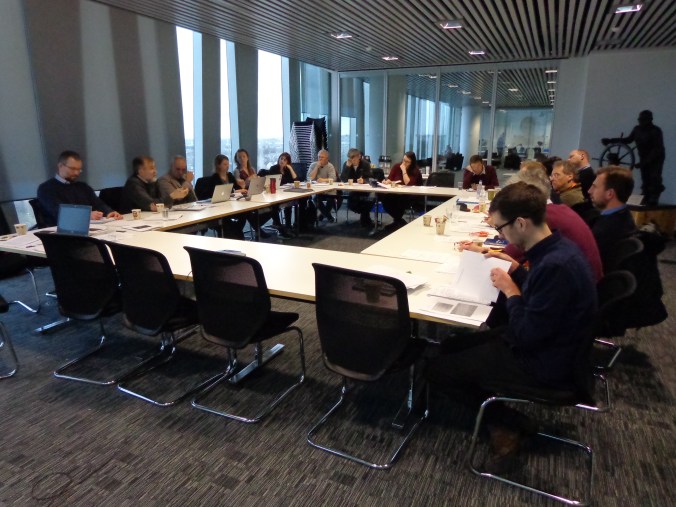
On Friday 24th and Saturday 25th February 2017 our project hosted its first symposium, on the subject of ‘Cultures of Law in Urban Northern Europe’. This was funded by the Research Institute of Irish and Scottish Studies (RIISS) and was held in the Craig Suite at the Sir Duncan C. Rice Library, University of Aberdeen.

symposium-2017-021

After a welcome from Michael P. Brown on behalf of RIISS, and an introduction offered by Jackson Armstrong, the sessions, chaired by Anna Havinga, Adam Wyner, Andrew Mackillop and William Hepburn included the following presentations:

Graeme Small (Durham) and William Hepburn (Aberdeen) – Typology of the written record: materiality and process in the Aberdeen Council Registers

Christian Liddy (Durham) – The publication of law

David Ditchburn (TCD) – Time: Extracts from the Aberdeen Council Registers

Edda Frankot (Aberdeen) – Legal business outside the courts: private and public houses as spaces of law

John Ford (Aberdeen) – The Voyage of the James of Veere: Maritime Law in Aberdeen in the Early Sixteenth Century

Claire Hawes (Aberdeen) – Debt, Morality and the Law in fifteenth-century Aberdeen

Justyna Wubs-Mrozewicz (Amsterdam) – Conflicts about property and inheritances in sixteenth century Danzig

Jelle Haemers (& Chanelle Delameillieure) (Leuven) – Jurisdiction and Marriage in the Fifteenth-Century ‘Registers of the Aldermen’ of Ghent and Leuven

Michael H. Brown (St Andrews) – Burghs and Regalities: Conflicts of Jurisdiction

Jörg Rogge (Mainz) – Pax Urbana – the use of law for the achievement of political goals

Andrew Simpson (Aberdeen) – Texts of the Medieval Scottish Common Law in the Aberdeen Council Registers

Jackson Armstrong (Aberdeen) – ‘Malice’ and motivation for hostility and non-lethal wounding

Joanna Kopaczyk (Edinburgh) – Language as code: language choices and functions in a multilingual legal culture

Anna Havinga (Aberdeen) – Language shift in the Aberdeen Council Registers

Adelyn Wilson (Aberdeen) – Legal education in Aberdeen in the sixteenth and seventeenth centuries

Proceedings on Friday 24th also included a visit to Old Aberdeen House (Aberdeen City and Aberdeenshire Archives) with Phil Astley, and to St Machar Cathedral.

The objective of this first gathering was to present ‘gobbet’ style extracts from primary sources, and to raise questions for development illustrated by those extracts. We look forward to reconvening in 2018 to share draft papers developed from these initial questions and discussions, in collaboration for an edited collection of essays on the subject.

Violence against women in medieval Aberdeen

by Edda Frankot

ACR, 5, p. 296, 25 February 1457

vol-5-296

Item Thomas Raa in amerciamento pro iniusta perturbacione vxoris Johannis Dis’ et emendabit parti lese.

Item dicta vxor in amerciamento pro iniusta perturbacione ipsius Johannis [sic; recte: Thome?] et cetera.

Item Thomas Raa in amerciament1 for unjust disturbance of the wife of John Dis’ and will pay amends to the injured party.

Item the said wife in amerciament for unjust disturbance of the same John et cetera.

ACR, 5, p. 304, 15 Jul 1457

vol-5-304

Eodem die Johannes Glenny adiudicatur in amerciamento pro iniusta perturbacione vxoris Johannis Spront et emendabit parti lese ad visum proborum.

Item Johannes Spront adiudicabatur in amerciamento pro iniusta perturbacione dicti Johannis Glenny et emendabit et cetera.

The same day John Glenny is judged in amerciament for unjust disturbance of the wife of John Spront and will pay amends to the injured party in accordance with the vision of honest [men].

Item John Spront is judged in amerciament for unjust disturbance of the said John Glenny and will pay amends et cetera.

The Council Registers include many reference to perturbatio/perturbio and, in its Scots form, strub(u)lance. This appears to have been used for a broad range of disturbances which only occasionally are narrowed down further to ‘perturbatio burgi’ (disturbance of the burgh), or ‘strublance by word’, but which stops short of including violence which resulted in the drawing of blood. Regularly, two people are convicted, one after the other, for perturbatio against the other. Generally the entries are very short, like the examples above, and include no further details on the context of the disturbance: the time, the place and the reason for the dispute. Nor do we get any sense of the seriousness of the conflict. A nice exception to this is the case of ‘strubulance and skathtinge [harming]’ from 1491 which consisted of ‘castyne of wattir and filtht in his house’.2

Usually the convicted and the victims are men, but not always. In the first example above the wife of John Dis’ is both victim and disturber. I think we can assume that the second entry is supposed to say that she was convicted of perturbatio against Thomas, not against her own husband. There is no indication from the sources which of the two may have initiated the dispute. In the second example, the wife of John Spront is the victim of John Glenny, but John Glenny himself was also convicted for perturbatio against Spront, suggesting he defended his wife against unwanted attention. A point to note is the fact that neither of the women is named. Though some women do appear under their own name in the Aberdeen records, they very regularly just appear as the wife of their husbands. In this case it is unclear whether John Dis or his wife was considered responsible for paying the amends to Thomas Raa, as the entry does not extend that far.

It is likely that many of the cases of perturbatio and strublance took place within the context of public houses, which would mainly have been frequented by men, though as said there is very little specific evidence with regards to this in the Aberdeen sources. My main point of reference are the sources from the Dutch town of Kampen from around the same period, which include a lot more detail in cases of violence. In Kampen, too, the groups of perpetrator and victims were mainly made up of men, and the majority of the violence took place in public houses. A drinking jug was a popular choice for a weapon. Unfortunately, similar details are usually lacking in Aberdeen, but these four short entries perhaps leave more to the imagination…


  1. Amerciament: The condition of being subject to a pecuniary penalty at the discretion of the court or judge. http://www.dsl.ac.uk/entry/dost/amerciament 
  2. ACR, 7, p. 273 (14 Oct 1491). 

A Genoese merchant in medieval Aberdeen – a case from the lost ‘volume three’

by Edda Frankot

The Aberdeen Council Registers form an almost complete set of records: the only extensive period which is not covered by the registers runs from the middle of the year 1414 to the end of 1433. Even although there is only one volume missing in the sequence of volumes that is currently extant, namely volume three, former Aberdeen City Archivist, Judith Cripps, in a 1981 report on the matter argued that there may well have been three books that covered the period from 1414-33.1 By the early nineteenth century only the middle part, dating to 1426-29, had survived. At that time, William Kennedy, author of the Annals of Aberdeen, reported that he had seen this part some years before, but that it had ‘lately been mislaid’.2 A recent discovery by LACR’s own project director, Jackson Armstrong, suggests that fifty years earlier this part had also been the only remaining evidence from the period 1426-29. This discovery was the presence of a manuscript with extracts of the burgh records, including ones from 1426-29, in the Aberdeen University Library. For more on this discovery, see this week’s press release.

The extracts were made by James Man, who intended to write a history of Aberdeen. Most of his notes are short summaries of the contents of the burgh records, with occasional short quotes from the original in Latin. Seeing that volume two of the registers is almost entirely in Latin, whereas only 5-10% of volume four is in Scots, the vast majority of volume three would be expected to have been in Latin too. But it appears that Man also came across at least one entry in Scots. This is the only entry from 1426-29 that he transcribed in full, and its language is clearly different from that of the rest of Man’s notes: it is in Middle Scots and reads much like other entries in Scots from the fifteenth century elsewhere in the registers.

This specific entry is also interesting in that it features one of the only known instances of a southern European merchant active in Aberdeen. Pelegrino Grellus was a merchant from Genoa who, with his brother Lazarino, appears regularly in the royal Exchequer Rolls in the late 1420s and early 1430s, at about the same time as the two brothers appear in the Aberdeen records.3 The entry, dated 1426, concerns a dispute between ‘Pylgrime mirchand of Gene (=Genoa)’ and Jelm (or John?) van Wrey, whose place of origin remains to be identified, and his shipmen. Man may have had some trouble reading the place names in the original, as the first few letters of the word in his copy are difficult to identify. It looks something like ‘Mineth’ and is likely to be a place in the Low Countries. The alderman (provost), bailies and community of Aberdeen determined that Van Wrey, who was shipmaster of a ‘bus’, and his shipmen should calculate their fees (‘and se qwhat is acht thaim of thair fees’), which Pelegrino should then pay to the sailors. In addition, it was determined that the shipmaster should sail to Lazarino in Edinburgh. It appears that another decision had to be made there as to who should pay the shipmen’s fees for that part of the journey: the shipmaster or Lazarino, but it is not entirely clear from the notes whose decision this was to make.4

It may be that Pelegrino was in Aberdeen in relation with the transactions detailed in the Exchequer Roll, that is to say collecting salmon as part of his payment by the king for supplying the court, though there is no mention of a payment to the brothers in the Exchequer Roll for 1426-7.5 A year later, Pelegrino did receive thirty lasts and two barrels of salmon, in addition to another eleven lasts and eleven small barrels. For 1428-9 the two brothers are named together.6. It may also be that Pelegrino and Lazarino were already active in Scottish trade before they started supplying the king.

It is rare to come across southern European merchants active in Scottish trade. Taken as a whole, there were few foreign merchants who resided in Scotland in the later middle ages. There were no communities of merchants residing in any of the Scottish burghs in this period as there were in other towns throughout Europe (such as, for example, the Scots in Bruges and later in Veere), not even in Edinburgh.7 In addition, the majority of merchants who did come to Scotland were either English, Dutch, Flemish or Hanseatic (especially from Stralsund and Danzig). The most notable Aberdeen resident with a presumed southern European connection was William of Spaigne/Spanye, who appears in volumes four and five and may well have appeared in volume three, as his first appearance is on page six of volume four. William of Spaigne was a councillor in the late 1430s and early 1440s and appears finally in 1450. In that same year a Jonet Spaigne is listed in an account. She was perhaps a relation, either a daughter or a sister. Judging by the fact that William was a councillor, he must have been fairly well established in Aberdeen by the late 1430s. Despite his suggestive surname, we do not know whether he came from Spain himself, or descended from a Spaniard. We do know that he owned some property on the Gallowgate in the late 1440s.8

There is also no evidence as to where the Genoese Pelegrino resided, but his brother owned a house in Kirkcudbright in the mid-fifteenth century and served as custumar of that town in 1455 and 1460, so many years after the entry from 1426.9 In 1426 Lazarino appears to have been in Edinburgh, though it is not clear whether he was a permanent resident. Unfortunately, any other potential appearances in volume three are lost forever, like most other Scottish burgh records from that period. But thanks to the efforts of James Man in the 1700s we have at least gained a glimpse into Aberdeen in the 1420s and its links with the outside world.


  1. Report to City of Aberdeen District Council on Missing Register of Council 1414-1434, Judith A. Cripps, City of Aberdeen Archivist, 29 June 1981. 
  2. Letter from the Scottish Record Office (John Imrie) to John Wilson, Town Clerk of Aberdeen, 2 February 1981. 
  3. ER IV, 443, 444, 445, 472, 507, 531, 542, 621. 
  4. AUL, MS 532, p. 13. 
  5. With regards to supplying the court, see ER IV, cxlv 
  6. ER IV, 443; 472, 507. 
  7. David Ditchburn, Scotland and Europe: the Medieval Kingdom and its Contacts with Christendom, c. 1215-1545, volume 1: Religion, Culture and Commerce (East Linton 2000), 204; Edda Frankot, ‘Aberdeen and the east coast of Scotland. Autonomy on the periphery’, in: Wim Blockmans, Mikhail Krom and Justyna Wubs-Mrozewicz, eds, Routledge Handbook of Maritime Trade around Europe, 1300-1600. Commercial Networks and Urban Autonomy (Woodbridge: Routledge, forthcoming 2017), 409-25, at 415. 
  8. ACR 4, pp. 6, 103, 139; ACR 5(1), pp. 25, 26, 116; ACR 5(2), pp. 647, 659, 662, 663, 667, 674, 682, 691, 692. 
  9. Ditchburn, Scotland and Europe, 204. 

LACR – The view from the Archive

The records that are at the heart of the ‘Law in the Aberdeen Council Registers’ (LACR) project are kept in the beautiful Charter Room on the third floor of Aberdeen’s Town House where they are cared for by the staff of Aberdeen City & Aberdeenshire Archives. Of course the Archive service, formed in 1980, is the latest in a long line of guardians who have ensured the survival of the city’s unique UNESCO-recognised Burgh Registers.

21/11/11 Aberdeen Archives

A question that is frequently asked by visitors is: why does Aberdeen have such a remarkable collection of late-medieval records whereas only fragments remain for other Scottish towns during this period? This is probably the result of three things: the geographical location of Aberdeen which meant that it, and its records, escaped the worst excesses of the Reformation, a culture of good record keeping within the burgh and a healthy dose of good luck. In particular, their survival is testament to the fact that successive town clerks, the predecessors to the current Archive team, saw the records as having important evidential value and were therefore worth preserving. That evidential value persists and is the focus of the current project.

One of the primary functions of the Archive service is to make the records in its care as widely available as possible. A major hurdle to realising this aim for the medieval Burgh Registers is that the language and handwriting of the original text makes them well-nigh impenetrable to all but the expert palaeographer. Aberdeen City & Aberdeenshire Archives sees the current LACR project as the essential foundation for making the fascinating information contained within the records available to those who are not experts. If you follow this blog regularly, you will already have read some riveting stories of life within medieval Aberdeen. Such vignettes are captivating and can help tell the story of the city to tourists, school pupils and locals with a fascination in how their town has developed.

53

The task of opening up the records to this wider audience is too large for the Archive service to achieve on its own and we are immensely proud to be in partnership with the University on the LACR project. The partnership is already having significant knock-on benefits with the Archive participating in many associated public engagement activities. In September Phil Astley, City Archivist, presented a paper about the project at the annual Archive and Records Association Conference in London while November will see the Archive hosting a meeting of the UK National Commission for UNESCO at the Town House. Major regional cultural events taking place in 2017 in Aberdeen and the North East of Scotland such as Spectra, Look Again and the Granite Noir writing festival will all have input from the Archives. All this follows the much higher profile that the service has achieved through the recognition of its records by UNESCO UK and the positive publicity surrounding the LACR project. We are confident there will be many more exciting opportunities to come.

Explorathon 16′: Pirates, plunder and shipwreck

explorathon-16-logo

Have you ever wondered what a medieval pirate was like? Join us at the Aberdeen Maritime Museum on Friday 30 September from 12:30-1:30 to find out!

The event is part of Explorathon 16′ (http://www.explorathon.co.uk/Aberdeen) and is described on their website:

‘Aberdeen was a European economic hub centuries before the discovery of oil but frequently upset its continental neighbours by turning a blind eye to piracy. Join members of the Law in the Aberdeen Council Registers project team for an exploration of the darker side of medieval overseas trade, and an overview of exciting new work that is unlocking the City’s UNESCO-recognised ancient records.’

On the day Edda Frankot will transport us back to the world of piracy and seafaring around medieval Aberdeen and ask the audience to step into the shoes of those making legal judgements about cases of shipwreck. Jackson Armstrong will highlight the international significance of the rich records of medieval Aberdeen which allow us to find out about this maritime world. William Hepburn will show what the handwriting in these records looks like and how we can decipher it. Anna Havinga will look at the language of the records and invite the audience to interpret old Scots words.

So, if you want to know more about pirates, plunder and shipwreck as well as the exciting research underway on Aberdeen’s medieval records, join us this Friday!

The event is free and suitable for ages 12 and over. Booking is required and can be done here: http://www.abdn.ac.uk/events/booking/pirates-plunder-and-shipwrecks-from-aberdeens-medieval-archives-explorathon16-127.php


LACR on tour – EAUH conference in Helsinki

by Edda Frankot

The first outing of the Law in the Aberdeen Council Registers (LACR) project at an academic gathering took place at the bi-annual conference of the European Association for Urban History (EAUH) which, this year, met in the beautiful capital city of Finland, Helsinki, from 24 to 27 August. The conference was held in the grand central building of the city’s university, which shares a space along Helsinki’s Senate Square with the beautiful Lutheran Cathedral. As we learned at the conference, the buildings around the square were all built as part of a great overhaul of Helsinki’s city centre in the 1820s and 1830s by German architect Carl Ludvig Engel, on orders from the Russian tsar, to a state befitting its new role as capital of the autonomous Finnish province of the Russian Empire (from 1809 to 1917). A statue of Tsar Alexander II (assassinated 1881), popular among Helsinki’s citizens, has been given pride of place at the centre of the square. At the end of August the city appeared very lively, partly due to a cultural festival in the city centre.
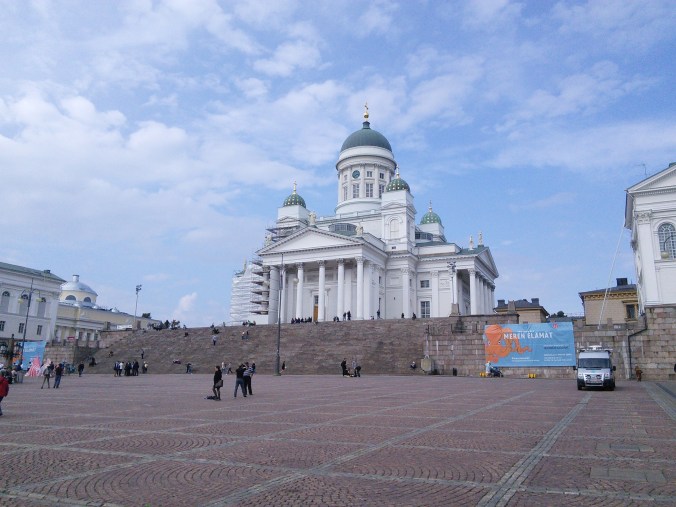
img_20160825_124021

Lutheran Cathedral

img_20160825_162244

Statue of Tsar Alexander II in front of the former Senate building

Approximately 750 attendees gathered for a wide array of papers relating to urban history from all regions of the world and from ancient times until the present. The conference started in the early evening of the 24th with a general welcome, a pair of keynote lectures, by Riita Nikula and Maarten Prak, and a lovely musical intermezzo by a small male choir. The remainder of the conference consisted mainly of various long parallel sessions which were split into two, with some shorter sessions included as well. The longer sessions allowed for a wider than usual range of aspects concerning a subject to be elaborated upon. Most of the speakers uploaded a full version of their paper before the conference, but at the conference itself only shorter versions of these, of about 10 minutes each, were presented. This generally allowed for more time for discussion, though one session I attended actually included eleven speakers (!). Because the presentations were brief, this ended up not being too much of a strain on the senses, though the discussion did have to be cut rather short. The conference also included a most welcoming reception in a beautiful room at city hall, at which we could also enjoy the hilarious Bonk exhibition.1
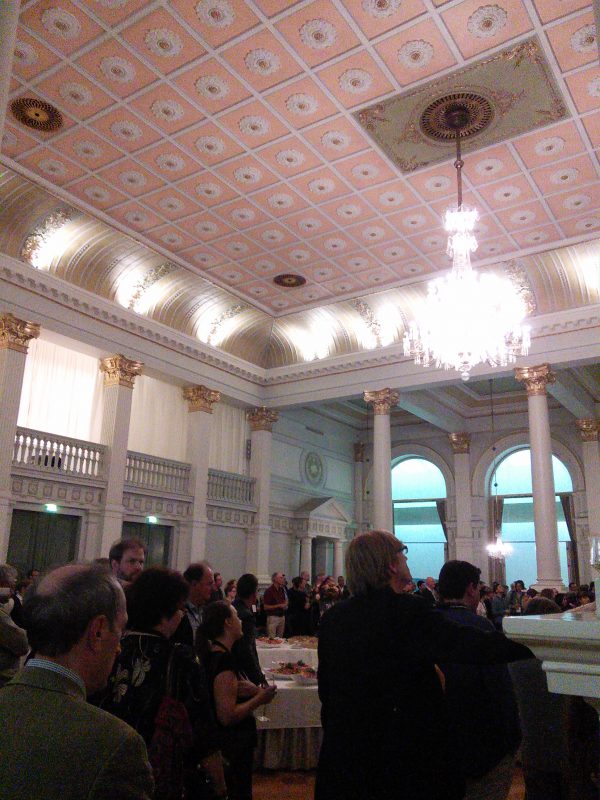
img_20160825_173356

Conference reception at Helsinki City Hall

There were some excellent papers. I particularly enjoyed a presentation on residential segregation in nineteenth-century New York City by Gergely Baics, who is a very engaging speaker. The keynote by Maarten Prak, urging urban historians to focus their research more deliberately on a specific agenda to aid the success of funding applications and increase impact, was also enlightening. Prak suggested three main topics of research as part of this agenda: immigration, creativity and citizenship. Of these three citizenship, especially what Prak called practical citizenship, including political, economic and military participation (in, for example, city councils, guilds and civic militias), is most relevant to our project.

The paper which I presented, entitled ‘Opening the Registers: Digital Humanities and the Aberdeen Burgh Records’, focussed specifically on the Digital Humanities side of the LACR project and the question how archives and urban historians can best work together in the age of digital transformation.

In the case of LACR the objectives of the City Archives and urban historians, as well as scholars from law, computing and socio-linguistics, at the University of Aberdeen come together naturally. Our focus upon the UNESCO-recognised Aberdeen Council Registers, the only source of its kind from urban Scotland which covers (almost) the whole of the fifteenth century, is very straightforward and logical. But in other cases the choice of which archival sources to digitise may not be so clear-cut. There is, therefore, a real danger that certain sources will be quietly forgotten when they remain available only in an analogue form while others, which are considered more important for various reasons, are made widely accessible through digitisation. Resources for digitisation are limited, and choices need to be made, but archivists and historians need to cooperate to ensure best practice.2

Other papers in the session also focussed on digital archives relevant for urban history, both medieval and modern. Of particular relevance to LACR was the paper on the Du:cac (Dubrovnik: Civitas et Acta Consiliorum) project.3 This is producing transcriptions of a similar source to ours from medieval Dubrovnik, Croatia. That project is concerned with geographical locations, which are then linked to the relevant spot on a map of the city which was produced specifically for this project (see screenshot below). The result will be a useful resource for the study of historical urban development. From the perspective of our project, it is an inspiring example of what can in principle be done with material like that for Aberdeen. Once we have produced the digital transcription, the possibilities of what might be done next are wide-ranging indeed!

screenshot-ducac

Screenshot from the du:cac website, showing a segment of the town plan with dots which link to relevant transcriptions of each location (http://ducac.ipu.hr/project/mapping/e6-segment)

Another paper in the session was presented by two archivists from the Copenhagen archives who spoke about their efforts to digitise some important (modern) resources for social history by making use of crowdsourcing, whereby volunteers transcribe or index documents. Crowdsourcing presents a specific set of challenges, but has been used successfully in a number of projects.4 Very interesting was also the presentation on the iron and steel archives of Middlesbrough. As the steelworks there have recently closed, the remaining archives and sites related to the works have become an important focal point of public engagement with the city’s heritage. This is a nice example of how history, archives and heritage can inspire civic public engagement. We hope that our project can set the foundations for similar opportunities for Aberdeen, while at the same time providing abundant material for historians, lawyers and linguists to study.

  1. https://en-gb.facebook.com/BonkExpo2012/ 
  2. With regards to this see also Gerben Zaagsma, ‘On Digital History’, BMGN – Low Countries Historical Review 128 Digital History (2013), 3-29; Charles Jeurgens, ‘The Scent of the Digital Archive: Dilemmas with Archive Digitisation’, BMGN – Low Countries Historical Review 128 Digital History (2013), 30-54. 
  3. Available at http://ducac.ipu.hr/project/. Accessed 16 September 2016. 
  4. For example: the Suda On Line project, available at: http://www.stoa.org/sol/history.shtml; and Itinera Nova for which 29,500 acts of the Louvain aldermen’s bench have so far been transcribed by over 50 volunteers: ‘ State of affairs’, available at: http://www.itineranova.be/in/state-of-affairs. Both accessed 16 September 2016.