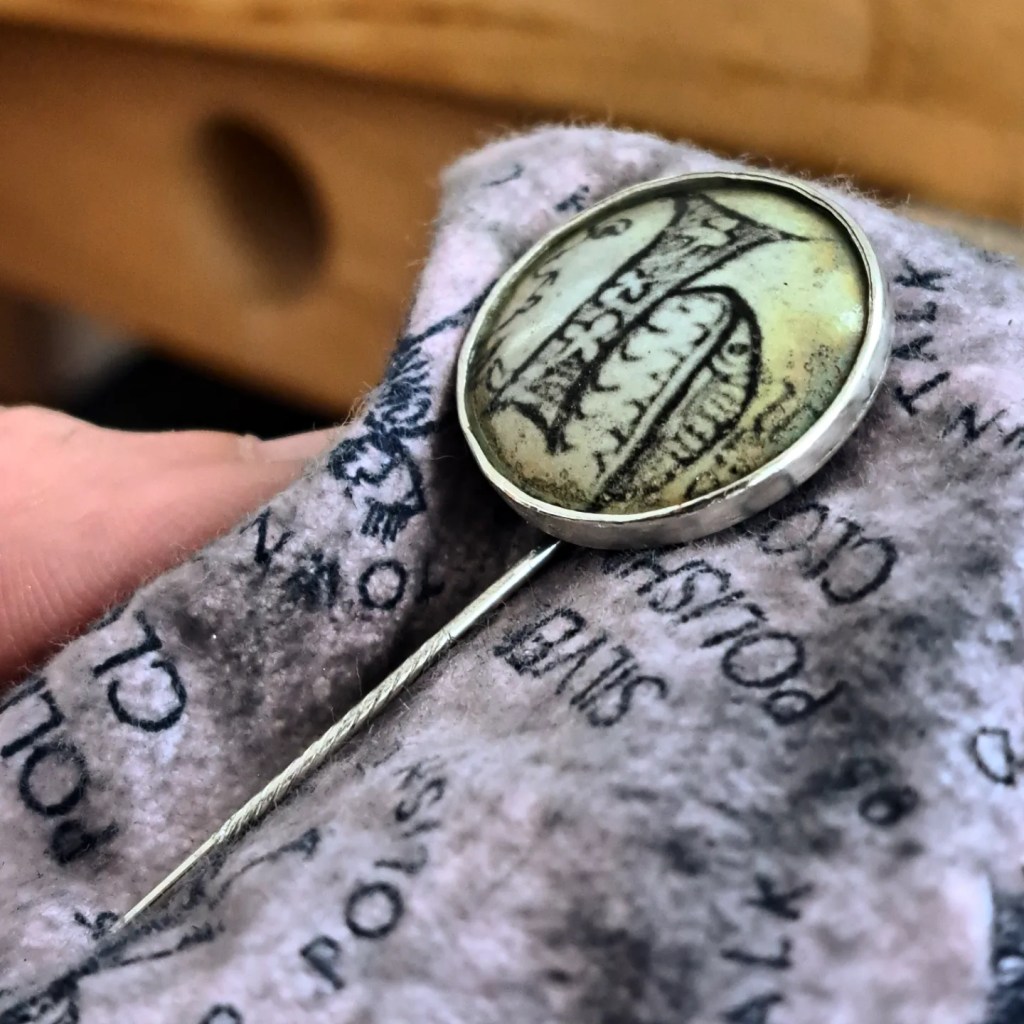
Coral beads on a silver chain. Two rings, one her mother’s wedding ring, forged with the letters MM and TP for Marjorie Marr and Thomas Prat. A brooch in the shape of a circle with a sword inside. Every piece made of shining silver. Also, a wool mantle lined with rabbit fur. Agnes imagines these items in Uncle Ninian’s home, hidden away in a box under his bed until he needs them. She remembers how he’d come to her house over the years, trying to do all the things that a legal guardian is supposed to do: petting her on the head and asking if she was being fed and clothed properly, sitting down with her to teach her how to read and do accounts, only to get up from the table in the next moment. And she’d follow him like a puppy, playing the game with him of entering each room and locating valuables that she’d help him carry to his horse. He’d take anything from woven tapestries to sets of silver spoons.
‘You’re a good girl, ’ he’d say, quickly looking away as he climbed into the saddle. ‘God bless you, Agnes.’
Slowly but surely, he’d emptied her deceased parents’ house of books, jewellery, kitchen utensils, even furniture. In the final years before Agnes turned twenty-one, her nurse had to use a single pot to cook their meals. They shared between them one pillow to sleep on. What Ninian needed the money for, she didn’t know then. Orphans don’t get to ask their guardians what they use their inheritance for. It was assumed by the town officials that he, being her father’s brother, would act in the interest of the family estate. A young heiress was to listen, obey, and eventually learn. So she did.
Only her mother’s goods did Ninian leave untouched over the years, as though the striking red colour of the coral beads were keeping him away. They invoked the mysteries of God Almighty – Agnes had thought so herself when as a young girl she’d seen them first on her grandmother’s wrist, then on her mother’s. That’s why she, now twenty-one and a week old, is surprised to come home and find these items gone. Ninian’s key is on the table.
‘Very well, ’ Agnes says to her nurse, who’s clasping her heart at the loss of the goods, ‘soon my pockets will be overflowing with the rents from my tenants, now they pay me and not him. You’ll see, when I find the most expensive lawyer in town, it’s not you that will be crying for help.’
In court, Uncle Ninian is a pale shadow of who he was when he first became her guardian. He was self-important then, the legal representative of one of the richest girls in town, a head full of hair and words dancing on his lips like a poet. Whenever someone trespassed onto her estates, he went straight to court, and took her with him, as if he needed a tender girl to witness him act the hero part. Now, they sit opposite each other in the court room, him bald, thin and nervous, her red-cheeked and calm. Her lawyer speaks a language of carefully calculated blame:
‘Ninian Prat has owed a debt to every single one of us at one point or another. We all know the state of his repute in the burgh. We all know he’s a drunk and a gambler. We all know Agnes Prat will have to spend the coming years restoring her parental home to the state it was before her parents’ death, God have mercy on their souls. So I ask you, do you trust this man when he claims that Marjorie Marr’s treasures rightfully belong to him?’
It’s almost too easy. Uncle Ninian has made so many enemies in the burgh, boasting too widely of his influence over the town’s wealthiest child, and making too many promises he’s not kept. In the bustling street outside the tollbooth, Agnes ends up walking home behind her uncle. The crowd at the Market Cross parts to let him through, like he’s a leper among saints. He keeps his head down until he disappears behind a corner.
The following Friday, Ninian doesn’t come to court to hand over the goods or provide evidence for why he should have them. The case is postponed another week, but with the same result. Agnes sends her nurse to his home, suddenly unwilling to send the lawyer to insult her uncle further. But the nurse returns with a report of an empty house where there’s not so much as a pillow to sleep on, save for a single item, left on the threshold wrapped in cloth: Marjorie Marr’s coral beads.
‘Where do you suppose he’s gone?’ Agnes rotates the beads around her wrist.
‘To Hell, if there’s justice, ’ her nurse says. ‘And there’ll always be justice, the court has shown us this.’
Agnes agrees, but when she goes to sit by the window with her mother’s beads, she’s uncertain. Each bead that she touches with her fingers is a reminder of something men of the law rarely speak of. Mercy. Compassion. Redemption. She feels at once too young to understand these words, and far too old.