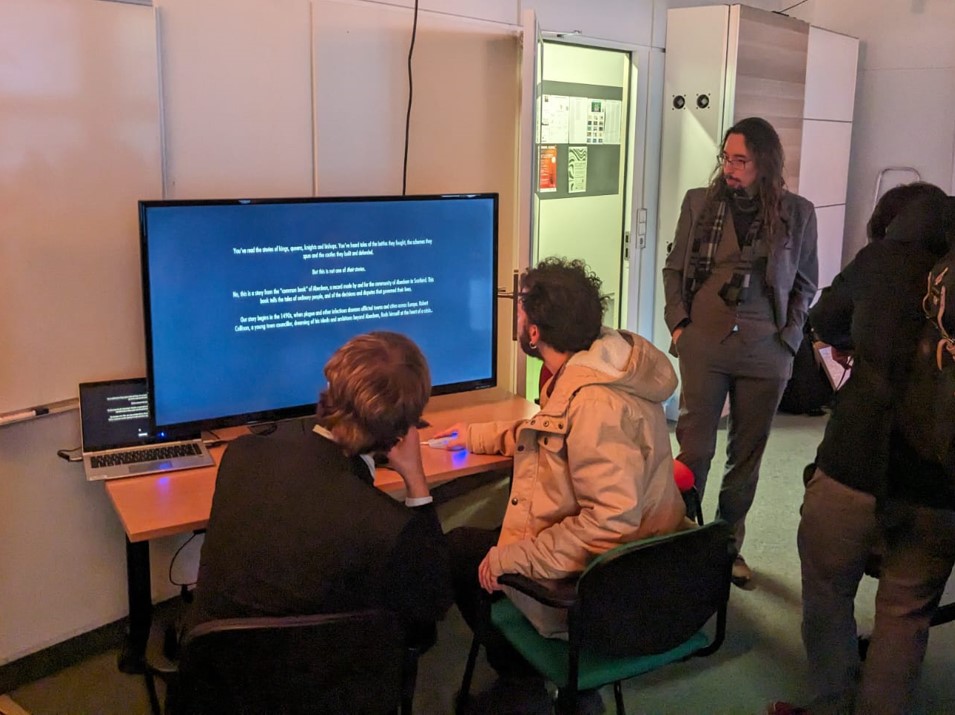
They spoke on ‘Historical primary sources in video games’, exploring ideas about how games can expose historical practice and drawing on their game making experience in Strange Sickness. They were there in true hybrid fashion – William in person while Jackson joined online. The workshop was expertly organised and hosted by Dr Eduardo Luersen and Dr James Wilson : they’re in the photo playing Strange Sickness at the evening session in the GameLab.
The workshop included fascinating papers and discussions including on the topics of historical knowledge, expertise and practice in game-making, on how code and mechanics can make historical arguments, and on the reception of and access to historical ideas through games. The first evening also included a roundtable with the historian and narrative director at Ubisoft, on the process of making of Assassin’s Creed Mirage (2023). Thanks to Eduardo and James for hosting a very stimulating event!
On 14 March Jackson Armstrong gave a paper entitled “All thingis covntit”: Government and Accounting in Fifteenth-Century Burghs.
This was for a joint meeting of the Scottish History Seminar and Medieval History Research Seminar at the University of Edinburgh, coordinated by Dr Alasdair Raffe and Dr Emily Ward.
The presentation explored different types of accounts created in medieval burghs, and what those involved in governing towns thought they were doing when they drew them up and subjected them to audit. The paper represents work underway arising from the FLAG project, and there was a rich discussion afterwards about the nature of account-keeping in medieval and early modern Scotland. It was a valuable opportunity to examine these topics, and also for Jackson to catch up with colleagues and some former students!
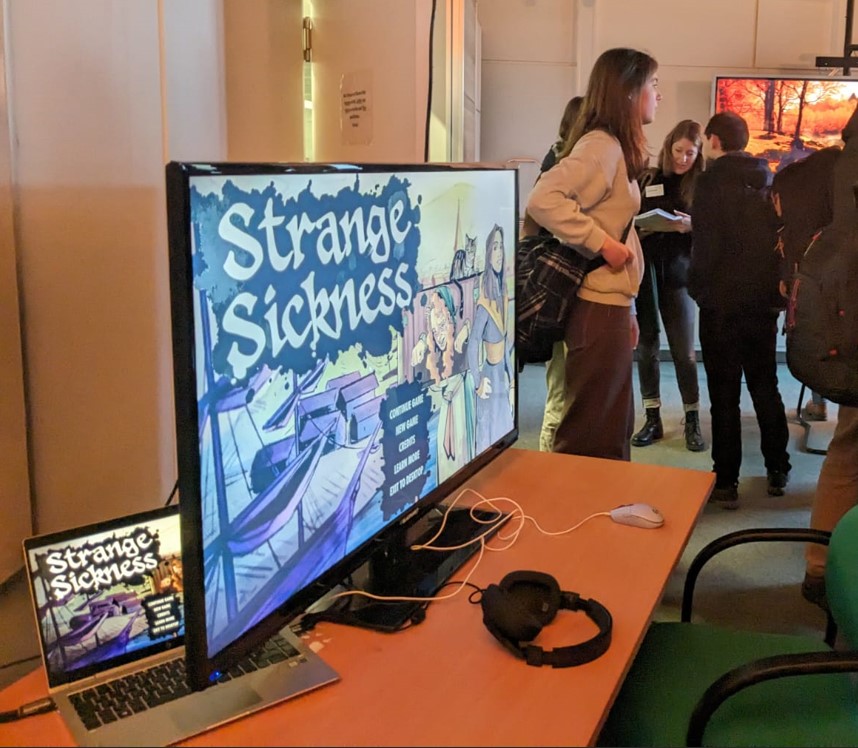
On 21 February Jackson Armstrong and William Hepburn gave a talk on ‘Historical Archives & Video Game Development’ in Edinburgh.
This was for the History, Time & Temporality in Music, Sound & Media research cluster, at the Reid School of Music, Edinburgh College of Art. The cluster is running a series this semester on games, coordinated by Dr James Cook.
The presentation explored the approach to history adopted in Strange Sickness, the idea of ‘creative translation’ of historical sources, the different ways a game can be historical, and the lessons learned in making this game. There was a stimulating discussion with the audience questions, in person and online, around the textual, visual and aural layers of games.
William Hepburn reflecting on visual representations of lost spaces
The Conference at Riddle’s Court – interior images via @CILIPScotland
On 11 May William & Jackson spoke at the Scottish Council on Archives‘ Why Archives & Records Matter Conference. This was a really insightful day, with presentations from a wide mix of fields (including healthcare, public services, and tourism, to name a few) working with archives and records.
It was striking that so many of the talks and discussions concentrated on the themes of trust, transparency, accountability, and evidence – all very much live topics in 2023 – and all crucial to healthy & vibrant democratic societies. Congratulations to the SCA in bringing together a showcase of how important and impactful archives and records are to all aspects society, economy, & culture.
Jackson & William spoke about about using archives in video game development, through the burgh records project and the making of Strange Sickness.
The event was held in beautiful Riddle’s Court, Edinburgh, a 16th-century merchant’s tenement restored by the Scottish Historic Buildings Trust.
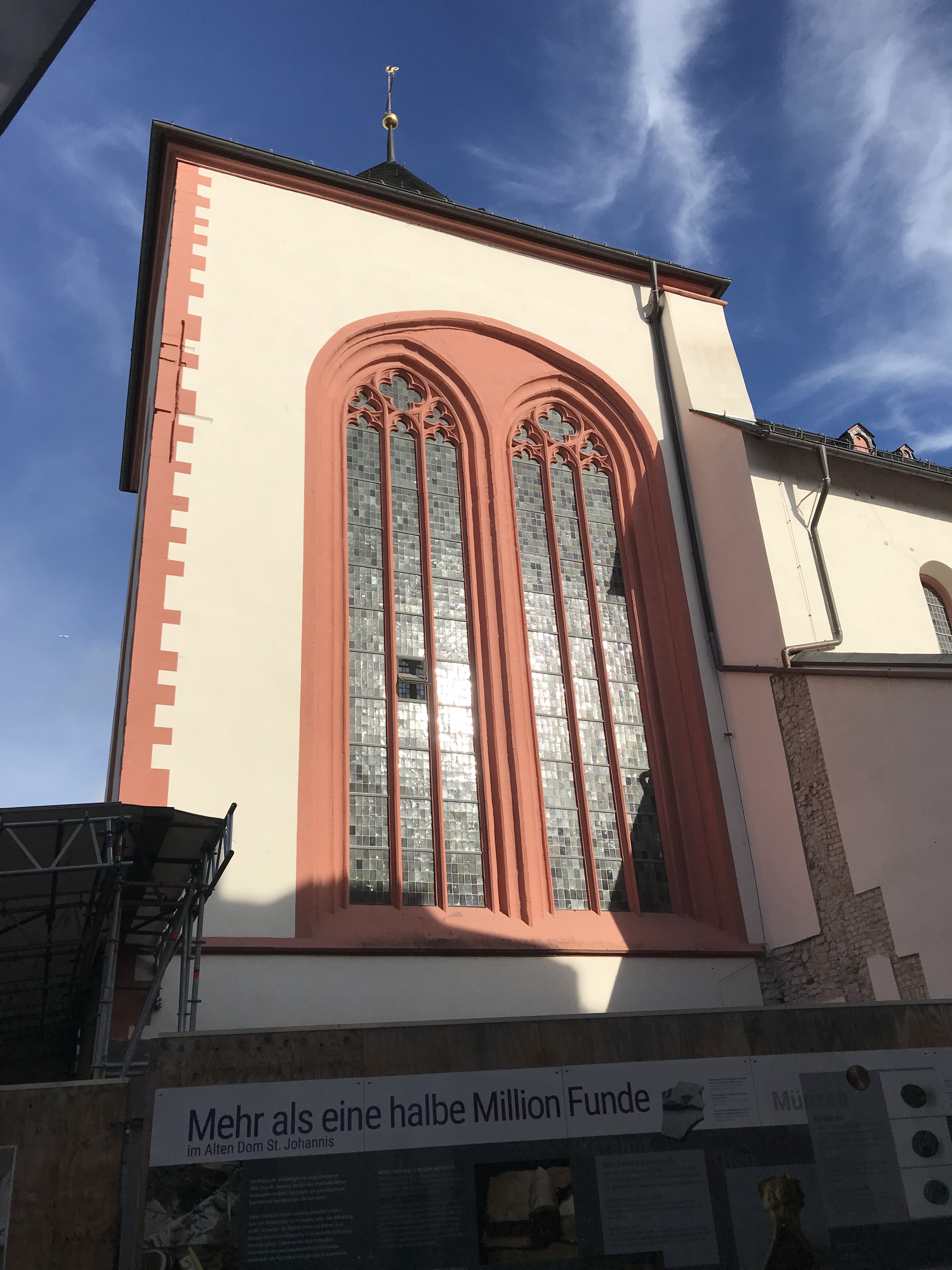
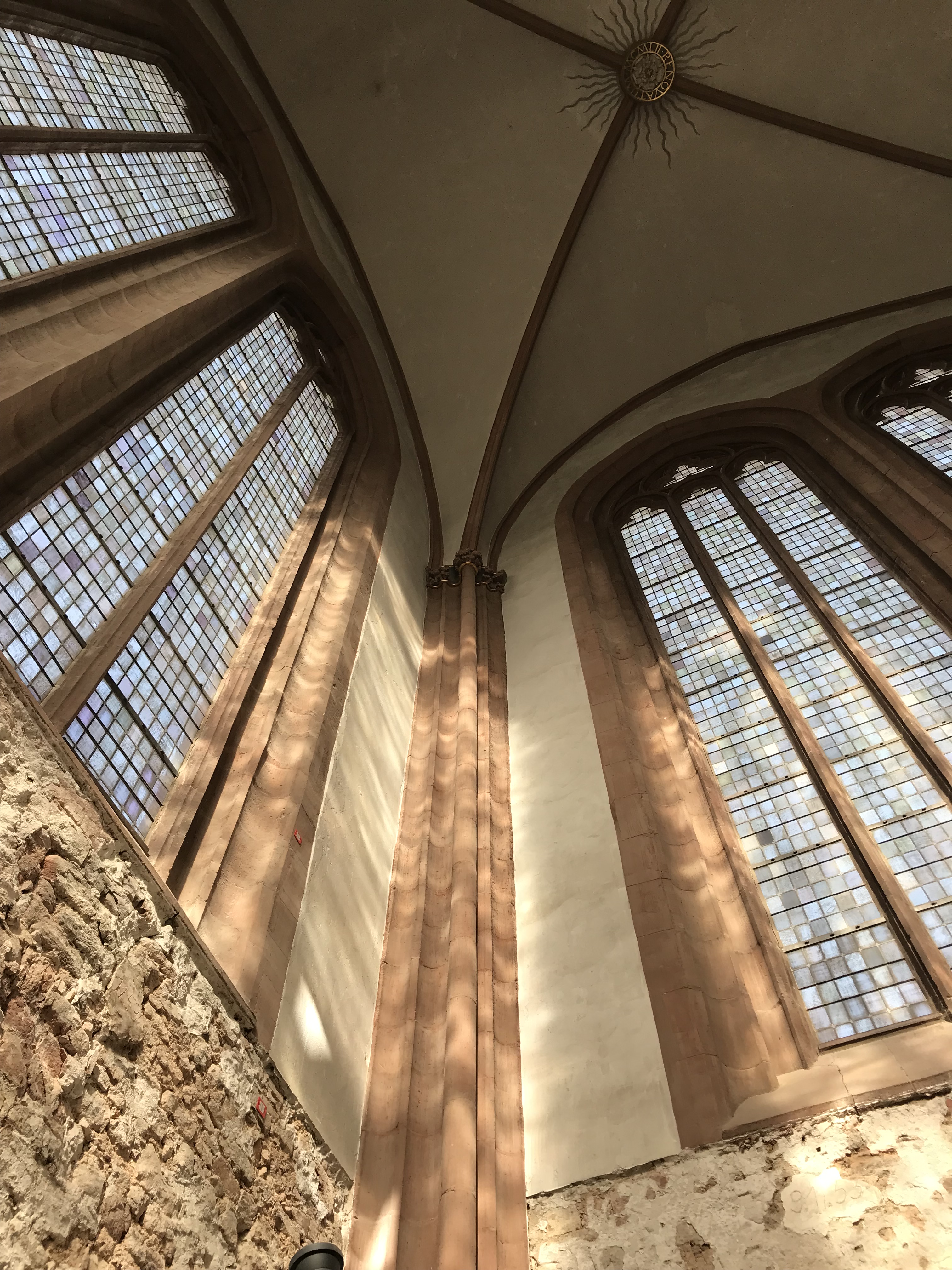
Mainz: The Old Cathedral (foreground) and St Martin’s Cathedral
Late medieval urban government was under discussion through the main project themes of ‘order’, ‘budget’ and ‘unity’.
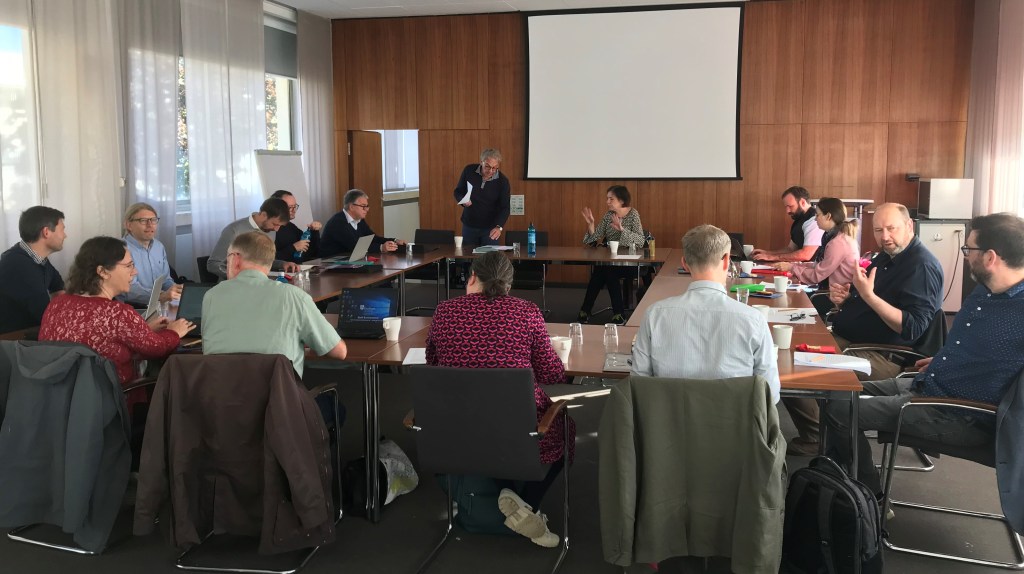
On 6 and 7 October FLAG hosted its second international workshop, a gathering in person at Johannes Gutenberg-Universität Mainz. The main purpose of the workshop was for the project team to share working drafts of publications, and to hear insights and input from a panel of commentators and round-table participants. Following the event a group of FLAG team members visited Augsburg – long overdue as we had originally hoped a team meeting there would have been a first gathering back in 2020!
Workshop underway in Mainz
The papers presented in advance for discussion addressed FLAG’s examination of urbanitas as a focus for comparison between Augsburg and Aberdeen, and explored the digital methods we are using. The discussions around the papers highlighted the importance of bringing Scottish and German historiography into new dialogue, which is also one of the goals of FLAG.
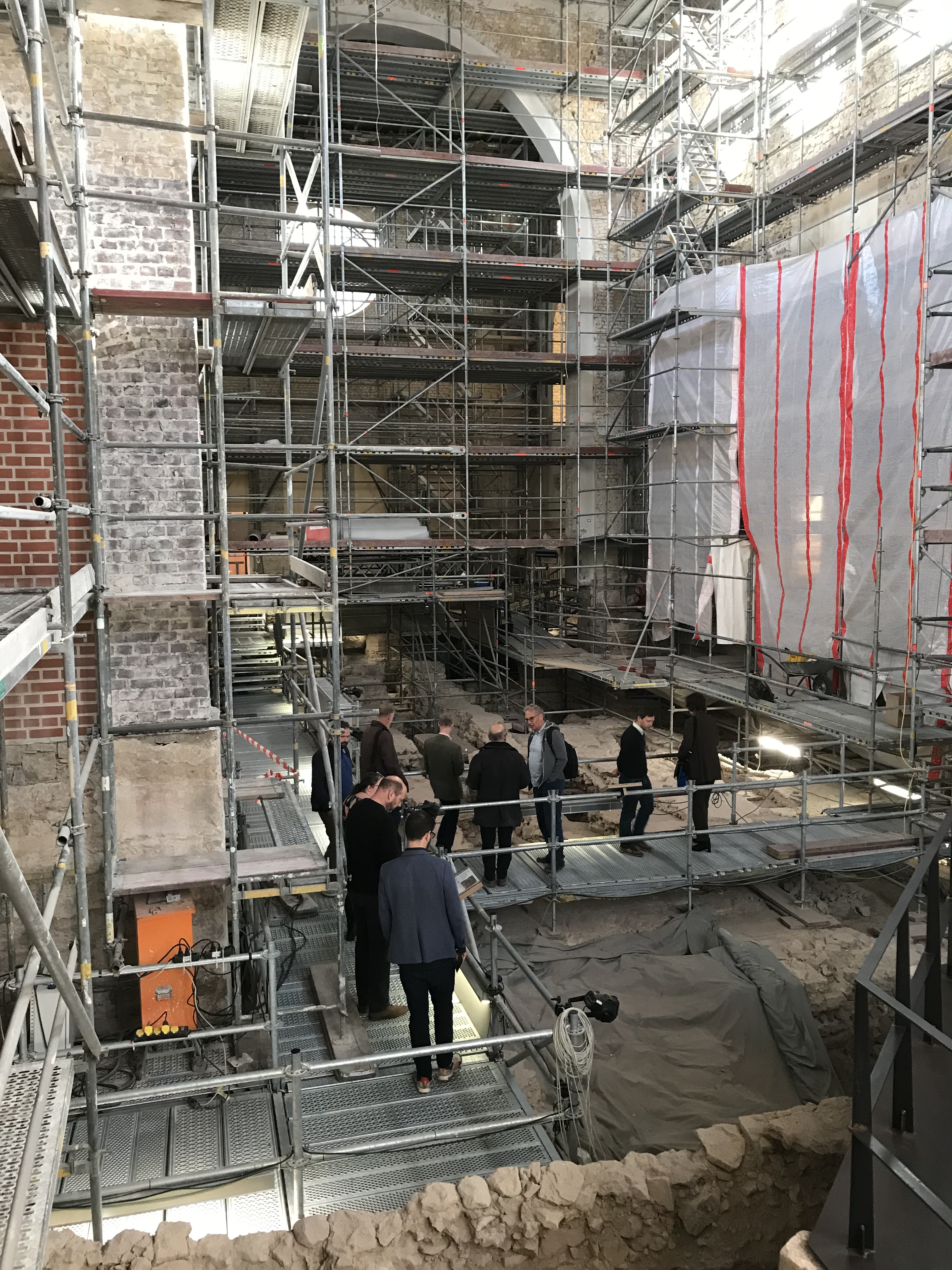
On the morning of the 6th we were treated to a guided tour by excavation director Dr. Guido Faccani of Mainz’s ‘Old Cathedral’ (today’s Lutheran Johanniskirche). This is the only cathedral building originating in the early middle ages in Germany, and it is the predecessor building of the Romanesque cathedral of St Martin.
Dr. Faccani leads the tour
On 6 October the programme included the following sessions:
Welcome and introduction – Professor Jörg Rogge and Dr. Jackson Armstrong
Dr. Regina Schäfer: On administrative structures and terminology in Augsburg (1368 to 1466). Commentators: Dr. Mathias Kluge, Augsburg; Dr. Dominique Adrian, Nancy.
Dr. William Hepburn: Compt, rekning and payment: The Economic Ideal of Urban Government in Late Medieval Aberdeen. Commentators: Dr. Eliza Hartrich, University of East Anglia; Professor Graeme Small, Durham.
Dr. Wim Peters & Dr. William Hepburn: Evaluation of digitised sources – digital hermeneutics. Commentators: Professor Jessica Nowak, Leipzig/Mainz; Dr. Benjamin Hitz, Basel.
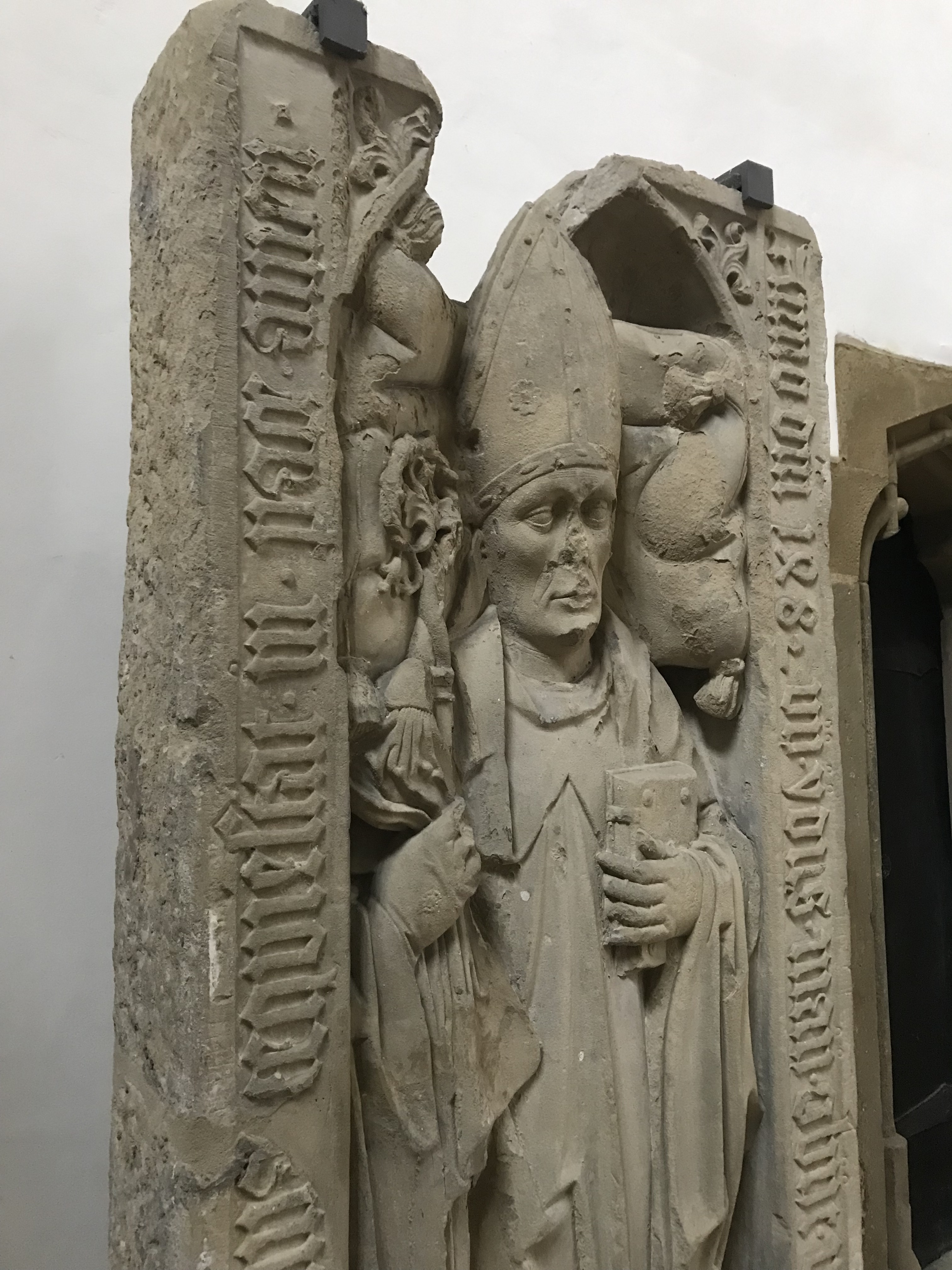
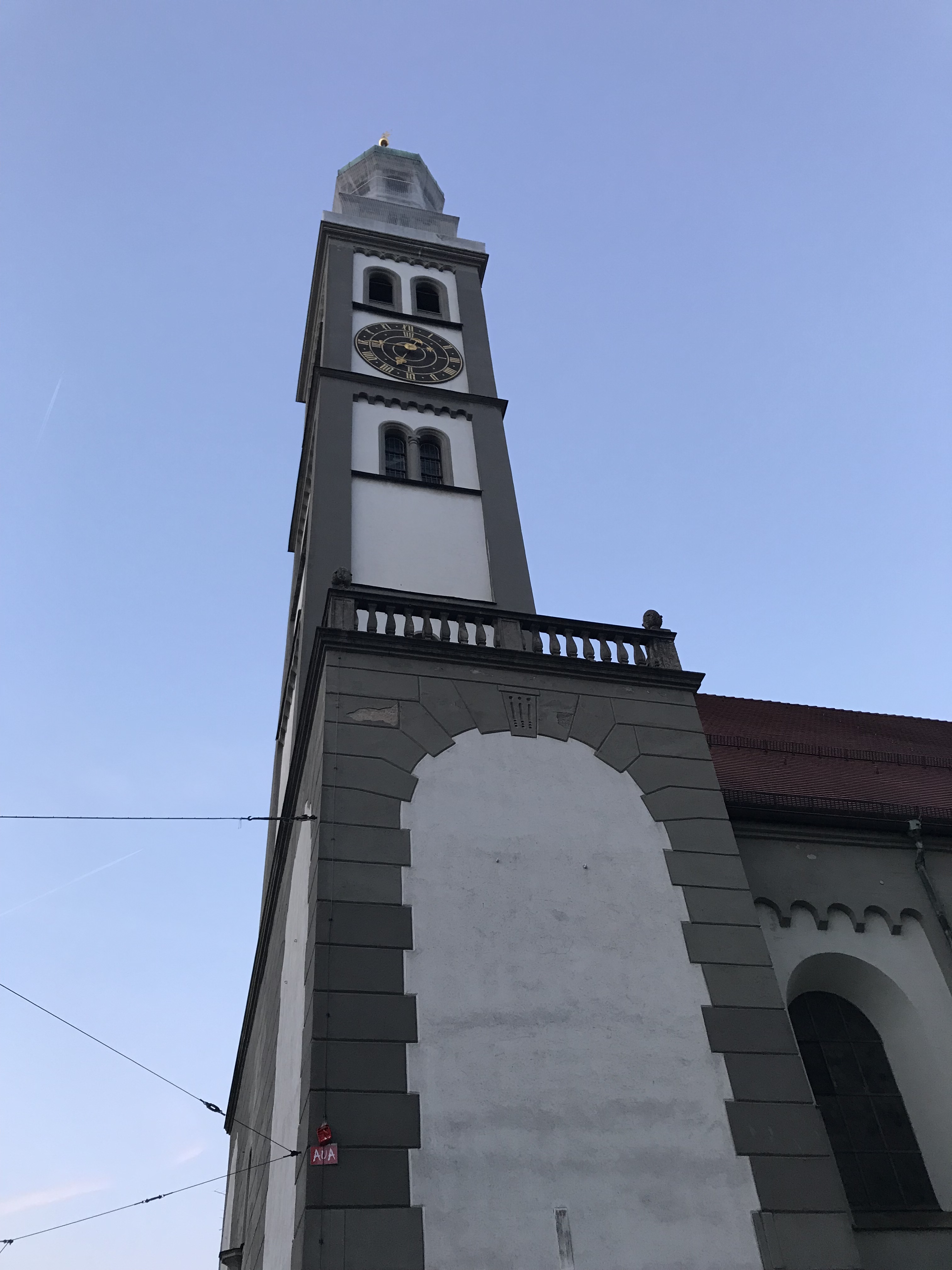
Above: Images of Augsburg Cathedral (L), effigy of Abbot Heinrich Friess (d.1482), in the Basilica of SS. Ulrich and Afra (C), and the Perlachturm (R)
On 7 October the programme included the following sessions:
Professor Jörg Rogge & Dr. Jackson Armstrong: Urbanitas – Augsburg and Aberdeen in Comparison. Commentators: Prof. Gabriel Zeilinger, Erlangen-Nürnberg; Dr. Alan MacDonald, Dundee.
Roundtable: Professor Michael Brown, St. Andrews; Professor Edda Frankot, Universität Nord; Professor Jelle Haemers, Leuven; Professor Steffen Krieb, Akademie der Wissenschaften in Mainz.
On 8 and 9 October members of the FLAG team visited Augsburg, and included a visit to the Maximilian Museum which holds the fifteenth-century archive chest, and early modern wooden models of the medieval town house.
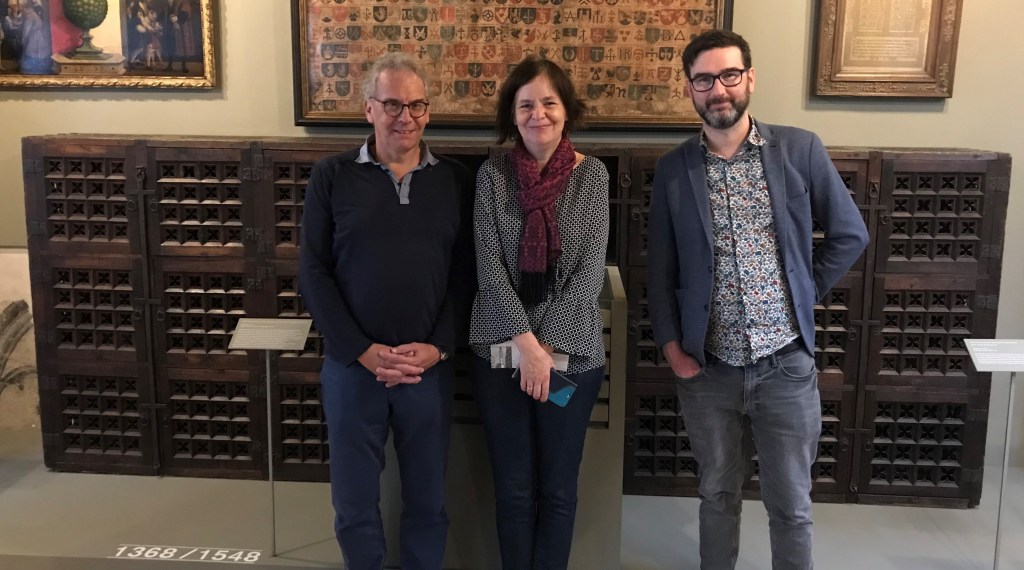
Jörg Rogge, Regina Schäfer, and William Hepburn with the archive chest of 1470 from the Augsburg town house, in the Maximilian Museum.
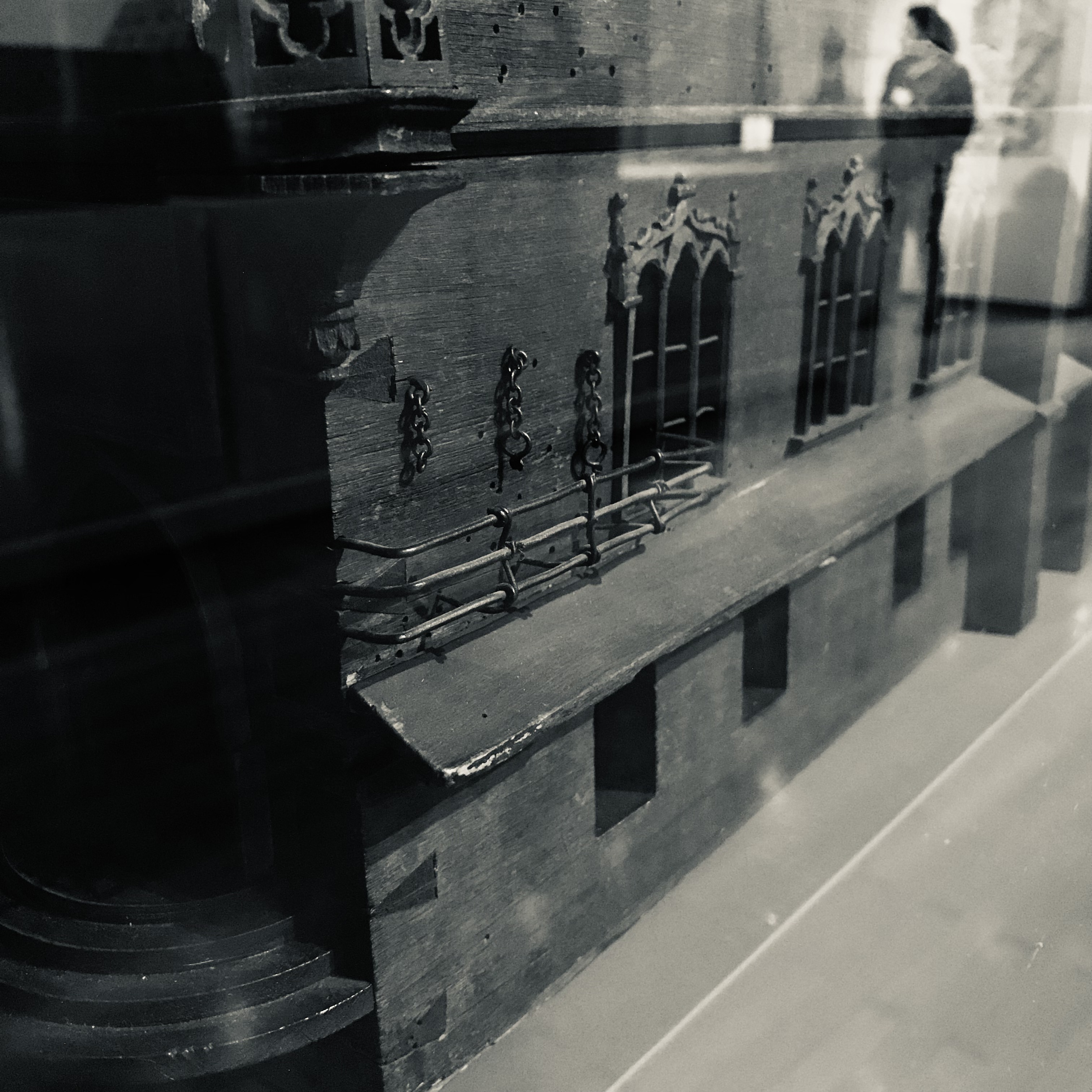
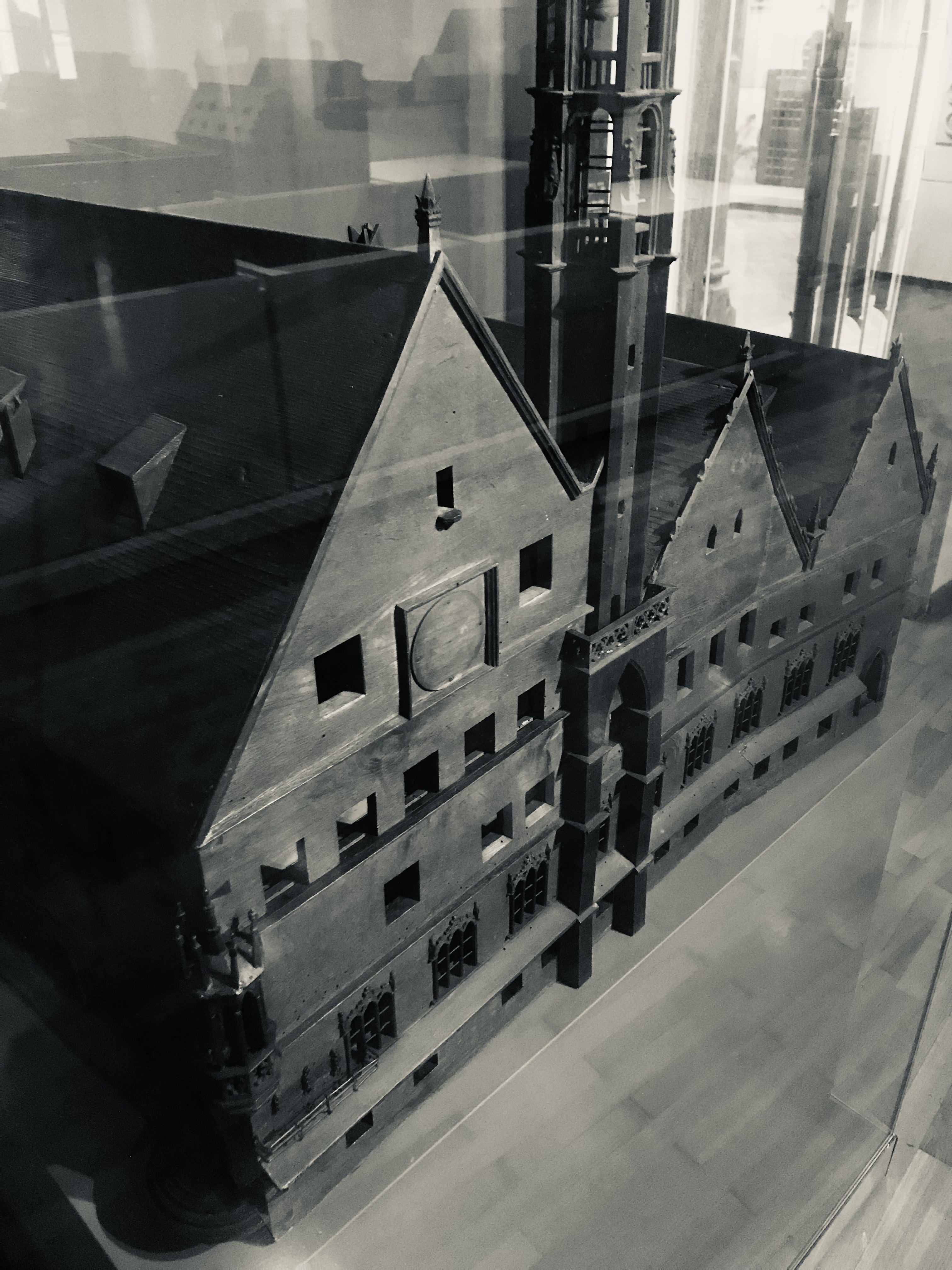
Above: detailed images of the model of the medieval town house of Augsburg, in the Maximilian Museum.
Neue Perspektiven für die städtische Verwaltung in Städten des 15. Jahrhunderts / New perspectives on civic administration in 15th-century towns
A report of our international workshop held on 5 and 6 November 2021 has been published on H-Soz-Kult (a moderated history-information platform based in Berlin). This report was prepared by Regina Schäfer and William Hepburn. The citation and link follows below:
‘Order’, ‘budget’ and ‘unity’ were among the themes explored in the first FLAG workshop on the topic of New perspectives on civic administration in fifteenth-century towns.
In-person workshop participants meet together and online
On 5 and 6 November FLAG hosted its first international workshop, a ‘hybrid’ in-person and online gathering in Aberdeen. This brought the project team together, alongside participants invited to share perspectives from their own work.
Some early arrivals in Scotland visit Dunottar Castle
The FLAG team presented the project’s challenge to identify shared aspects of ‘urbanitas’ in towns as different as Augsburg and Aberdeen. The themes of ‘order’, ‘budget’ and ‘unity’, and the digital tools and methods deployed in FLAG, were explored in the first two papers given by the project researchers.
The invitees then presented work-in-progress papers on their own work, covering aspects of medieval urban record keeping, and the interlinked themes of ‘order’, ‘budget’ and ‘unity’. An important goal of FLAG is to bring Scottish and German historiography into closer dialogue, and this was evident in the rich discussions that followed each paper. We were also treated to a display of Aberdeen council register volume one, by Phil Astley (City Archivist). Our hybrid format was a success, with the kind assistance of PhD student Ebba Strutzenbladh as facilitator. All participants followed the current measures for covid-19 mitigation. The programme outline follows below.
A full report on the workshop will be made available at the FLAG project website.
The meeting also allowed for some excursions around the formal planned sessions, including to Dunottar Castle, and Huntly Castle.
The walls of Huntly Castle welcomed some of the group
On 5 November the programme included the following sessions:
Welcome and introduction – Jörg Rogge (Mainz) and Jackson Armstrong (Aberdeen)
Wim Peters (Mainz) and William Hepburn (Aberdeen), Digital hermeneutics: methodology and first results from the Aberdeen ARO corpus
Regina Schäfer (Mainz), Talking about Law and Order in Augsburg
Amy Blakeway (St Andrews), War and the burghs, 1528–1550
Julia Bruch (Köln), Accounting Practices in Monasteries, Towns and Courts. Methodological Reflections
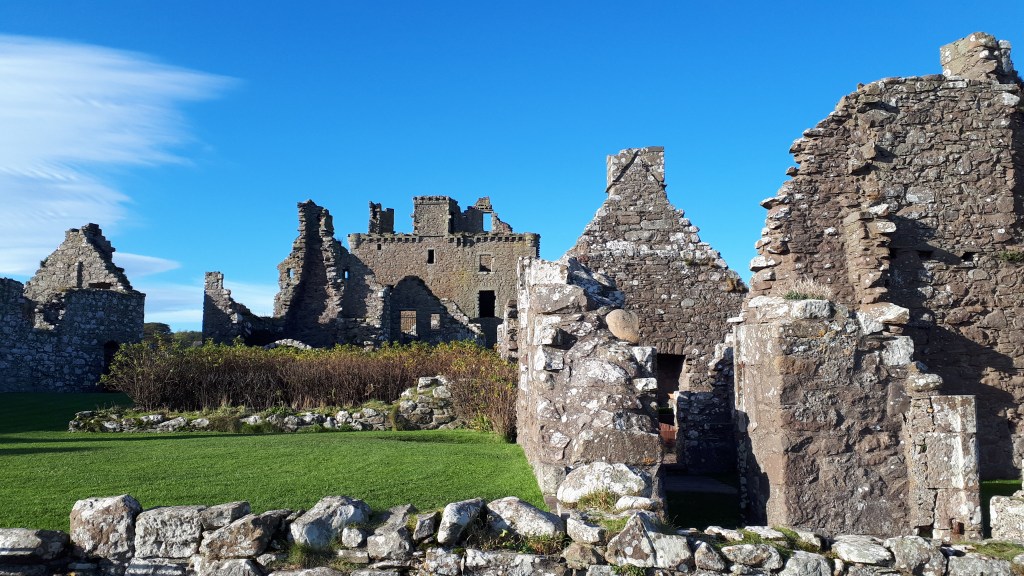
Dunottar Castle ruins
Elizabeth Gemmill (Oxford), The language of things: descriptions of objects and consumables in the burgh court records of late medieval Aberdeen
Jessica Bruns (Halle), Knowledge between pages. Book usage as a new form of administrative practice in late medieval Soest
Eliza Hartrich (UEA, Norwich), For the Comene Wele? Languages of Unity and Division in English and Irish Municipal Records, c. 1450-1500
Phil Astley (Aberdeen City & Aberdeenshire Archives) – viewing of Aberdeen Council Register volume from City Archives
Some FLAG visitors outside Huntly Castle
On 6 November the programme included the following sessions:
Jens Klingner (ISGV, Dresden), Texts and transmission. City books and account books from late medieval Dresden
Andrew Simpson (Edinburgh), Brieves in the Burgh Records of Aberdeen, ca.1400-1500: Some Preliminary Thoughts
Christian Speer (Halle), Are town books reliable witnesses of the past? Critical considerations on the categories “note“, “transcript” and “fair copy” based on the Libri civitatis and Libri obligationum of Görlitz in the 14th and 15th century
The workshop was held in the Craig Suite at the Sir Duncan C. Rice Library, University of Aberdeen. The crisp November weather offered a sunny treat to participants, some of whom who also took up the kind offer of a visit to see the Kirk of St Nicholas.
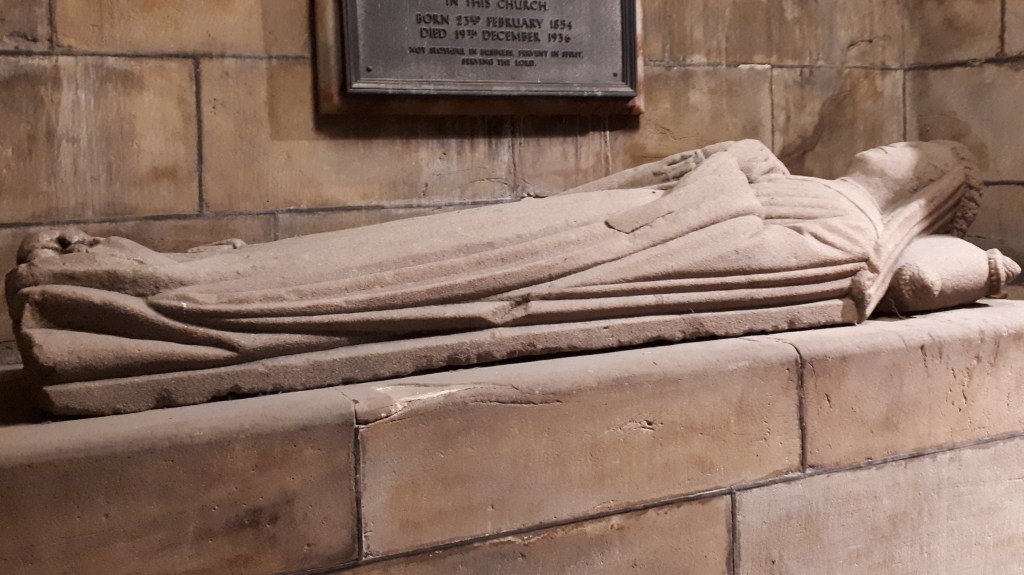
One of the medieval effigies in the Kirk of St Nicholas
Following the end of the workshop the sun came out for a visit to King’s College Chapel, and St Machar’s Cathedral, while others went to see the Dons lose to the Steelmen, before carrying on to hear Public Service Broadcasting play at the Music Hall!
On Monday 21 June 2021 the Aberdeen Burgh Records project will run an afternoon workshop in this year’s Scottish Graduate School for Arts & Humanities (SGSAH) International Summer School.
The session will introduce the historical burgh records and the languages within them, from the Latin and Middle Scots to the XML which underpins the digital Aberdeen Registers Online: 1398-1511 (ARO).
With members of the current FLAG project, it will present the digital humanities work which is currently underway, investigating the ARO alongside a comparable digital resource from medieval Augsburg.
And, with Dr Claire Hawes, it will showcase creative responses to the themes and language in the ARO, in the form of contemporary song-writing and musical performance.
Songs of Medieval Aberdeen (L-R: Paddy Buchanan, Claire Hawes, Craig Spink and Davy Cattanach)
Claire will discuss the process by which she and Aberdeen-based musicians collaborated to write a set of songs which were performed at the Scottish Parliament in early 2020. These songs have now been recorded for the first time and they will be included in the session!
Paddy Buchanan and Claire Hawes
The Summer School workshops are aimed at Arts & Humanities doctoral researchers in Scotland. The International Summer School workshops are aimed at Arts & Humanities doctoral researchers across Europe and the globe, including Scotland. The keynote sessions are open to the public.
If you are a PhD researcher and wish to register for the workshop, please go to the Eventbrite link.
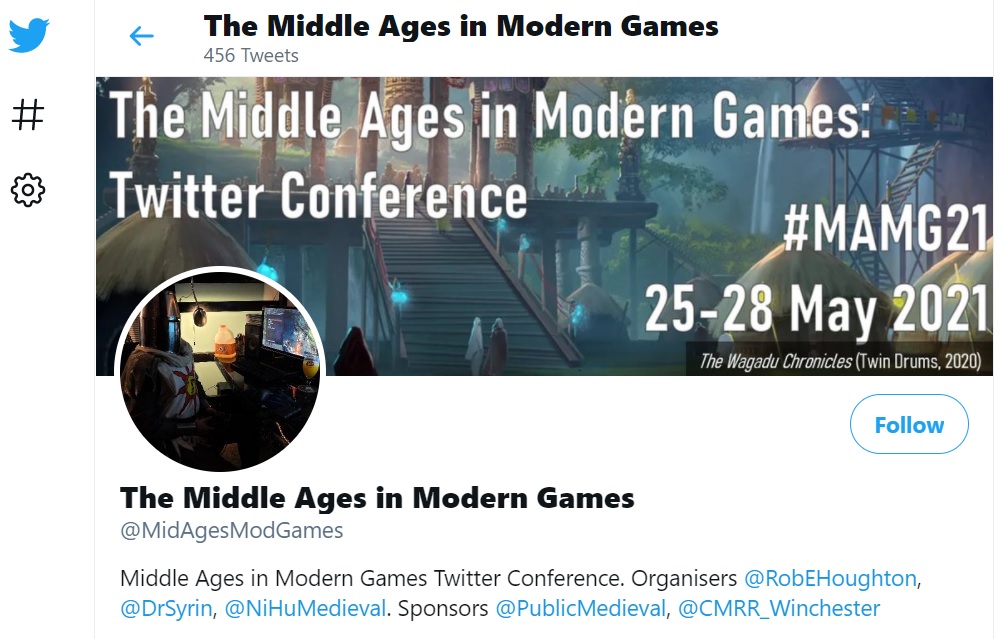
A paper in the form of a ‘thread’ of 12 tweets from @medievalabdn, by Dr William Hepburn and Dr Jackson Armstrong, will look at the story that has led so far to the Strange Sickness game project, and the steps on the road to creating and bringing a historical research-based game to life.
Papers at the conference running 25-28 May 2021 may be found with the Twitter hashtag #MAMG21.
This month and last the language used to describe certain types of violent, but non-lethal, offences in the cases before the burgh courts of Aberdeen was the topic of two presentations by Jackson Armstrong. In Providence, Rhode Island on Friday 26 October, at the North American Conference on British Studies, Jackson spoke on ‘Malice’ and Motivation for Hostility in the Burgh Courts of Late Medieval Aberdeen. This was part of a panel of papers concerning England and Scotland, on late medieval and Tudor towns. At the Aberdeen Maritime Museum on 14 November Jackson spoke on a similar topic as a lunchtime talk.
Both events generated excellent interest and questions.









 aberdeen registers
