Twelve months after the crowd-funder campaign, today is the day and Strange Sickness is now available on PC via Itch.io
Strange Sickness main menu image with book icon
Earlier today Strange SicknessKickstarter backers had an update about the release of this version of the game, and about plans for the Mac version and other rewards to follow soon.
Visit strangesickness.com to learn more about the game, including how sales will support two charities. There is also a historians’ commentary on the website which explores the relationship between the game and the historical research and sources on which it is based. (But play the game first to avoid spoilers!)
The book examines the practice of banishment for what it reveals about morally acceptable behaviour in late medieval urban society. Punishment was used by authorities in Kampen to address sexual offences, but also for other matters, including the non-payment of fines. The book considers the legal context of the practice, and banishment as a punitive and coercive measure. It also discusses the redemption of exiles, either because their punishment was completed, or because they arranged for the payment of outstanding fines.
Edda said: “The study is something that evolved over a long period of time, while I was engaged on other projects, so much of the book I worked on in my spare time. I think it provides a multi-layered insight into late medieval urban society and legal culture, utilising not only a wide range of written sources, but also contemporary drawings from fifteenth-century Kampen.”
‘Order’, ‘budget’ and ‘unity’ were among the themes explored in the first FLAG workshop on the topic of New perspectives on civic administration in fifteenth-century towns.
In-person workshop participants meet together and online
On 5 and 6 November FLAG hosted its first international workshop, a ‘hybrid’ in-person and online gathering in Aberdeen. This brought the project team together, alongside participants invited to share perspectives from their own work.
Some early arrivals in Scotland visit Dunottar Castle
The FLAG team presented the project’s challenge to identify shared aspects of ‘urbanitas’ in towns as different as Augsburg and Aberdeen. The themes of ‘order’, ‘budget’ and ‘unity’, and the digital tools and methods deployed in FLAG, were explored in the first two papers given by the project researchers.
The invitees then presented work-in-progress papers on their own work, covering aspects of medieval urban record keeping, and the interlinked themes of ‘order’, ‘budget’ and ‘unity’. An important goal of FLAG is to bring Scottish and German historiography into closer dialogue, and this was evident in the rich discussions that followed each paper. We were also treated to a display of Aberdeen council register volume one, by Phil Astley (City Archivist). Our hybrid format was a success, with the kind assistance of PhD student Ebba Strutzenbladh as facilitator. All participants followed the current measures for covid-19 mitigation. The programme outline follows below.
A full report on the workshop will be made available at the FLAG project website.
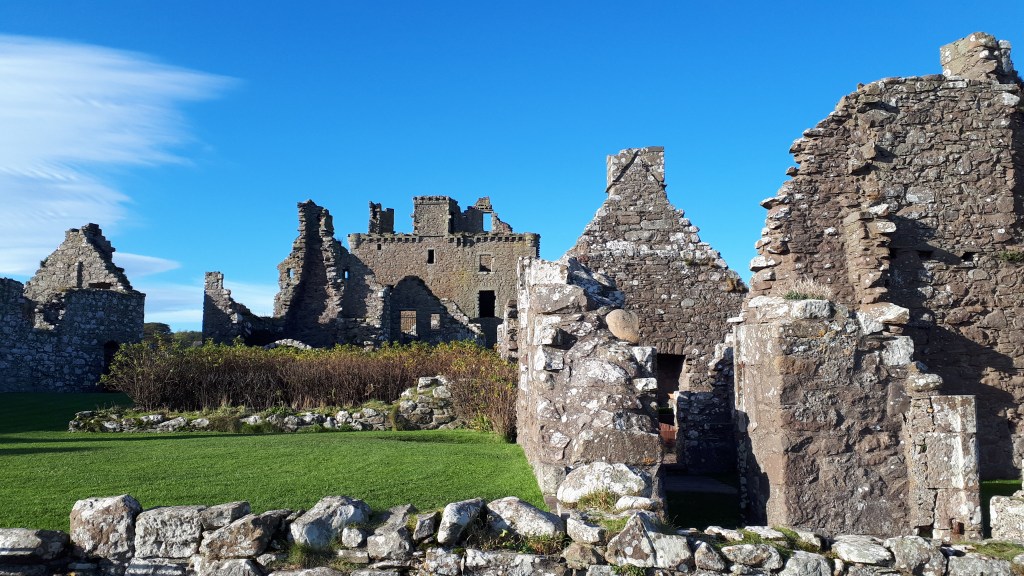
The meeting also allowed for some excursions around the formal planned sessions, including to Dunottar Castle, and Huntly Castle.
The walls of Huntly Castle welcomed some of the group
On 5 November the programme included the following sessions:
Welcome and introduction – Jörg Rogge (Mainz) and Jackson Armstrong (Aberdeen)
Wim Peters (Mainz) and William Hepburn (Aberdeen), Digital hermeneutics: methodology and first results from the Aberdeen ARO corpus
Regina Schäfer (Mainz), Talking about Law and Order in Augsburg
Amy Blakeway (St Andrews), War and the burghs, 1528–1550
Julia Bruch (Köln), Accounting Practices in Monasteries, Towns and Courts. Methodological Reflections
Dunottar Castle ruins
Elizabeth Gemmill (Oxford), The language of things: descriptions of objects and consumables in the burgh court records of late medieval Aberdeen
Jessica Bruns (Halle), Knowledge between pages. Book usage as a new form of administrative practice in late medieval Soest
Eliza Hartrich (UEA, Norwich), For the Comene Wele? Languages of Unity and Division in English and Irish Municipal Records, c. 1450-1500
Phil Astley (Aberdeen City & Aberdeenshire Archives) – viewing of Aberdeen Council Register volume from City Archives
Some FLAG visitors outside Huntly Castle
On 6 November the programme included the following sessions:
Jens Klingner (ISGV, Dresden), Texts and transmission. City books and account books from late medieval Dresden
Andrew Simpson (Edinburgh), Brieves in the Burgh Records of Aberdeen, ca.1400-1500: Some Preliminary Thoughts
Christian Speer (Halle), Are town books reliable witnesses of the past? Critical considerations on the categories “note“, “transcript” and “fair copy” based on the Libri civitatis and Libri obligationum of Görlitz in the 14th and 15th century
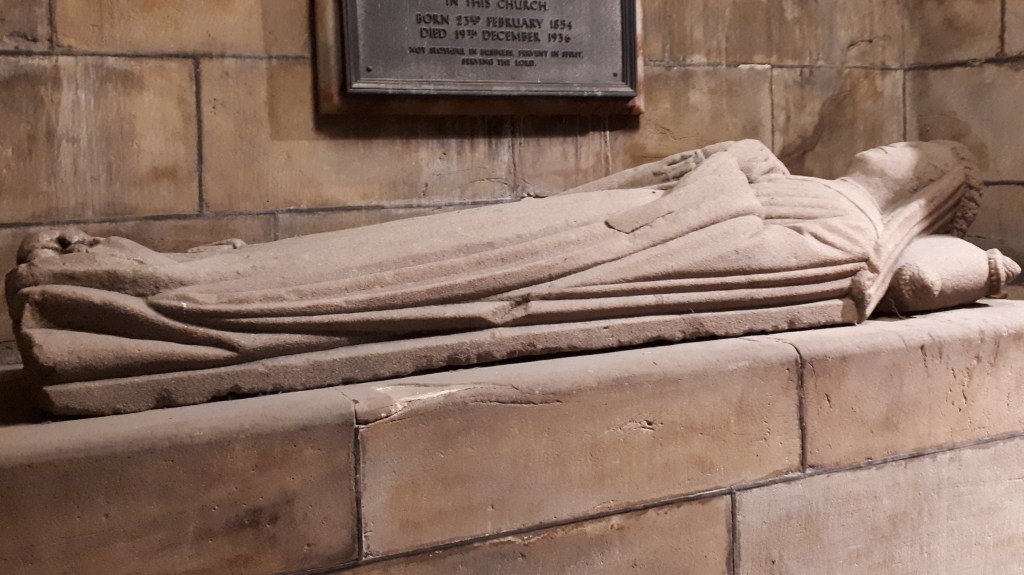
The workshop was held in the Craig Suite at the Sir Duncan C. Rice Library, University of Aberdeen. The crisp November weather offered a sunny treat to participants, some of whom who also took up the kind offer of a visit to see the Kirk of St Nicholas.
One of the medieval effigies in the Kirk of St Nicholas
Following the end of the workshop the sun came out for a visit to King’s College Chapel, and St Machar’s Cathedral, while others went to see the Dons lose to the Steelmen, before carrying on to hear Public Service Broadcasting play at the Music Hall!
Earlier this year we announced a new initiative with artists Kit Martin and Hetty Haxworth who are working with the Aberdeen Burgh Records Project to help introduce primary school pupils to block printing, monoprinting, collage, design and drawing, all inspired by the content of the Aberdeen Registers Online.
Working under Covid-19 restrictions, Hetty and Kit created an instructional video for teachers and pupils. The video accompanied a box of materials that enabled the class to complete this art and history project without in-person artist input. Pupil and teacher feedback from both pilot schools has been overwhelmingly positive.
Hetty, Kit and the Aberdeen Burgh Records Project are now exploring further opportunities for funding to help realise their ambitions for next steps with this work. A goal is to build upon the pilot and involve a group of primary schools within Aberdeen. This would include opportunities to work with teachers directly, to hold an open day to showcase the new pupil artwork, and to explore more of the historical context of the ARO.
On Monday 21 June 2021 the Aberdeen Burgh Records project will run an afternoon workshop in this year’s Scottish Graduate School for Arts & Humanities (SGSAH) International Summer School.
The session will introduce the historical burgh records and the languages within them, from the Latin and Middle Scots to the XML which underpins the digital Aberdeen Registers Online: 1398-1511 (ARO).
With members of the current FLAG project, it will present the digital humanities work which is currently underway, investigating the ARO alongside a comparable digital resource from medieval Augsburg.
And, with Dr Claire Hawes, it will showcase creative responses to the themes and language in the ARO, in the form of contemporary song-writing and musical performance.
Songs of Medieval Aberdeen (L-R: Paddy Buchanan, Claire Hawes, Craig Spink and Davy Cattanach)
Claire will discuss the process by which she and Aberdeen-based musicians collaborated to write a set of songs which were performed at the Scottish Parliament in early 2020. These songs have now been recorded for the first time and they will be included in the session!
Paddy Buchanan and Claire Hawes
The Summer School workshops are aimed at Arts & Humanities doctoral researchers in Scotland. The International Summer School workshops are aimed at Arts & Humanities doctoral researchers across Europe and the globe, including Scotland. The keynote sessions are open to the public.
If you are a PhD researcher and wish to register for the workshop, please go to the Eventbrite link.
A paper in the form of a ‘thread’ of 12 tweets from @medievalabdn, by Dr William Hepburn and Dr Jackson Armstrong, will look at the story that has led so far to the Strange Sickness game project, and the steps on the road to creating and bringing a historical research-based game to life.
Papers at the conference running 25-28 May 2021 may be found with the Twitter hashtag #MAMG21.
Following the successful Kickstarter campaign, new support for Strange Sickness has come from the University of Aberdeen and the Aberdeenshire Council Archaeology Service.
The Aberdeenshire Council Archaeology Service has enabled the project to meet its final stretch goal, and a Knowledge Exchange and Commercialisation Award from the University of Aberdeen more than doubles the funding raised during the Kickstarter campaign! This will allow more time to be booked from the game designer (Katharine Neil) and artist (Alana Bell).
This means that the whole game can be made with greater depth and detail, and that it will include the ‘epilogue’ stretch goal exploring the outbreak of 1514.
The extra funding wouldn’t have been possible without the faith in the project demonstrated by all the backers, and William and Jackson hope that they will all be pleased with the extra dimension that it will add to the game.
This does mean that the expected release of the game will push back to summer 2021, but the Strange Sickness team are sure the extra benefits this funding will bring to the game will make it worth the longer wait.
Work is underway on the game, and we’ve included a new image by Alana here for you to see how the look of the game is shaping up!
Fresh salmon for market was often called ‘red and sweet’ in the council registers. Photo courtesy Hetty Haxworth.
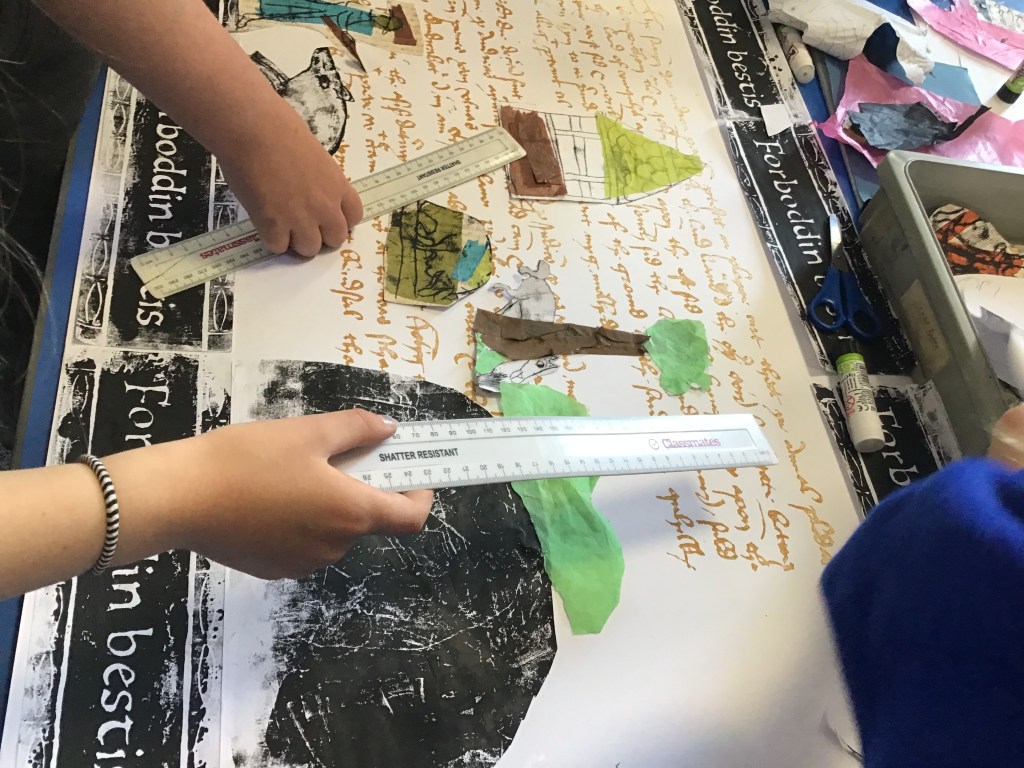
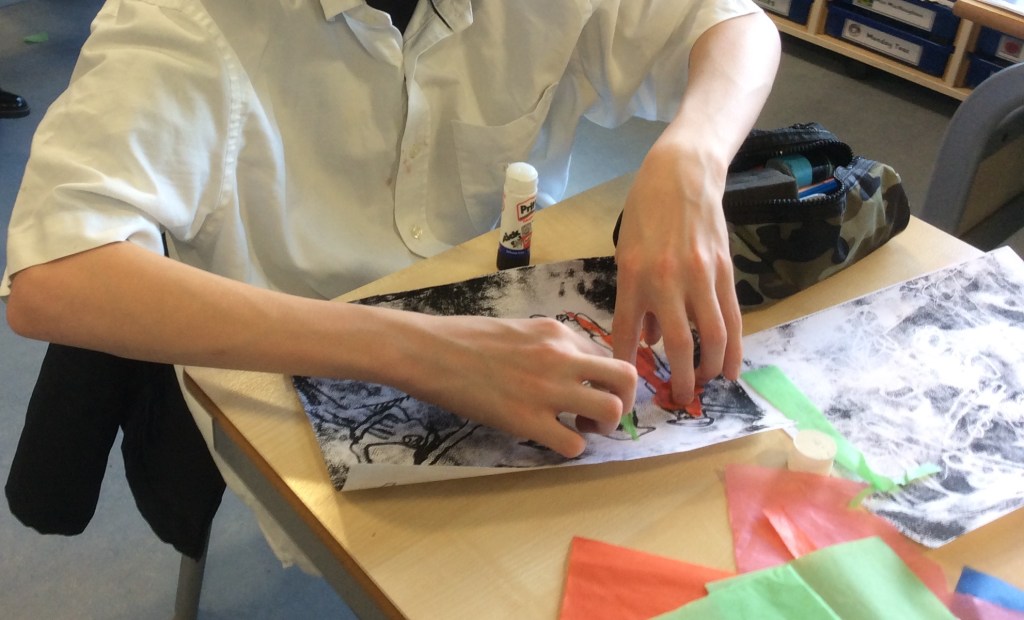
Artists Hetty Haxworth and Kit Martin are working with the Aberdeen Burgh Records Project to help introduce primary school pupils in Scotland to art techniques and ideas that they might not otherwise try.
Inspired by the transcribed text in the Aberdeen Registers Online, Kit and Hetty have developed a pilot printmaking project to be conducted with a Primary 5 class in an Angus primary – when schools return, that is! If well received, there is scope to expand the activity to other interested schools (or other groups) in Aberdeen City and Aberdeenshire.
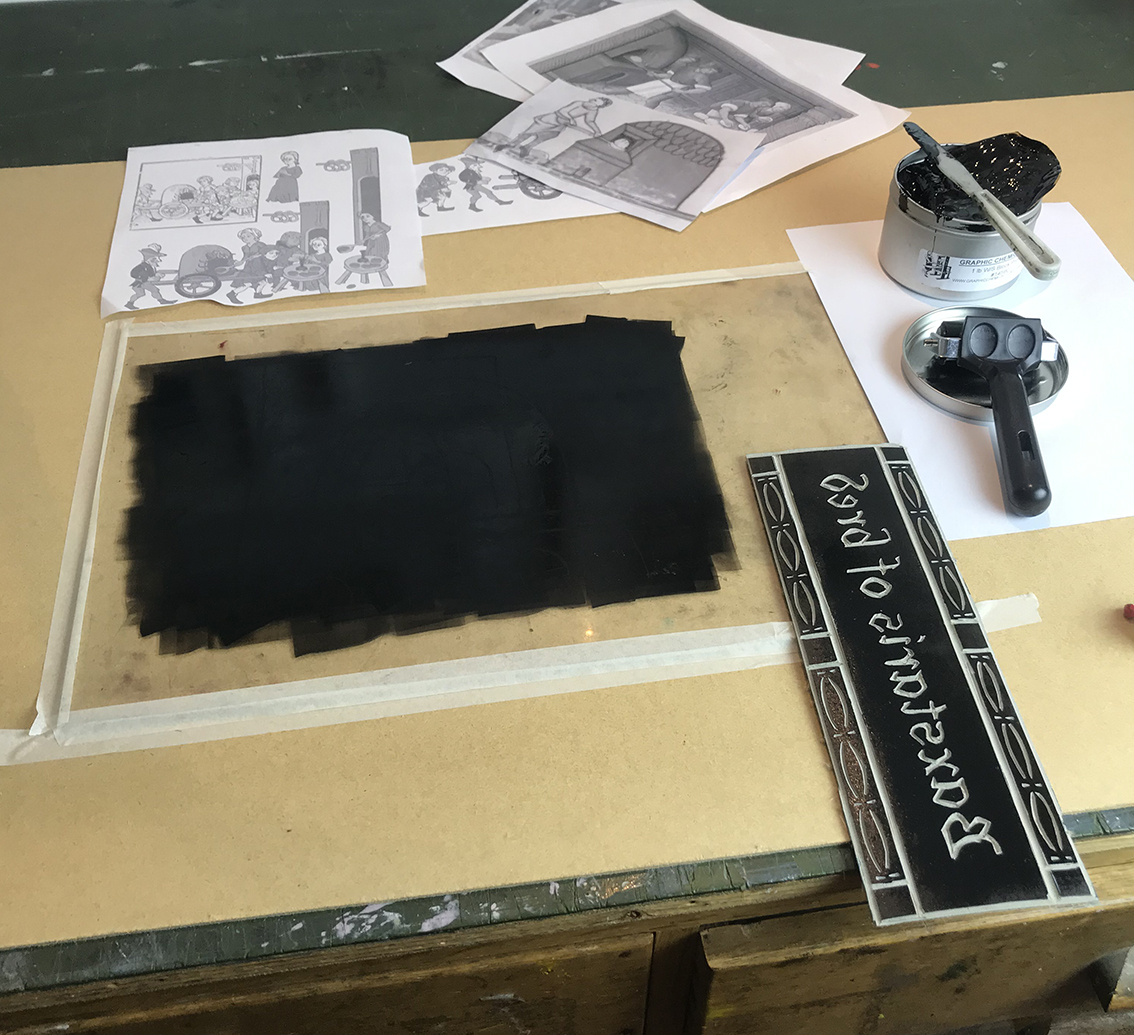
Hetty and Kit have made instructional videos introducing a selection of stories and themes within the Aberdeen Registers Online, along with printmaking techniques. The videos then give step-by-step instruction for teacher and pupils to complete a piece of collaborative visual art. A package of materials will be sent to the school along with links to the videos. This will include images from medieval manuscripts as inspiration, including from the Aberdeen Bestiary.
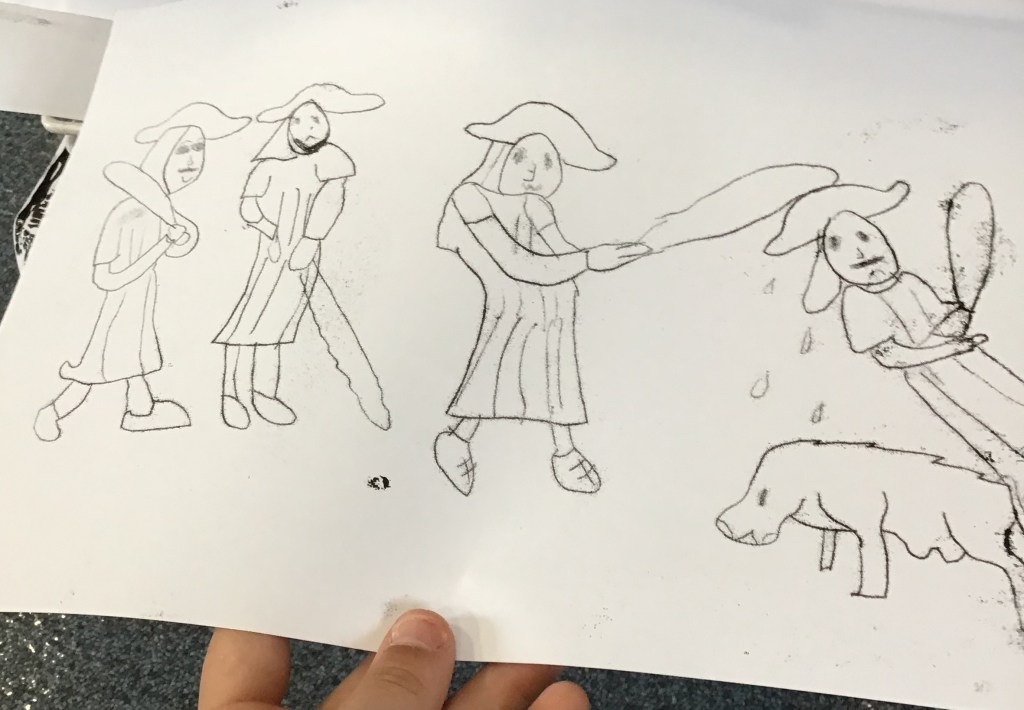
The tale of Aberdeen’s pig catchers has been told before in the blog! Photo courtesy Hetty Haxworth.
The art techniques explored in the activities are block printing and monoprinting as well as collage, design and drawing. The finished piece will be a medieval ‘scroll’ measuring 180cm x 85cm that will illustrate three stories from the Aberdeen council registers and bordered by Middle Scots words taken from the Aberdeen Registers Online, to form a decorative edge.
The results could be displayed on the school wall, or in other potential locations such as the University or the City Archives. The pilot work has been supported by funding from the University of Aberdeen Development Trust.
We’re looking forward to the next steps for this exciting creative response to the Aberdeen burgh records!
The Kickstarter campaign for Strange Sickness wrapped up with an amazing 220 backers and 132% funding support, following a focused three-week run which ended a minute before midnight on 17 December 2020.
The generous response to the campaign brought backers from Scotland and around the world to support the project. Practical support and encouragement from Opportunity North East Code Base (ONE CodeBase) has been integral to the project.
Backing for the game exceeded the initial target and the first stretch goal. This means the game will include a prologue, to precede the main narrative section of play. Here the player will be introduced to Aberdeen and its inhabitants and hear reports of frightening illnesses from elsewhere in Scotland and overseas. Player decisions made in the prologue will affect the main narrative which follows.
There are eight days remaining in the Strange Sickness Kickstarter campaign . But what does ‘strange sickness’ mean, and why have we chosen it as the title for the game? In this blog post I’ll dive into some of the sources from Aberdeen in which the evocative term is used.
In her recent book, Karen Jillings noted the association of the term with syphilis in the early sixteenth century, called at the time the Great Pox.[1] For instance, an entry from the Aberdeen council registers in 1507 refers to ‘the strange sickness of Naples’. The disease of Naples was another widely-used term for syphilis.[2]
Earlier entries suggest the term ‘strange sickness’ had broader applicability. Certainly, one use of the term from 1497 seems to refer to a venereal disease, coming as it does on the same day as an entry outlining cruel punishments imposed on ‘licht’ (‘immoral’) women, probably referring to sex workers, stipulating that unless they refrained from ‘vicis and Syne of venere’ (‘vices and the sin of sexual indulgence’) they would be burned on the cheek with a hot iron key and banished from the town (click on links in footnotes to see orginal records and transcriptions).[3]
However, an entry from 1498 suggests the term was used more generally, at least at this stage. It records an ordinance of the town for the inhabitants to close the gates at the back of their properties and build up their back walls in order to keep the town safe from ‘the pestilence and ale vthir Strang Seknes’ (‘the pestilence and all other strange sickness’).[4] This refers to the layout of the town, with the backs of individual properties effectively making up the physical boundary of the town, as can still be seen in Gordon of Rothiemay’s map from 1661.[5]
The phrasing here suggests pestilence (i.e. plague) was regarded as ‘strange sickness’ along with other types of disease. That plague was included as a type of strange sickness is further suggested by two entries from 1500. A statute issued on 15 August 1500 stated that people coming off a ship recently arrived from Danzig (today Gdansk) should be quarantined ‘for the sawite and weilfar of the town’ fra ale sthrange seknes’ (‘for the safety and welfare of the town from all strange sickness’).[6] Another statute, from six days later (21 August 1500), imposed further measures related to the ship from Danzig ‘for the escheving of the plage of pestilence and safte of this tone’ (‘for the eschewing of the plague of pestilence and safety of this town’).[7] Two entries from 1506 clearly include plague under the umbrella of ‘strange sickness’.[8]
If ‘strange sickness’ was a general term, encompassing plague, syphilis and possibly other diseases, what does it tell us about their shared characteristics? ‘Sickness’ is clear enough, but strange is a little more ambiguous. In Older Scots ‘strange’ as an adjective could mean, much as does in modern English, unusual or unfamiliar. It could also mean exceptional and, more specifically, alien or foreign.[9]
Certainly, in the late 1490s, syphilis was an unfamiliar disease, and Karen Jillings has argued that Aberdeen was ‘the first government body in the British Isles to tackle the Great Pox.’[10] Aberdonians may have been well aware of plague at this time, at least in theory, but it too is likely to have been unfamiliar in terms of personal experience for most, with no evidence that the disease had struck in the town for many generations.[11] Both diseases could also have been regarded as ‘strange’ in the sense of foreign or alien, with the Aberdeen records referring to France as the source of syphilis and the fears of plague sparked by the arrival of a ship from Danzig. They both too could have been regarded as exceptional in their severity.
The usage ‘strange sickness’ in late-medieval Aberdeen may capture all of these meanings, and it speaks to the role of uncertainty in the human experience of disease and infection. Even after months of blanket media coverage, growing scientific evidence and widespread testing, our experience of Covid-19 often remains shrouded in uncertainty, even setting aside the proliferation of conspiracy theories and disinformation. Symptoms overlap with other conditions, making it hard without a test to know if you have it (and even tests can be inaccurate). When a case is confirmed, working out exactly how it was transmitted comes with even greater uncertainty. All of this has contributed to a strangely intangible sense of threat throughout much of 2020, although for many of those who have caught the virus, and their family, friends and carers, the threat has sadly become all too tangible.
When rumours swirled of the plague and the Great Pox in late-medieval Scotland – diseases which were far more deadly than even Covid-19 – fear and uncertainty must have been widespread. The term ‘strange sickness’ resonates with this atmosphere, which we intend to evoke, and allow players to navigate, in the game.
[1] Karen Jillings, An Urban History of the Plague: Socio-Economic, Political and Medical Impacts in a Scottish Community, 1500-1650 (Abingdon: Routledge, 2018), p. 79.
[2] Jillings, An Urban History of the Plague, p. 77.










 aberdeen registers